
Over the millennia, marble has been far more than a mere building material; it was, and remains, an emblem of refinement, luxury and
For millennia, marble has been far more than a mere building material: it has been, and remains, an emblem of refinement, luxury and permanence. Since Antiquity, the world's great civilisations, from the Greeks and Romans to the Florentine Renaissance, have used marble to celebrate ideal beauty and perfect order. Temple columns, palace mosaics and timeless sculptures were all fashioned from this noble material, which uniquely unites strength with aesthetic delicacy.
In the Renaissance, marble became the favoured language of the European aristocracy, gracing the sophisticated interiors of palaces and manor houses as an expression of cultivated taste and social standing. Nor did the centuries that followed diminish its prestige; on the contrary, marble was reinterpreted in the Baroque, Rococo, Empire and Art Deco styles, always retaining its aura of supreme elegance.
Today, in contemporary architecture, marble is being rediscovered and celebrated through advanced crafting techniques, yet its charm still lies in its ability to tell a story: one of time, tradition, emotion and nobility.
In the heart of Bucharest, at Palatul Noblesse, marble takes on a distinctly artistic dimension. Here it is not merely a decorative material but a statement of style and a bridge between eras. Woven with vision into the restoration and interior design, marble becomes a silent witness to a return to authentic beauty – the kind of beauty that does not follow trends, but transcends them.
Palatul Noblesse, built in 1881 by the architect Alexandru Săvulescu, is a listed monument that perfectly blends Belle Époque architecture with modern restoration techniques. During the extensive rehabilitation and refurbishment that began in 2013, teams of artisans brought the palace's original features back to life, while incorporating precious materials such as marble.
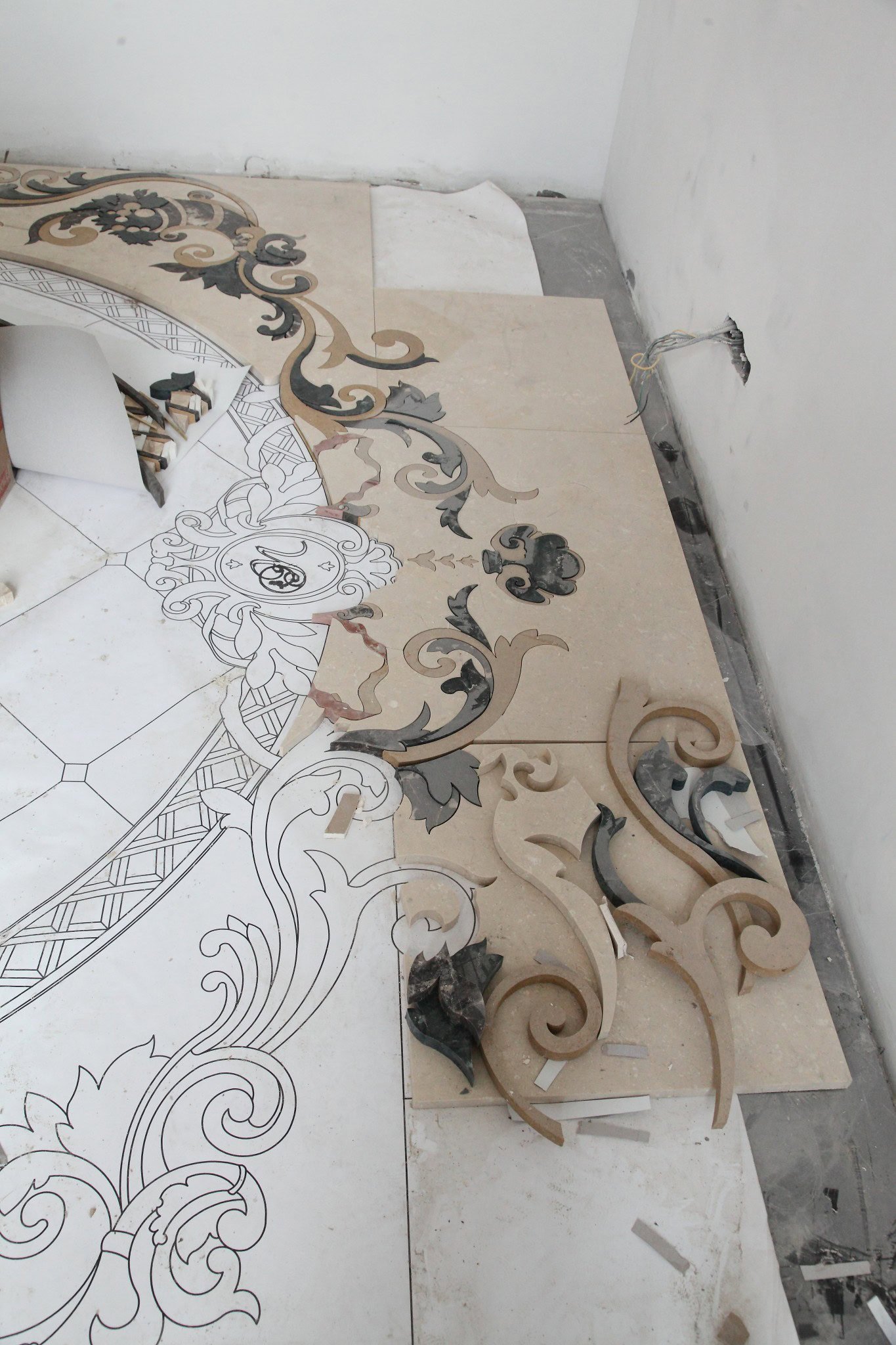
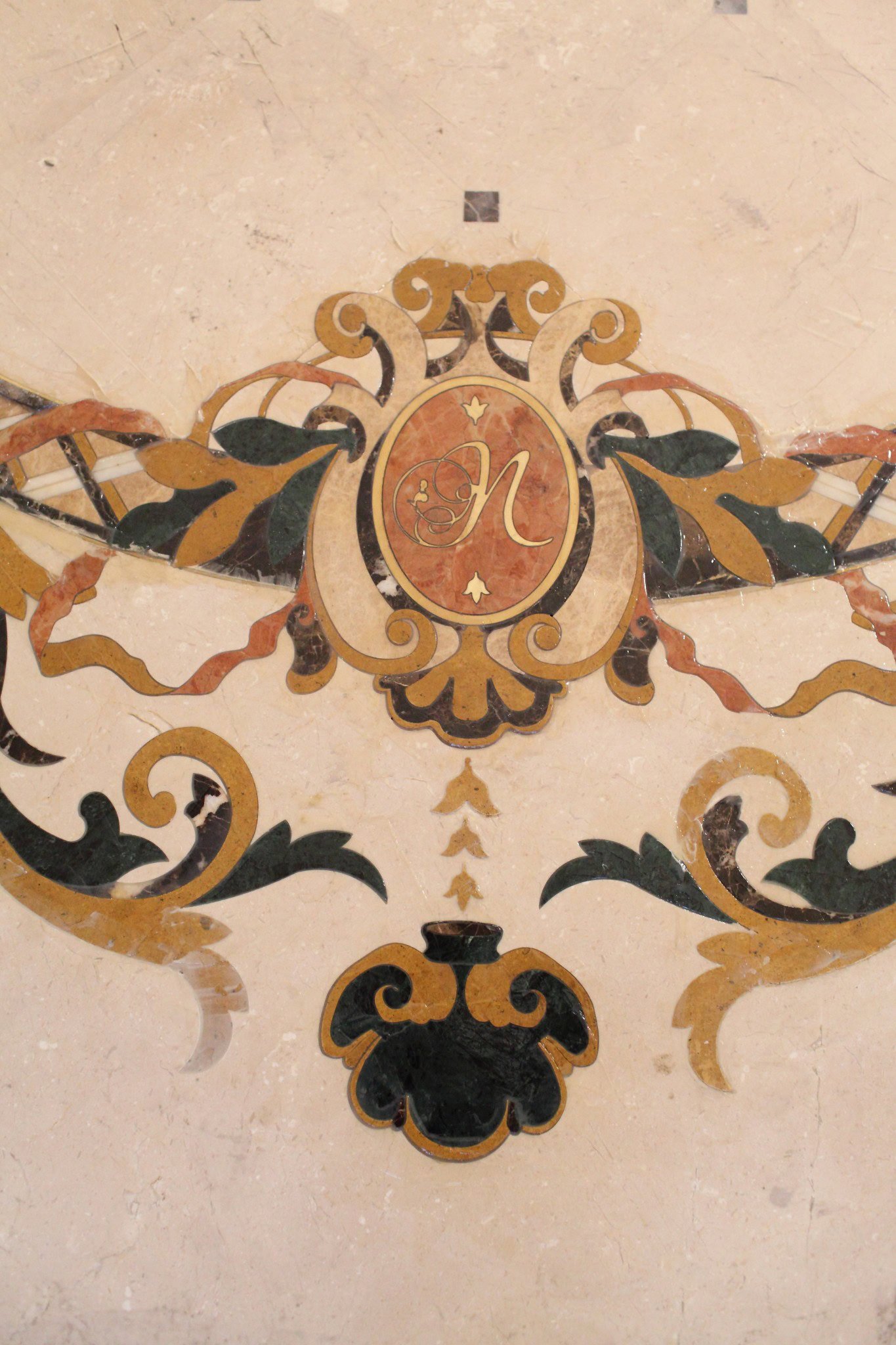
The marble floors are not merely functional; they are conceived as centrepieces of the décor. The main hall in particular, renowned for its intricate composition of more than 5,000 pieces in seven types of marble, captivates visitors and sets a regal tone from the moment they arrive.
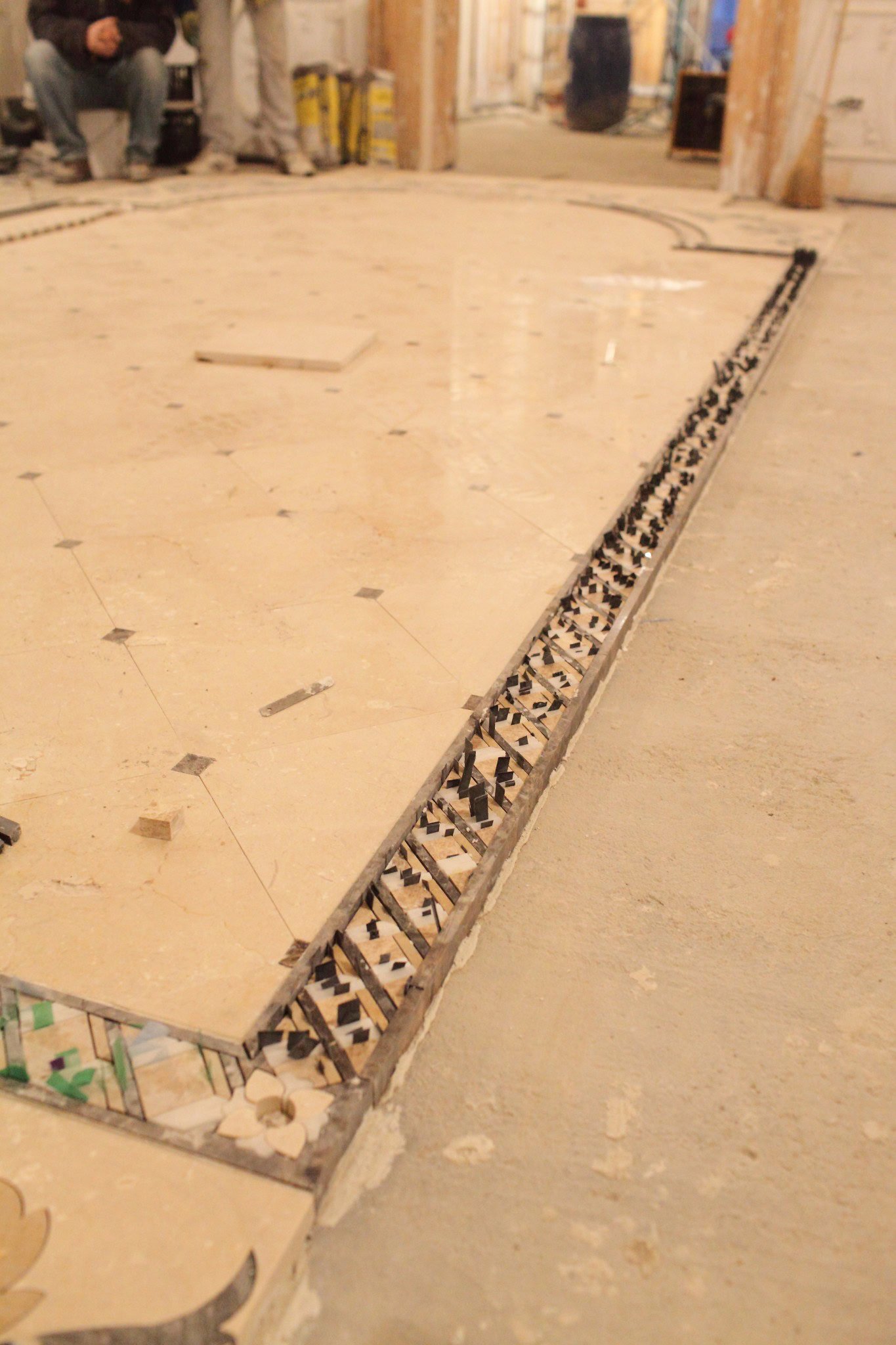
The restoration of this noble surface was a meticulous process. Every piece was cut, polished and fitted by hand, in perfect harmony with the rest of the interior architecture. To preserve the authenticity of the style, artisanal techniques were used, complemented by modern processing technologies such as water jet cutting, which allows highly precise cuts and elaborate patterns that were impossible to achieve in the past.
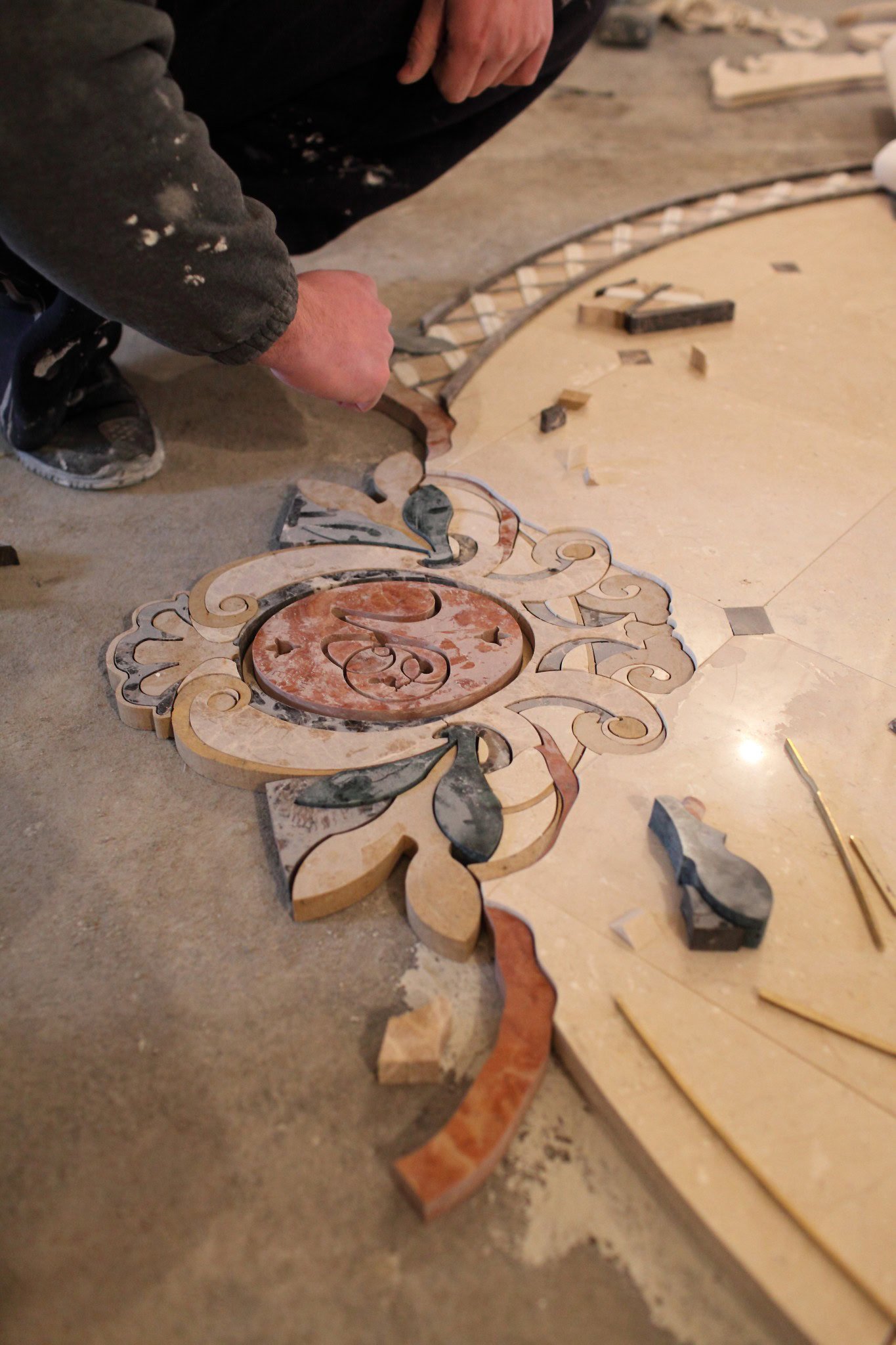
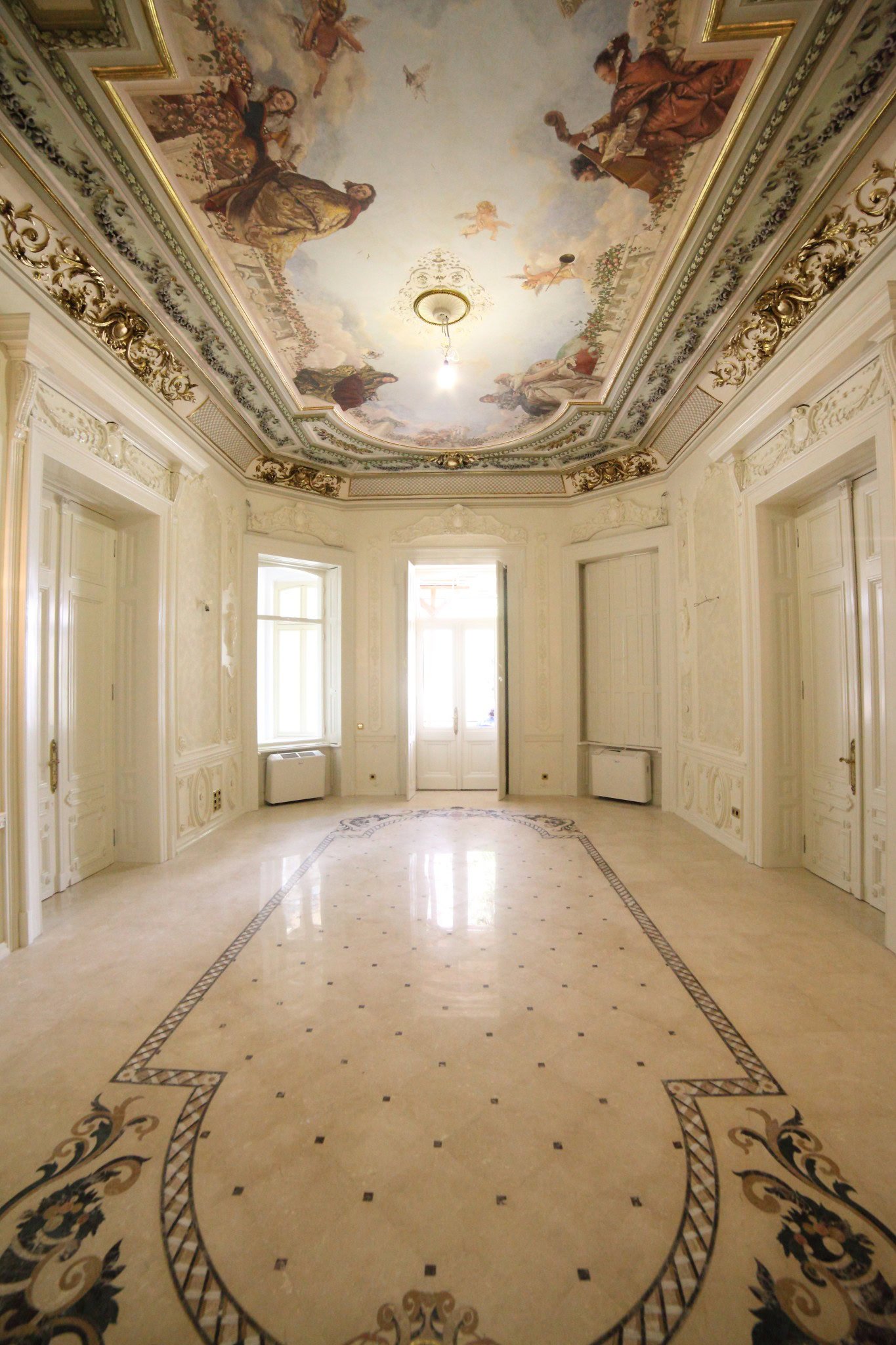
The Baroque Salon, one of the most imposing and theatrical rooms in Palatul Noblesse, captivates with its spectacular floor, crafted from five different types of marble – some 3,500 pieces, each carefully chosen for its hue, texture and visual harmony. This mineral carpet of rare elegance was conceived as a centrepiece of the design: not merely a backdrop, but an active part of the room's aesthetic story.
The floor's composition is designed as a mirror of the painted ceiling, creating a subtle interplay of reflections and symmetries that heightens the sense of space and grandeur. The resulting effect is a contemporary rendering of Venetian splendour, a homage to the great Italian palazzi.
At the heart of this room, the floor becomes a stage and every step part of a visual ritual. The pairing of contrasting yet harmonious tones lends the space a quiet but assured monumentality that captivates the eye and enhances the architectural value of the entire ensemble.
In themed rooms such as the Gallery, Luxury and Florence, marble becomes the thread linking past and present. From classic black-and-white patterns to cream tones and lozenges inspired by the Louis XV style, each room offers its own distinct visual experience. This style of interior design shows off the furniture and the artworks on display, harmoniously complementing the sophisticated atmosphere of the space.
Marble graces not only the floors but also the interior and exterior staircases, each step carefully restored to recapture the building's original splendour. Even the Luxury bathroom features elegant marble cladding and fine mosaics, completing the sense of luxury.
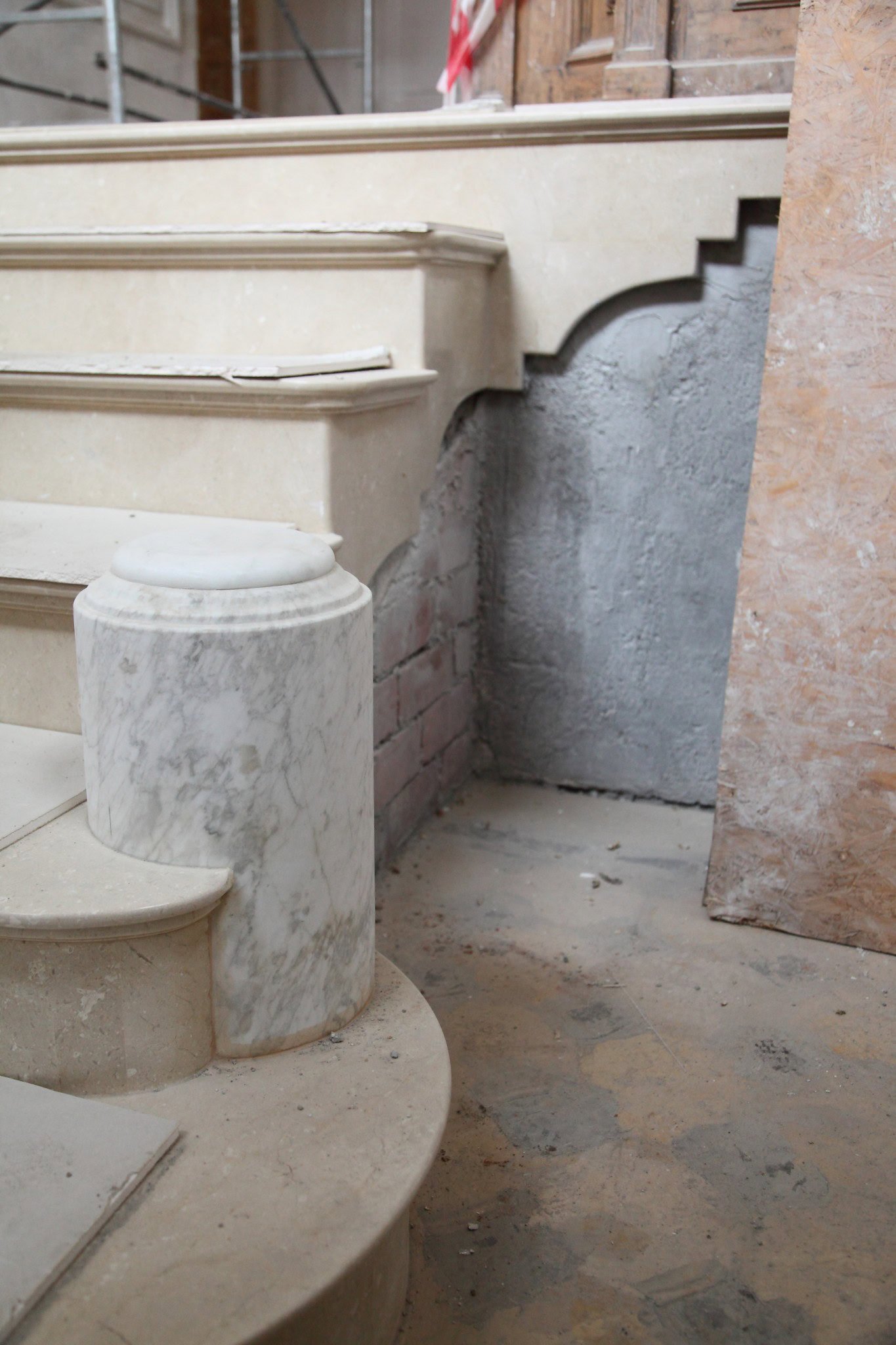
Carefully restored by Noblesse Group, the marble of Palatul Noblesse is not merely a noble material but an expression of respect for history and art. Every slab, whether reconditioned or skilfully added, helps recreate the refined atmosphere of the Belle Époque. Today, this architectural monument is reborn with dignity, becoming a benchmark for interior design with soul – proof that true beauty can be preserved and reimagined for generations to come.
Tell us more about your event and our team will be in touch shortly.
Request a Tailored Quote