
The Orthodox christening ritual, step by step: renunciation, chrismation, immersion, tonsure and Holy Communion. What each gesture of the christening service symbolises.
The Orthodox christening is a service rich in symbolism, in which every gesture carries a profound meaning. From the renunciation of evil and the profession of faith to the immersion in holy water, the tonsure and Holy Communion, the christening follows an order preserved for centuries. In this article we walk you, step by step, through the Orthodox christening ritual and the meaning of each moment — from the church to the celebration that follows.
Whether the christening takes place in a country church or in a place of worship in the heart of the city, the order of service remains the same, and the emotion is just as powerful. Understanding the meaning of each gesture helps parents and godparents to experience this unique moment more fully, and to pass on to future generations the beauty of a tradition that unites family, faith and the joy of being together, in the loveliest way possible.
The christening service begins at the church entrance, where the priest welcomes the child, the parents and the godparents. In the Orthodox tradition, the baptism is preceded by prayers of cleansing and blessing that prepare the child to receive the Sacrament. It is the moment when the whole family gathers around the little one, in an atmosphere of emotion and quiet reflection.
The priest offers prayers for the child's health and protection, and the godparents step forward, ready to answer on the child's behalf throughout the service. Every word and gesture in this first part serves to open the way to the spiritual birth that baptism brings.
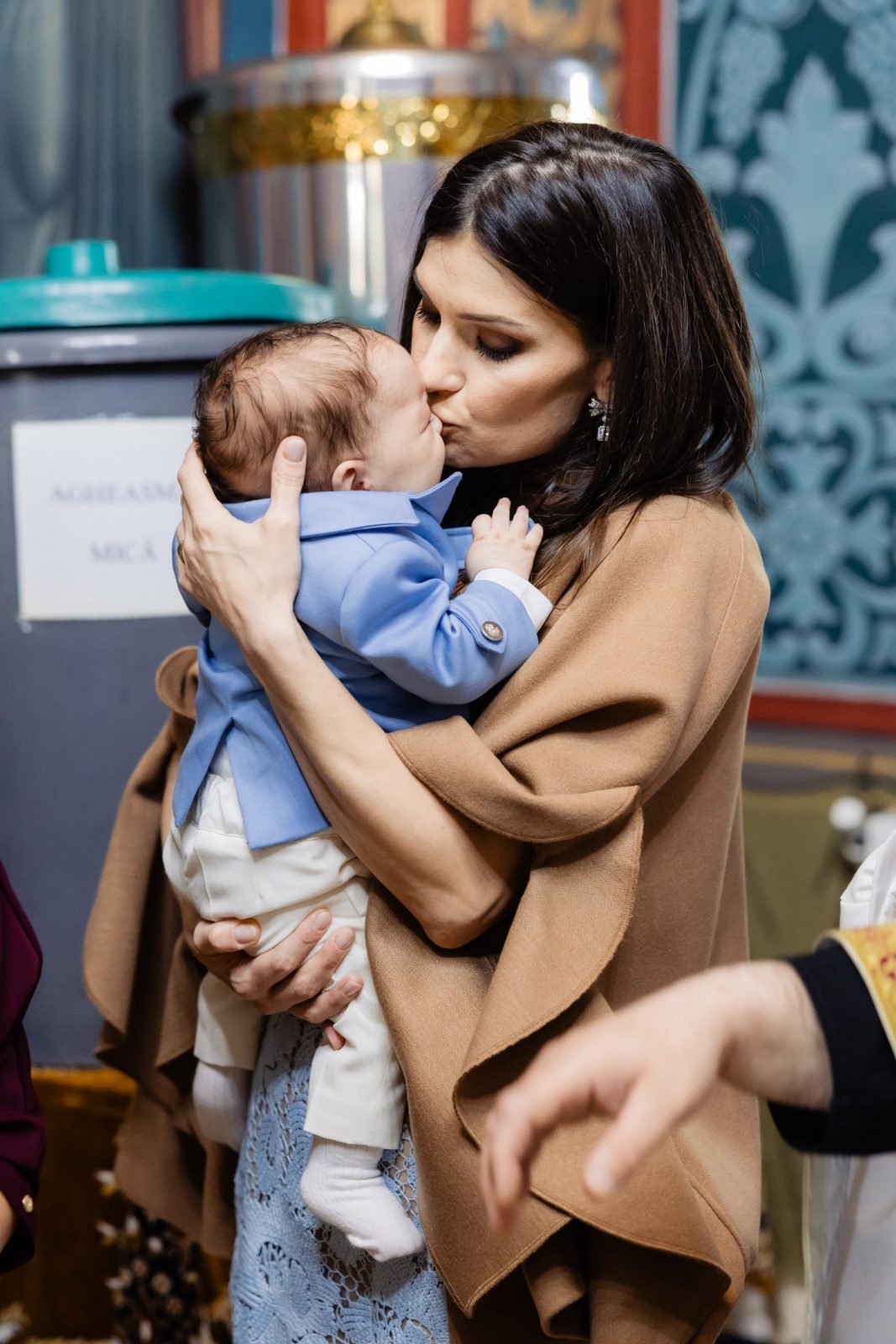
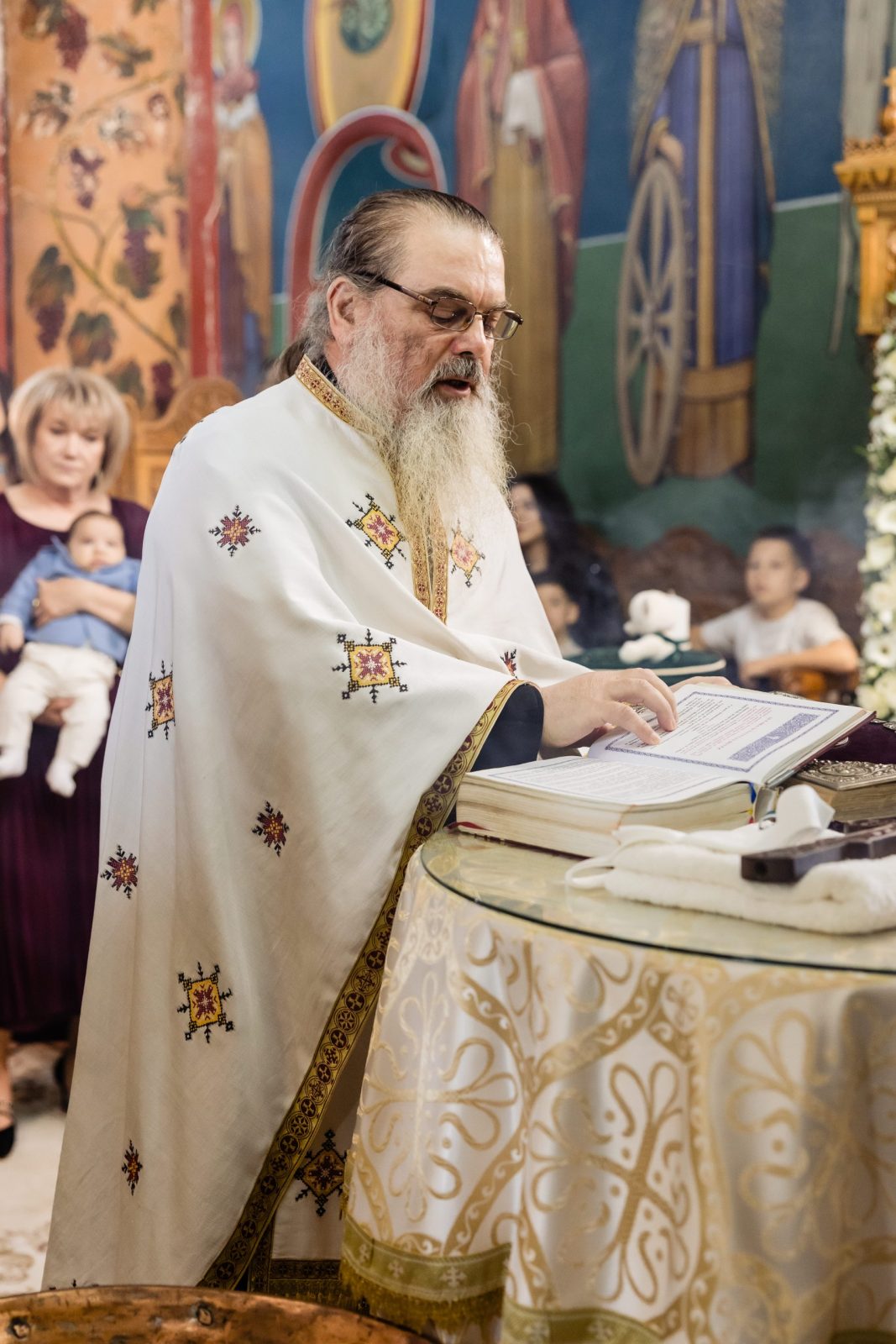
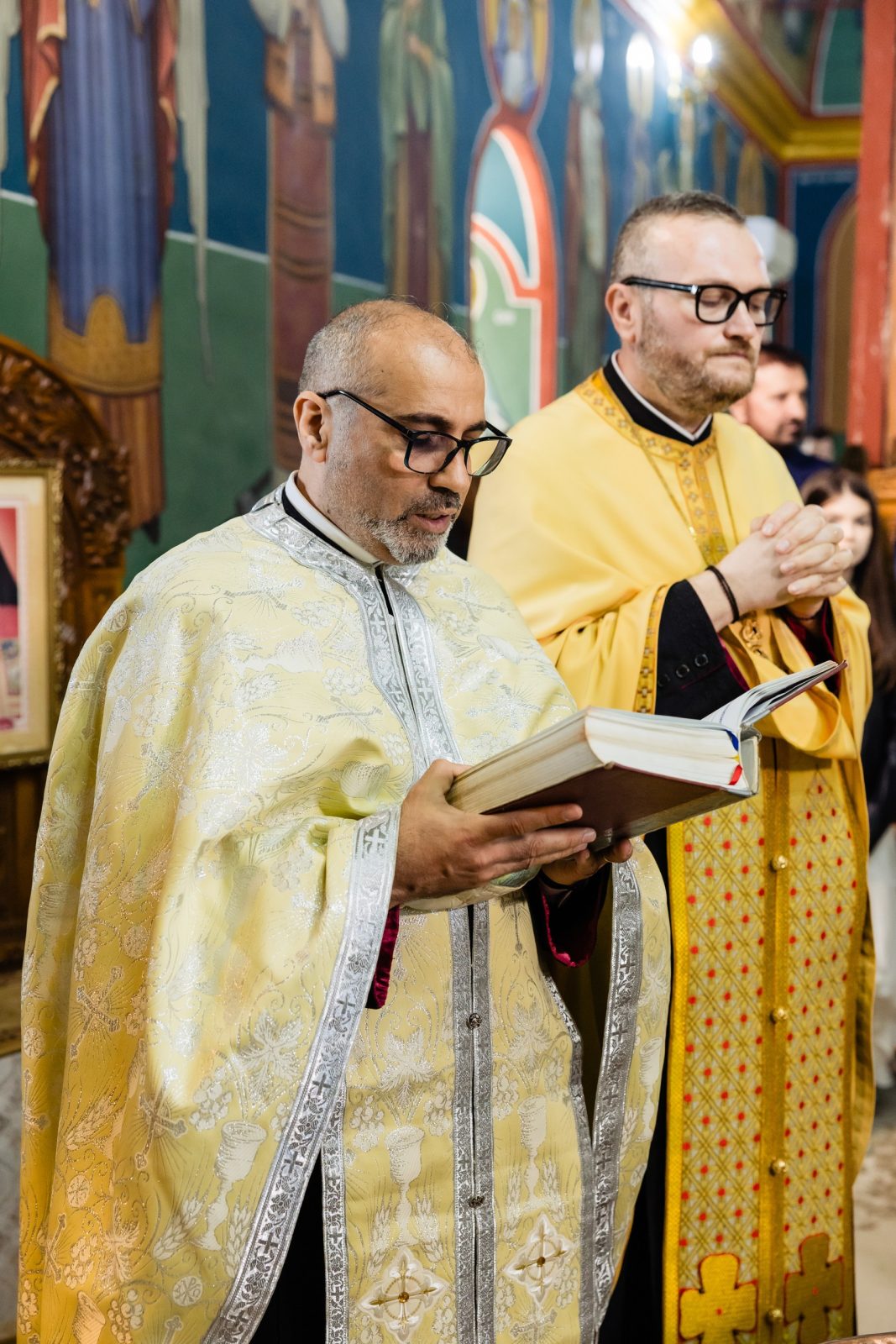
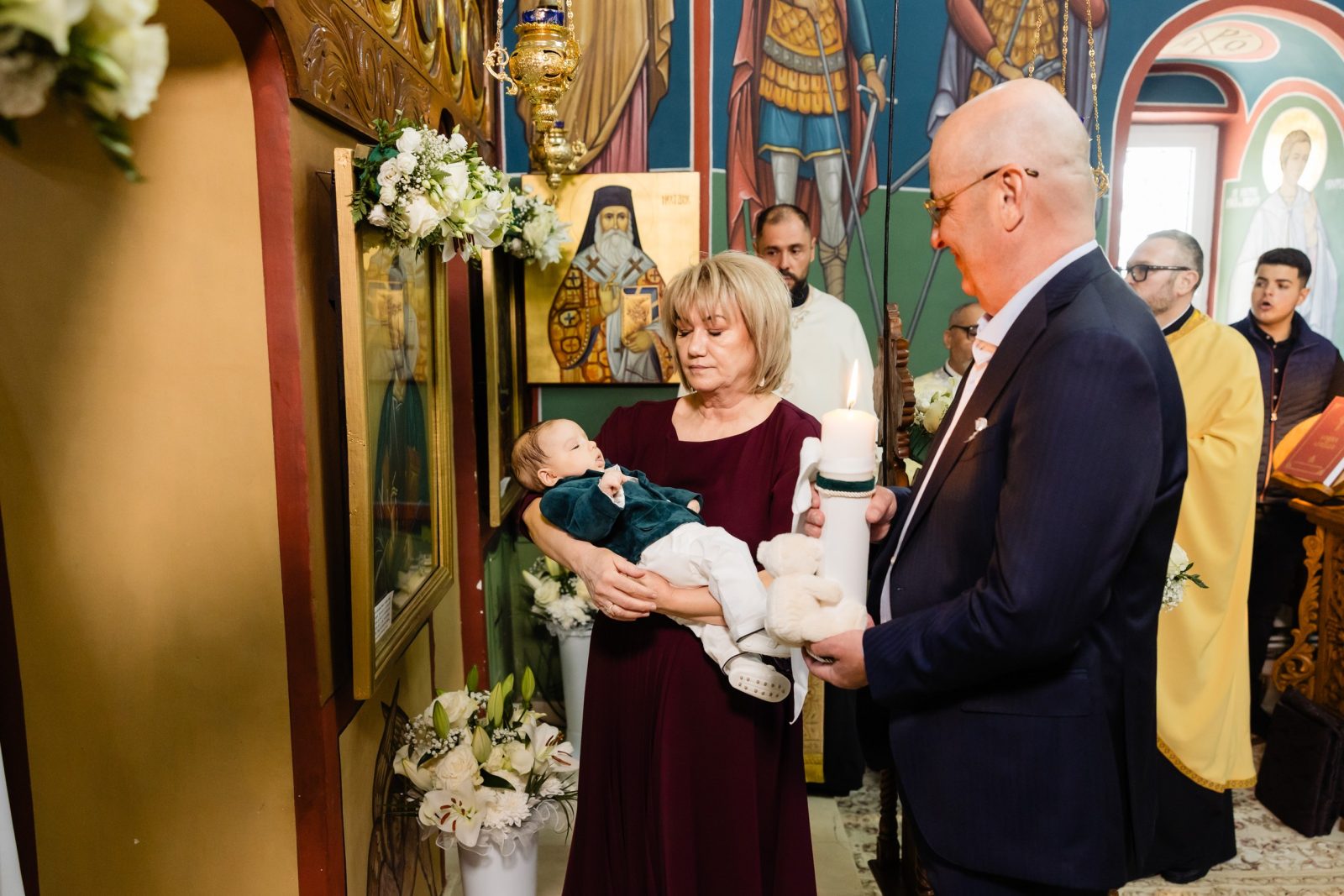
One of the most significant moments of the ritual is the renunciation of evil and the profession of faith. Holding the child in their arms, the godparents renounce sin on the child's behalf and profess the faith by reciting the Creed. Through this gesture, the godparents take on the spiritual responsibility of guiding the newly baptised child along the path of faith.
Symbolically, this moment marks the choice of good and a conscious entry into the Christian community. Although the child is too young to understand, the words spoken by the godparents are the covenant they make before God and the whole family.
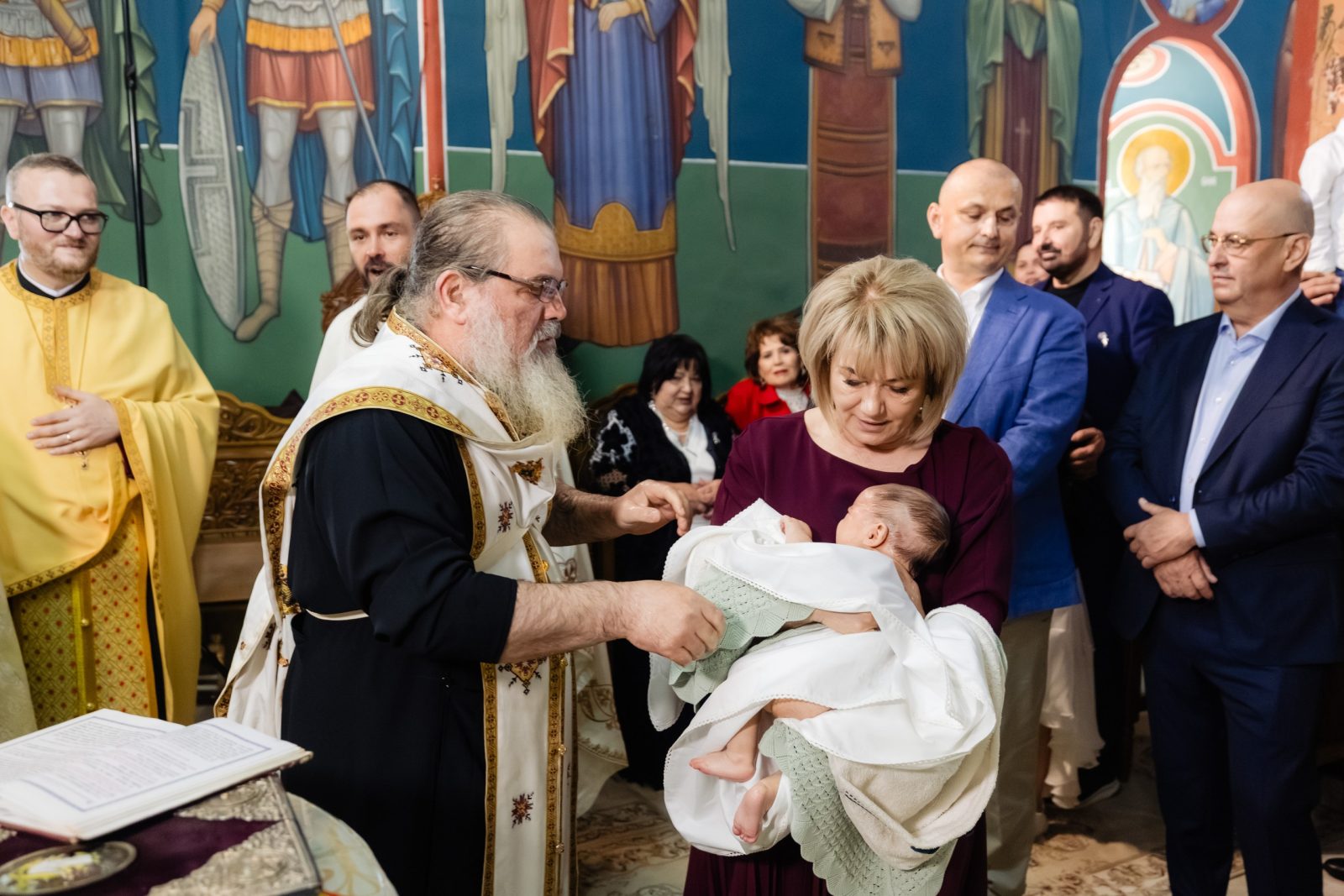
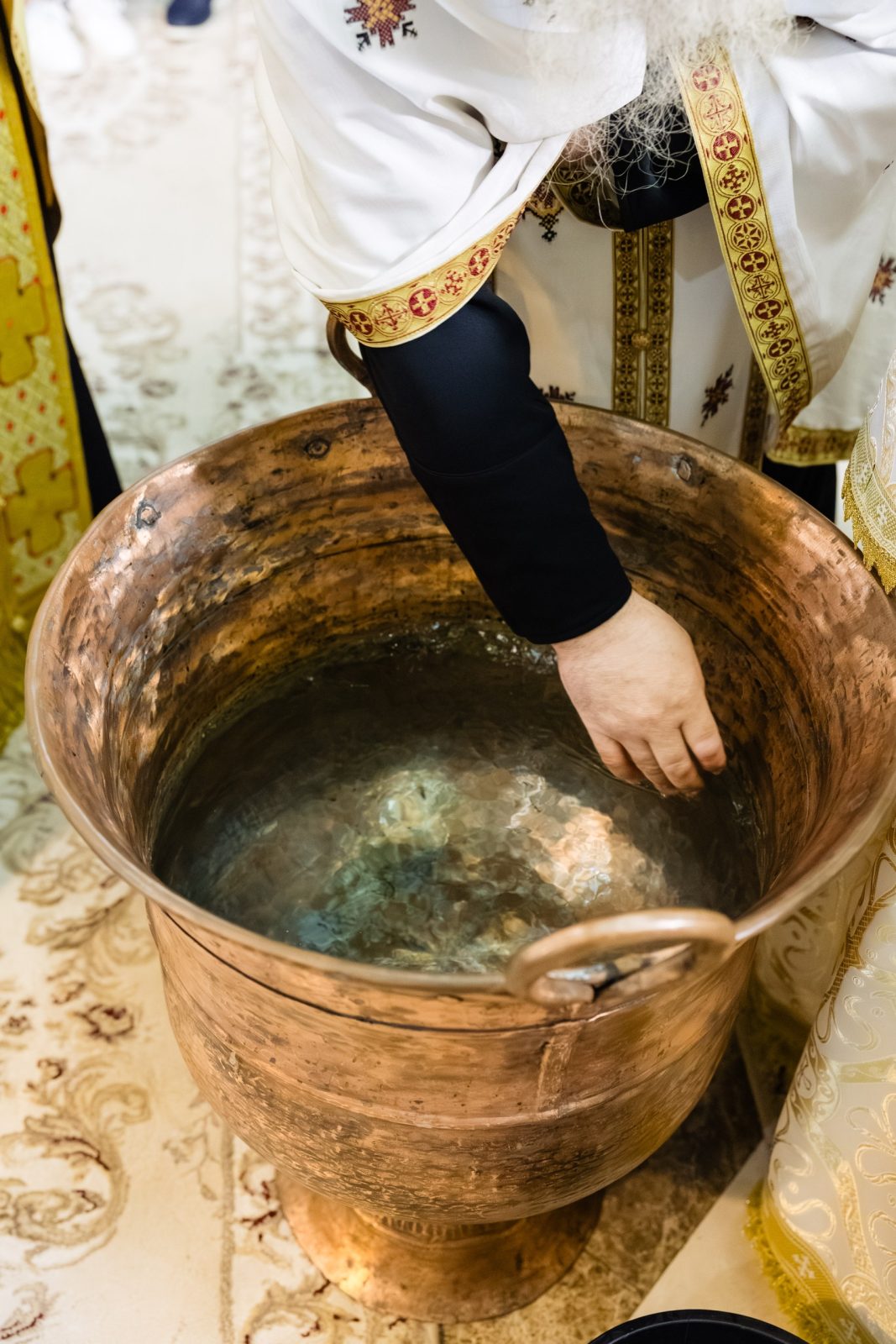
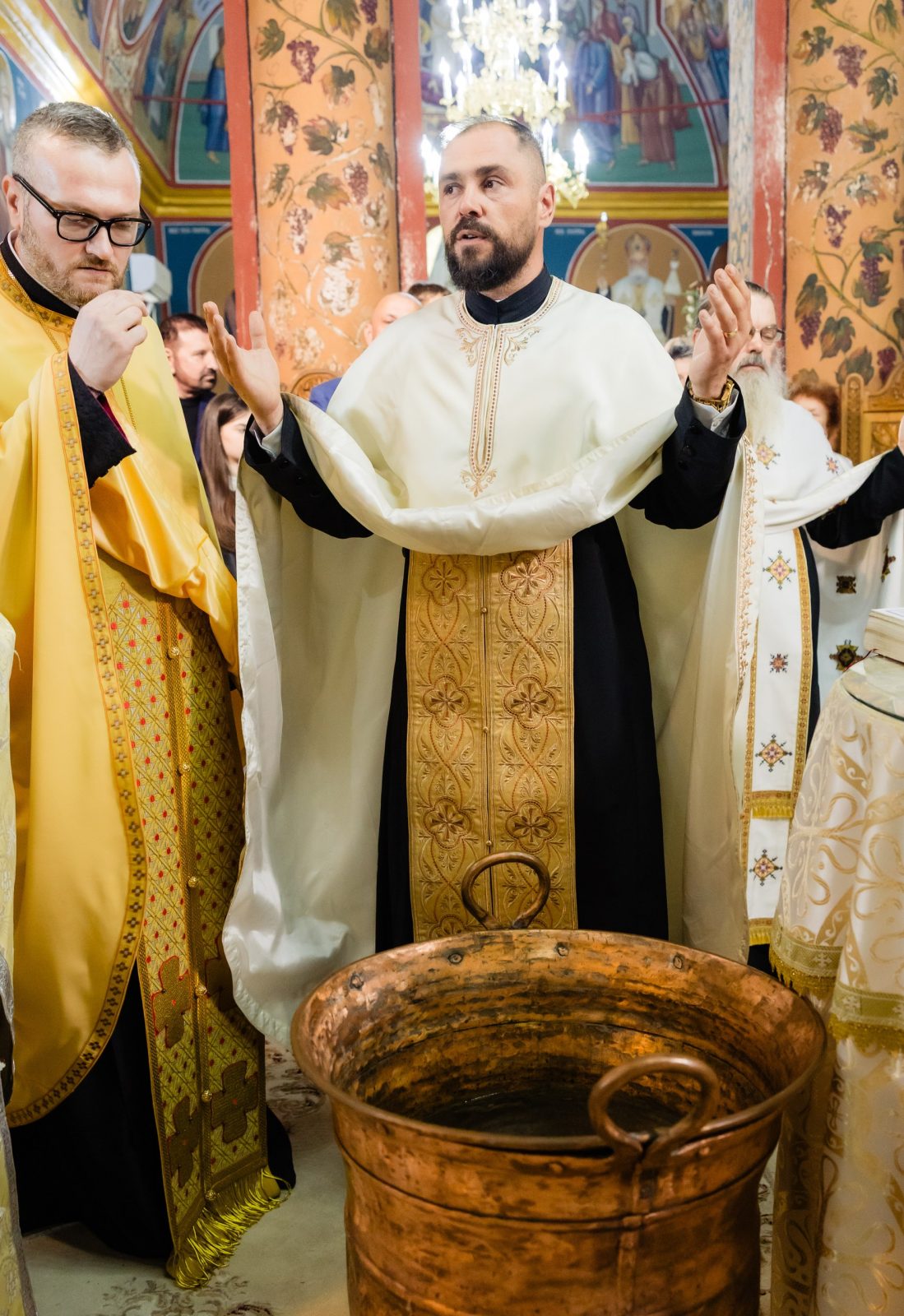
Water is the central element of the christening. The priest blesses the water in the font with special prayers, transforming it into baptismal water — a symbol of cleansing and rebirth. By tradition, blessed oil is also added to the water, a sign of blessing and healing.
The blessing of the water is accompanied by prayers rich in symbolism, recalling the baptism of Christ in the River Jordan. The water thus becomes the medium through which the child passes from their former life into a new, spiritual life, in communion with the Church.
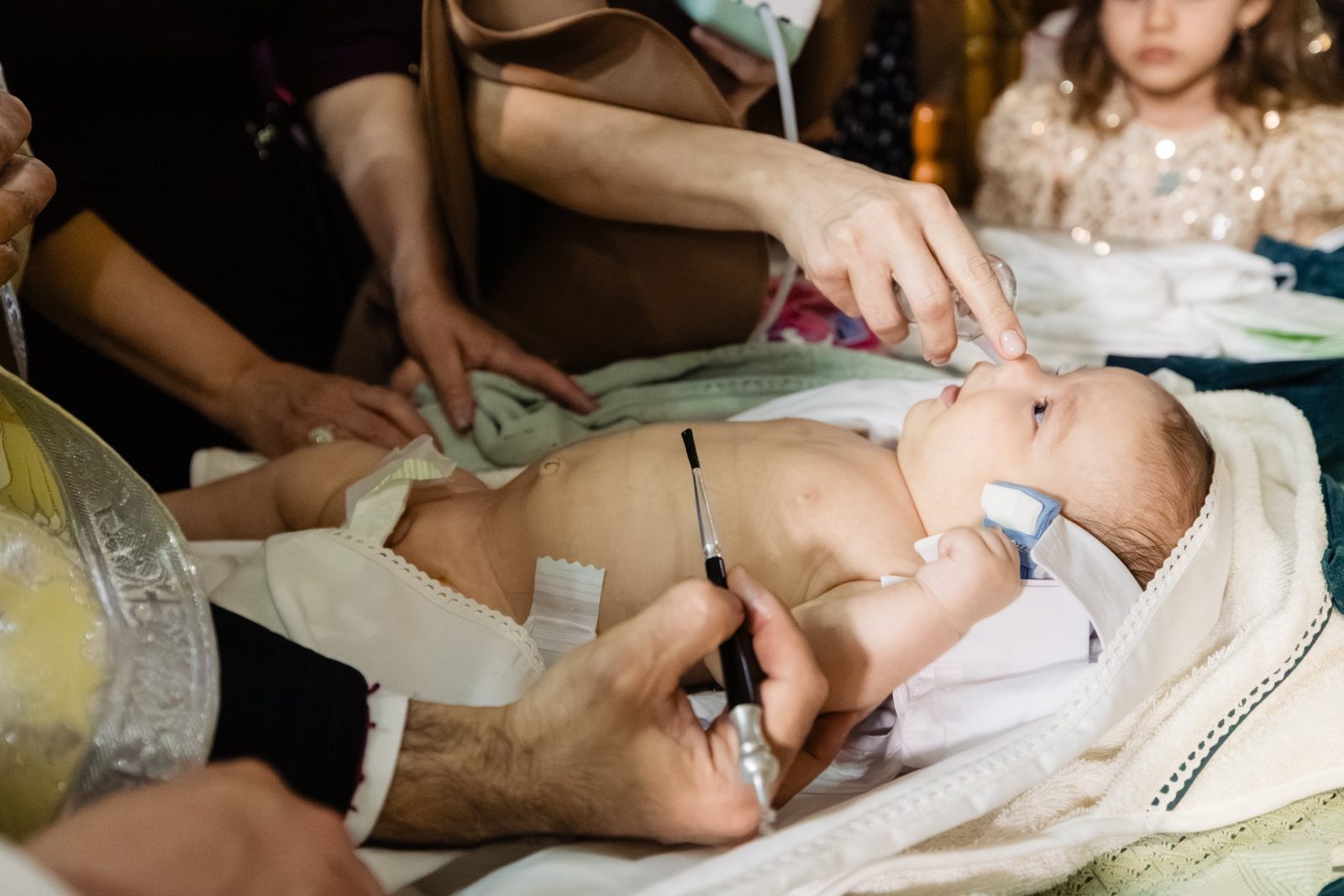
After the immersion in water comes the Sacrament of Chrismation. The priest anoints the child with the Holy Chrism on the forehead, eyes, ears, nose, mouth, chest, hands and feet, each time saying “The seal of the gift of the Holy Spirit”. Through chrismation, the newly baptised receives the gifts of the Holy Spirit needed for a Christian life.
Each anointing has its own meaning: mind, senses and body are blessed and placed under divine protection. Chrismation completes the baptism and prepares the child to receive, in time, the other Sacraments of the Church.
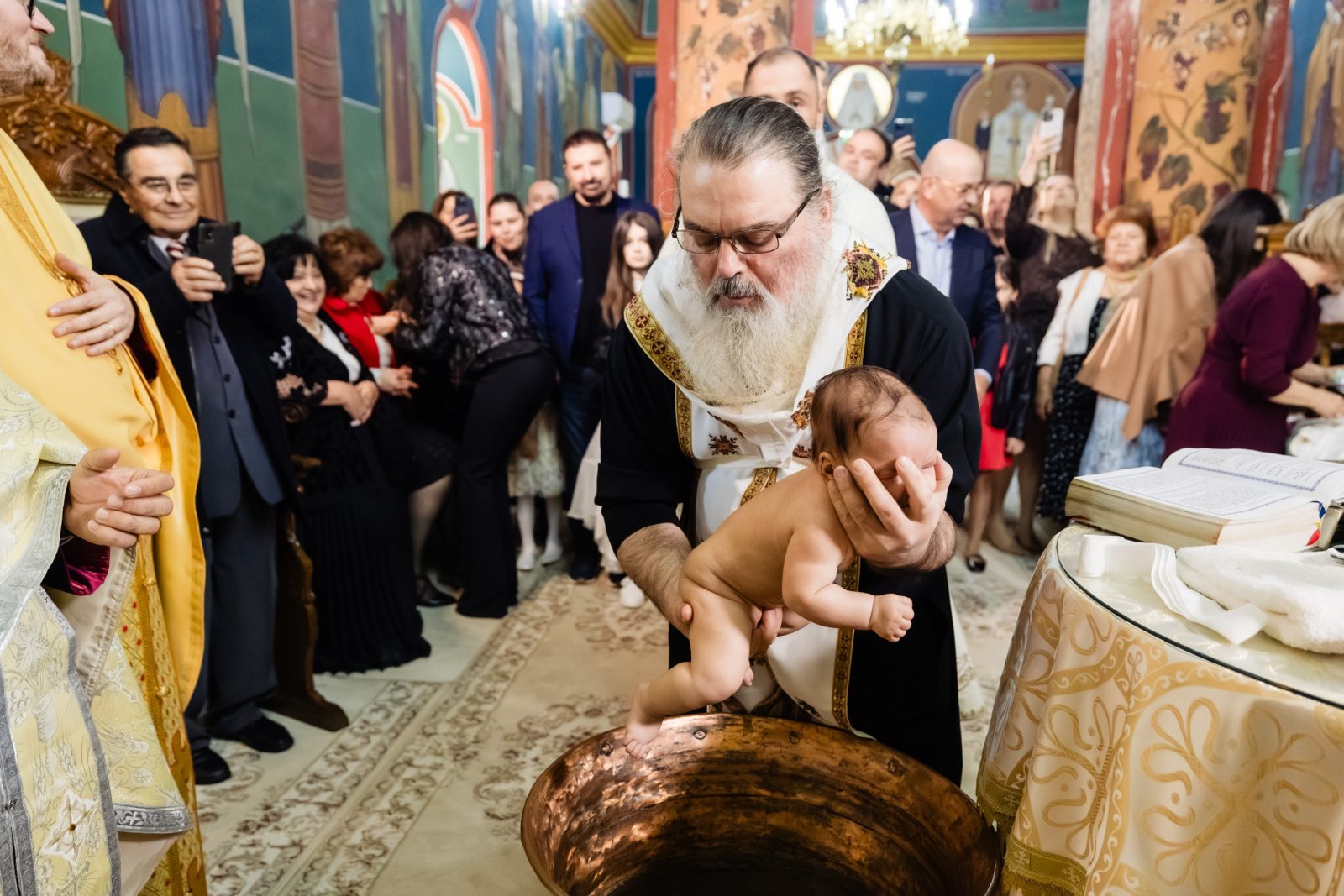
Immersion in the water is the high point of the ritual. The priest immerses the child three times in the holy water, speaking the child's name and the words "The servant of God is baptised…", in the name of the Father, and of the Son, and of the Holy Spirit. The three immersions symbolise the three days Christ lay in the tomb, and His resurrection.
This is the moment when the child symbolically receives a new birth — cleansing from ancestral sin and entry into new life. It is a moment of rare intensity, met with deep emotion by the whole family gathered around the font.
After the anointing with chrism, the priest symbolically cuts a few strands of hair from the crown of the child's head, as a sign of dedication and gratitude to God. This tonsure represents the child's first offering to God and seals their belonging to the Church.
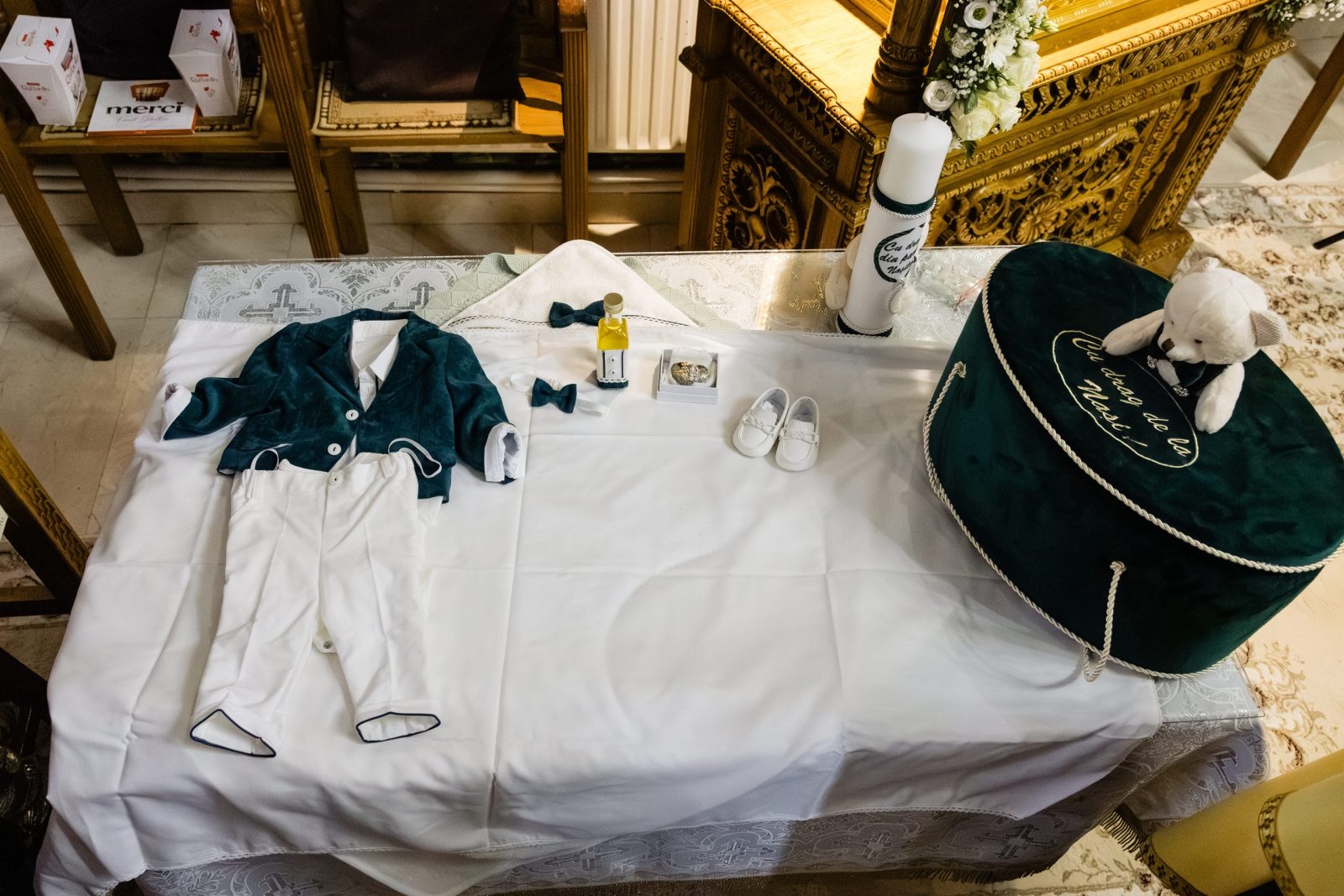
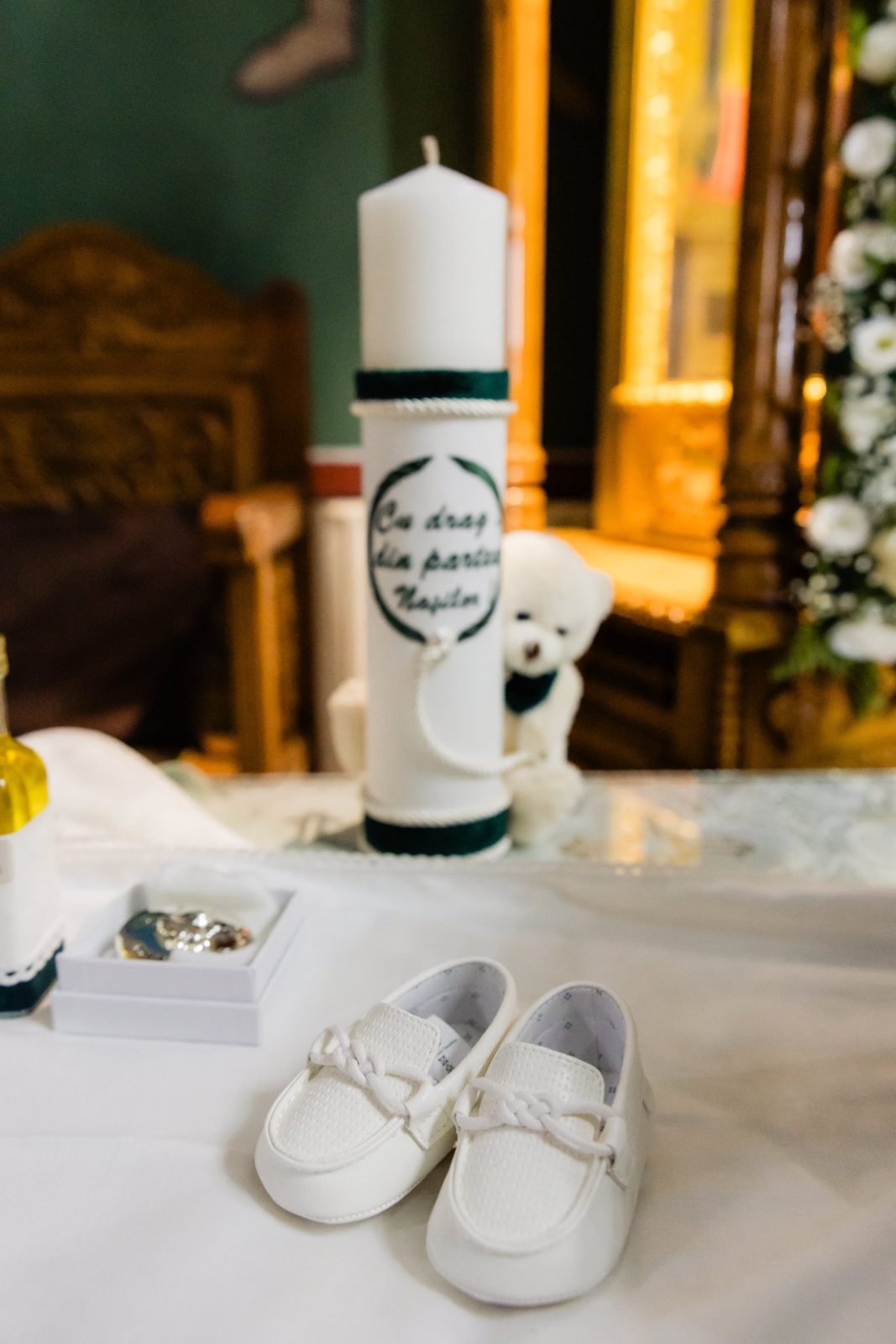
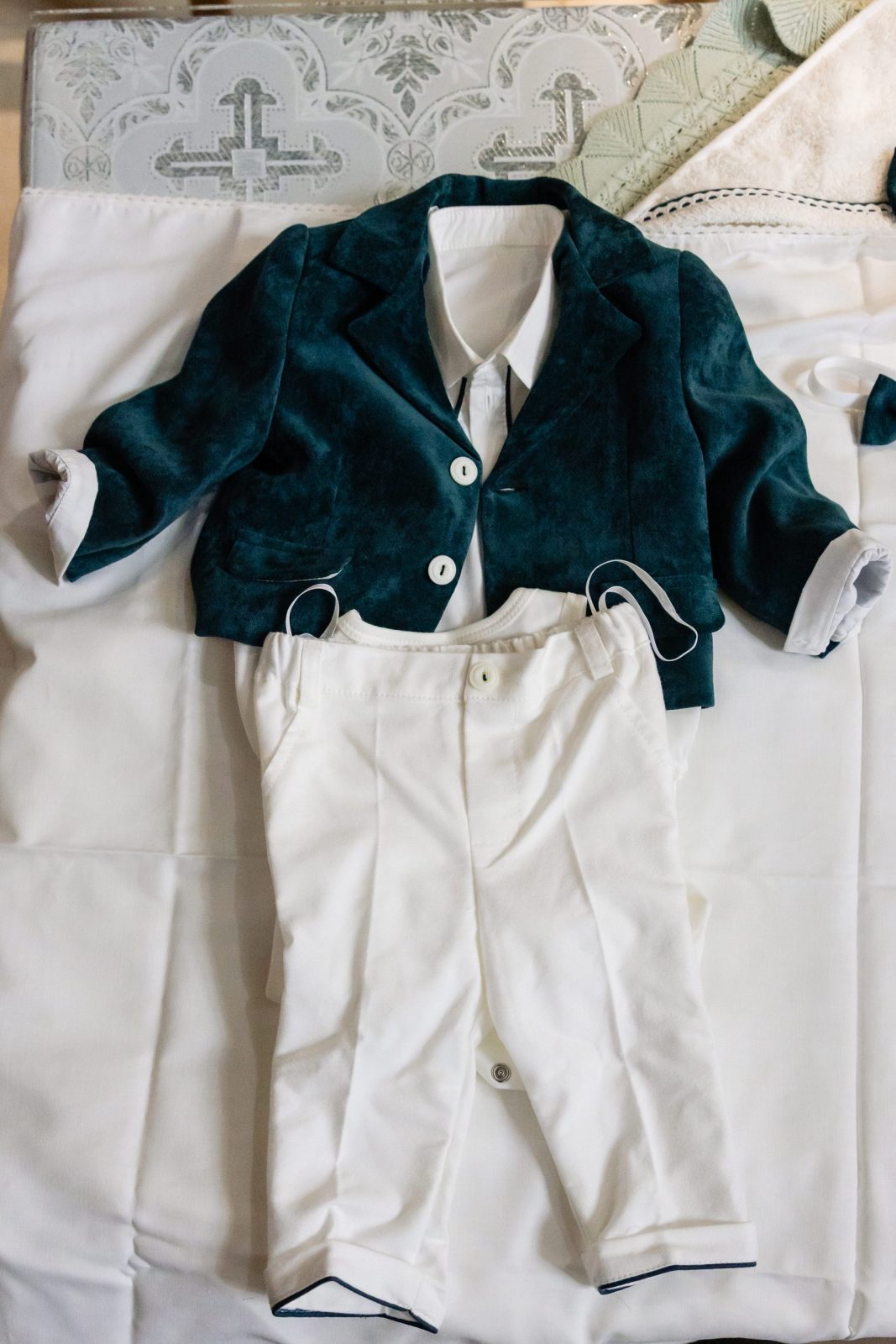
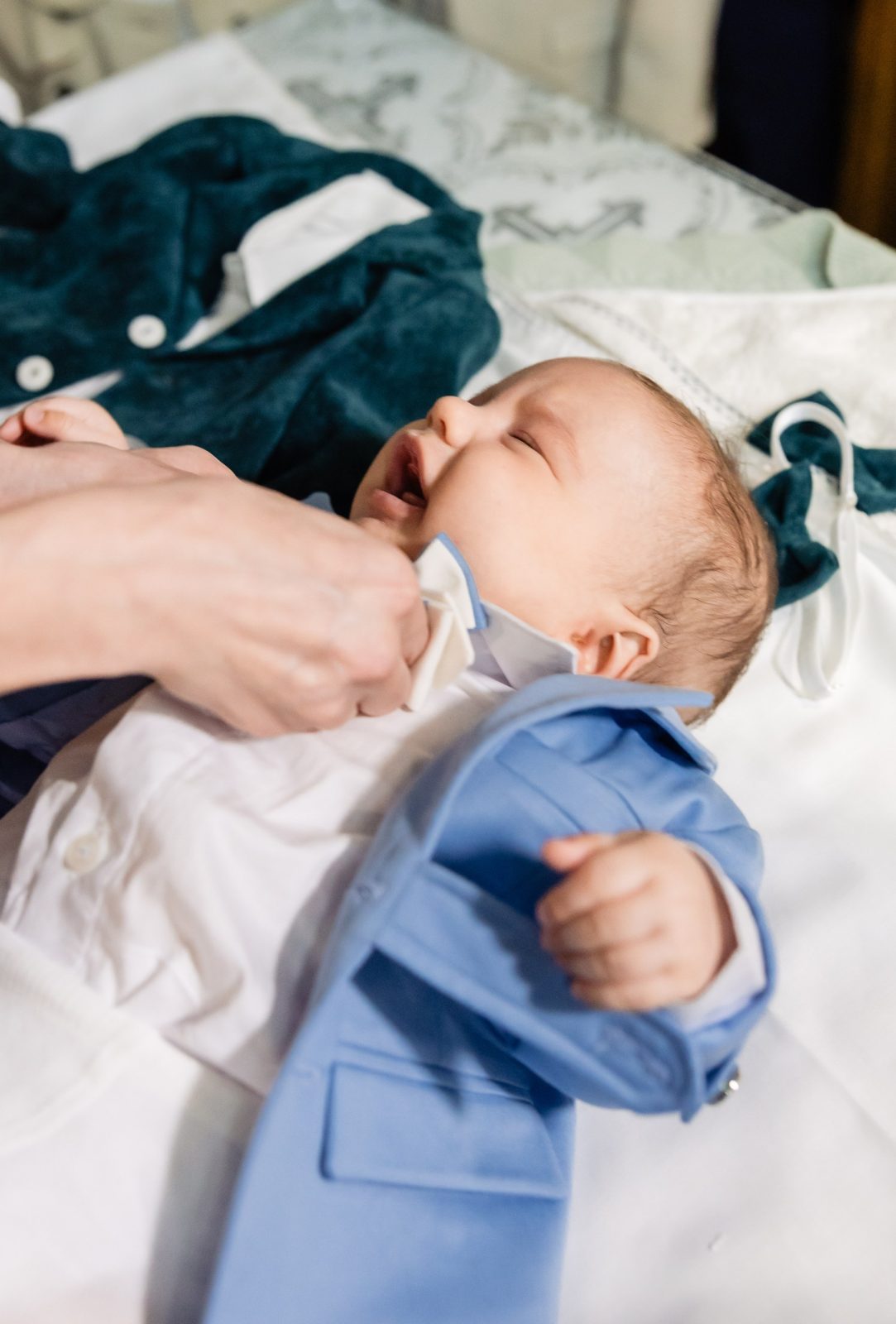
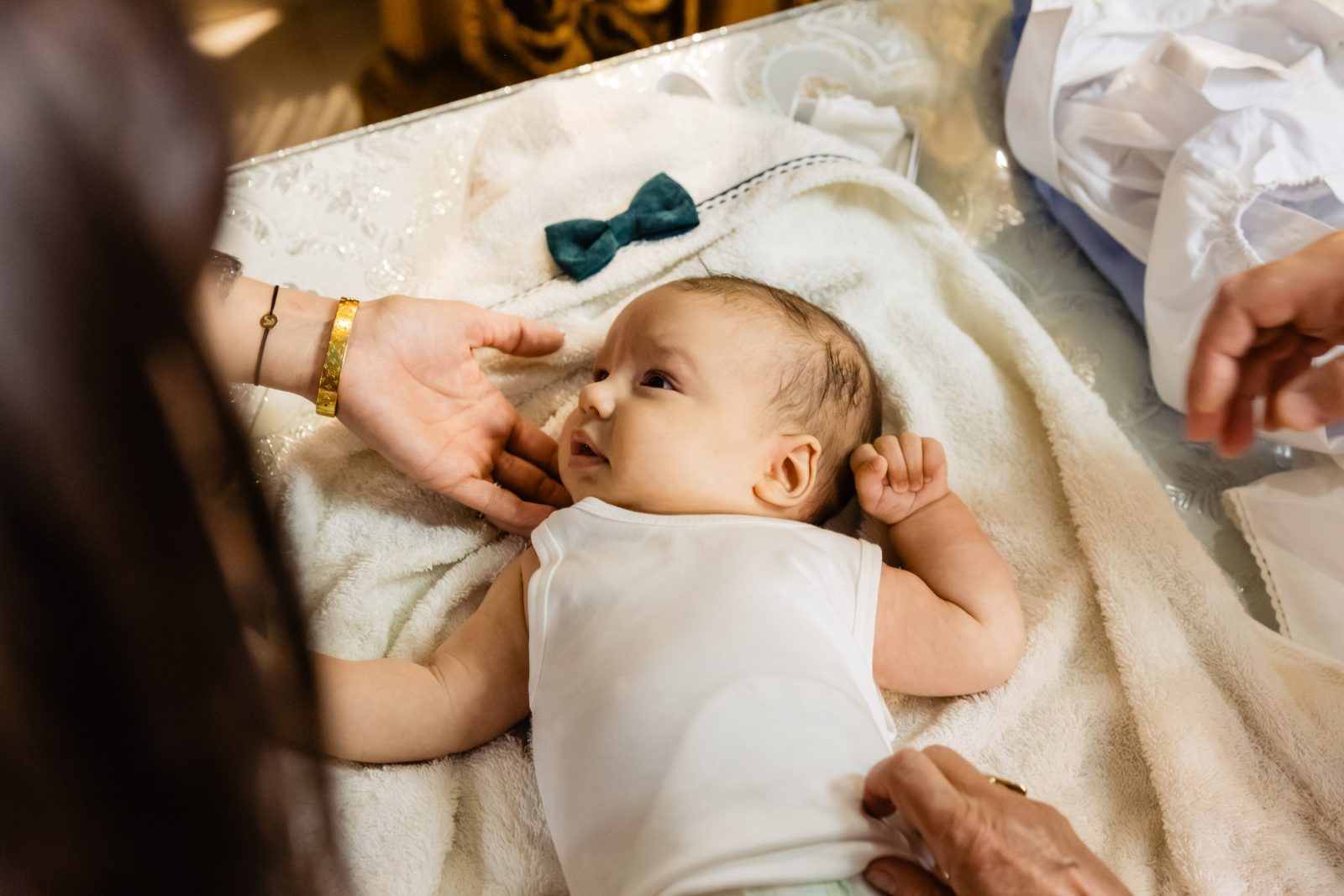
The child is then dressed in white, a sign of the purity and light received through baptism. The white christening garments symbolise a pure soul and new spiritual life, which is why the christening outfit is traditionally in pale shades.
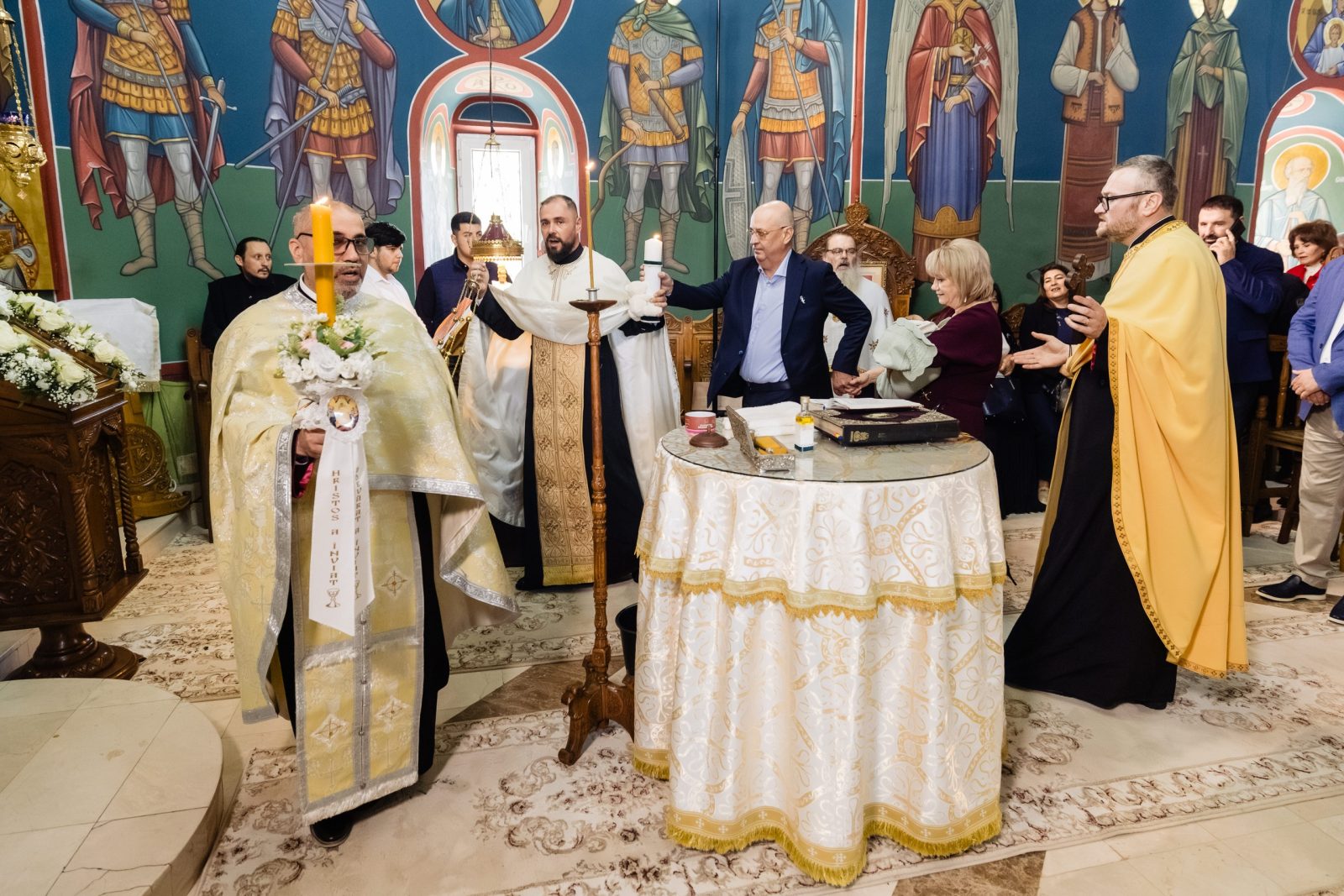
The ritual usually concludes with the child's first Holy Communion and the procession around the font, a moment of joy and thanksgiving. The priest says the final prayers, and the godparents and parents receive the blessing. From this moment on, the child is a full member of the Church community.
At the end, family and guests congratulate the little one and the godparents, and the emotion of the service gradually gives way to the joy of celebration. This is when the religious ritual intertwines with the tradition of the christening party.
In the Orthodox tradition, christening usually takes place in the first months of a child's life. The reason is both theological and practical: through baptism, the child is welcomed into the Church and placed under God's protection as early as possible, while their soul receives cleansing and the gifts of the Holy Spirit. There is no strictly prescribed age, but many families choose a time between the first and third month.
The choice of timing also depends on the child's health, the godparents' availability and the planning of the celebration. Whatever the age, the meaning of the ritual remains the same — a spiritual rebirth and entry into the Christian community, at a joyful moment for the whole family.
Before the christening, the family has a few essential things to prepare. First, the date and the church are chosen, along with the priest who will lead the service. Next come the godparents — the child's spiritual parents — and the christening set: the candle, the towels, the little white garments and the crijma (the white cloth in which the baby is wrapped after immersion).
The preparations also include choosing the venue for the celebration afterwards, the décor and the menu. Planning ahead lets the christening day unfold smoothly, leaving the family free to savour every emotion of the occasion, both at the church and at the celebration.
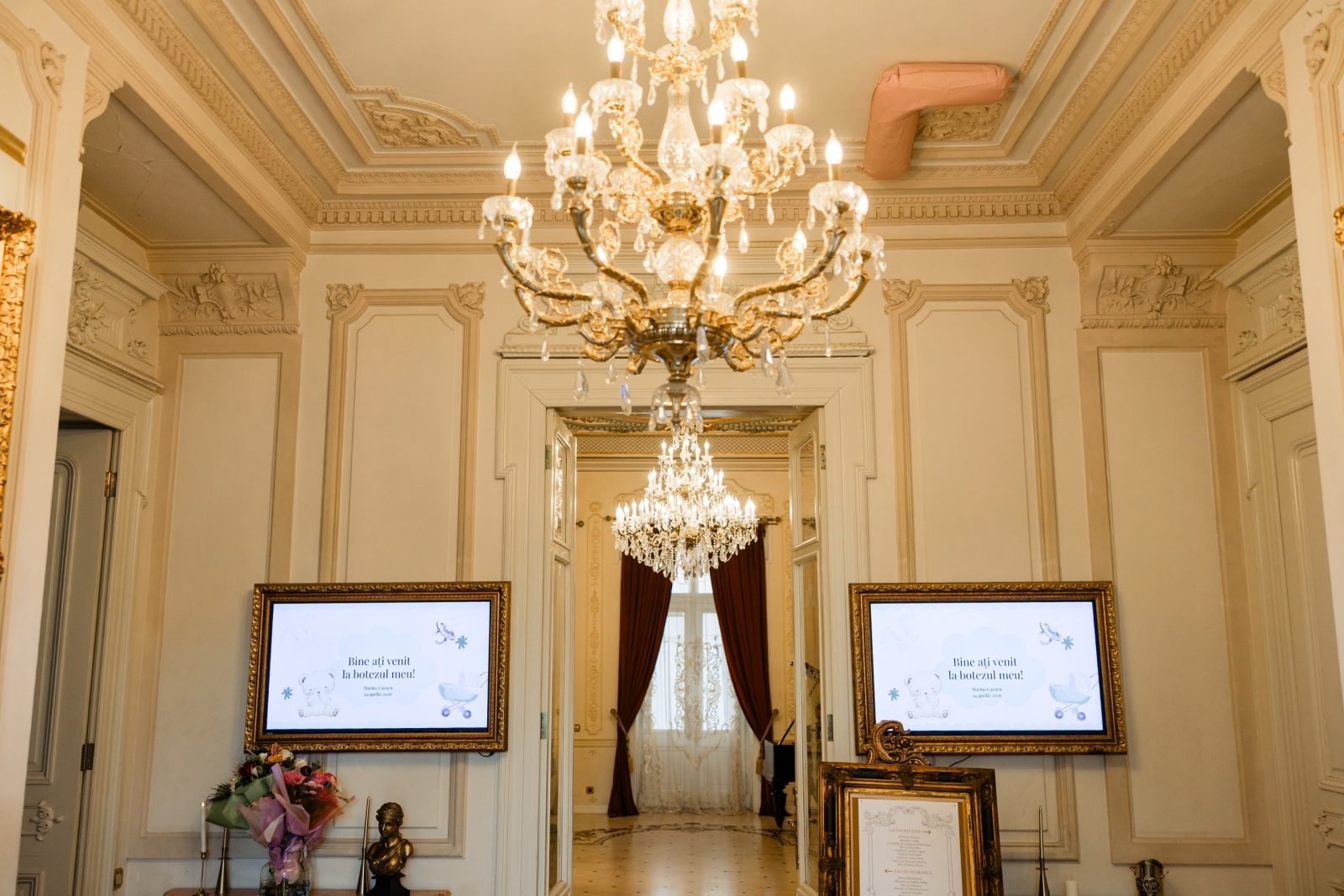
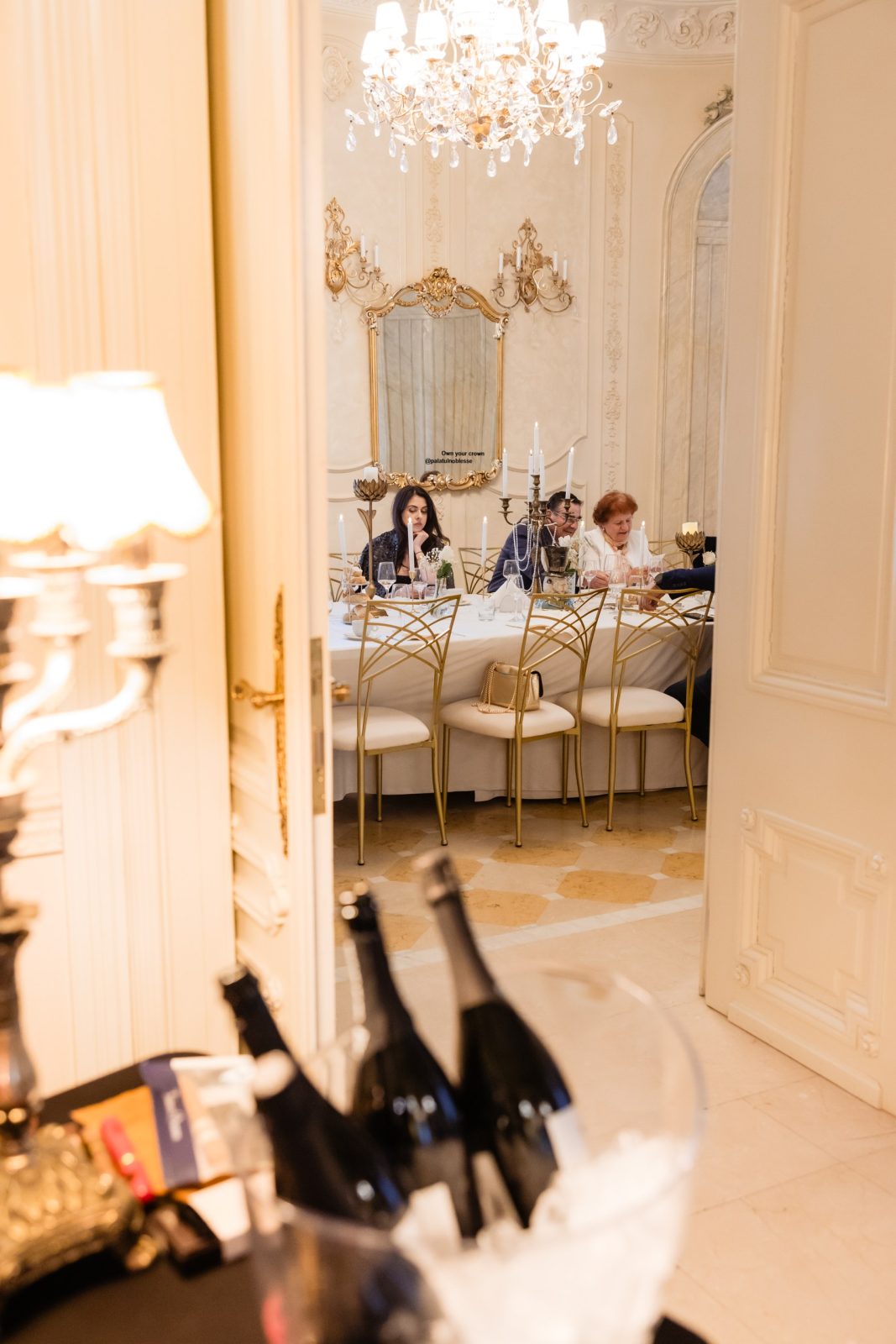
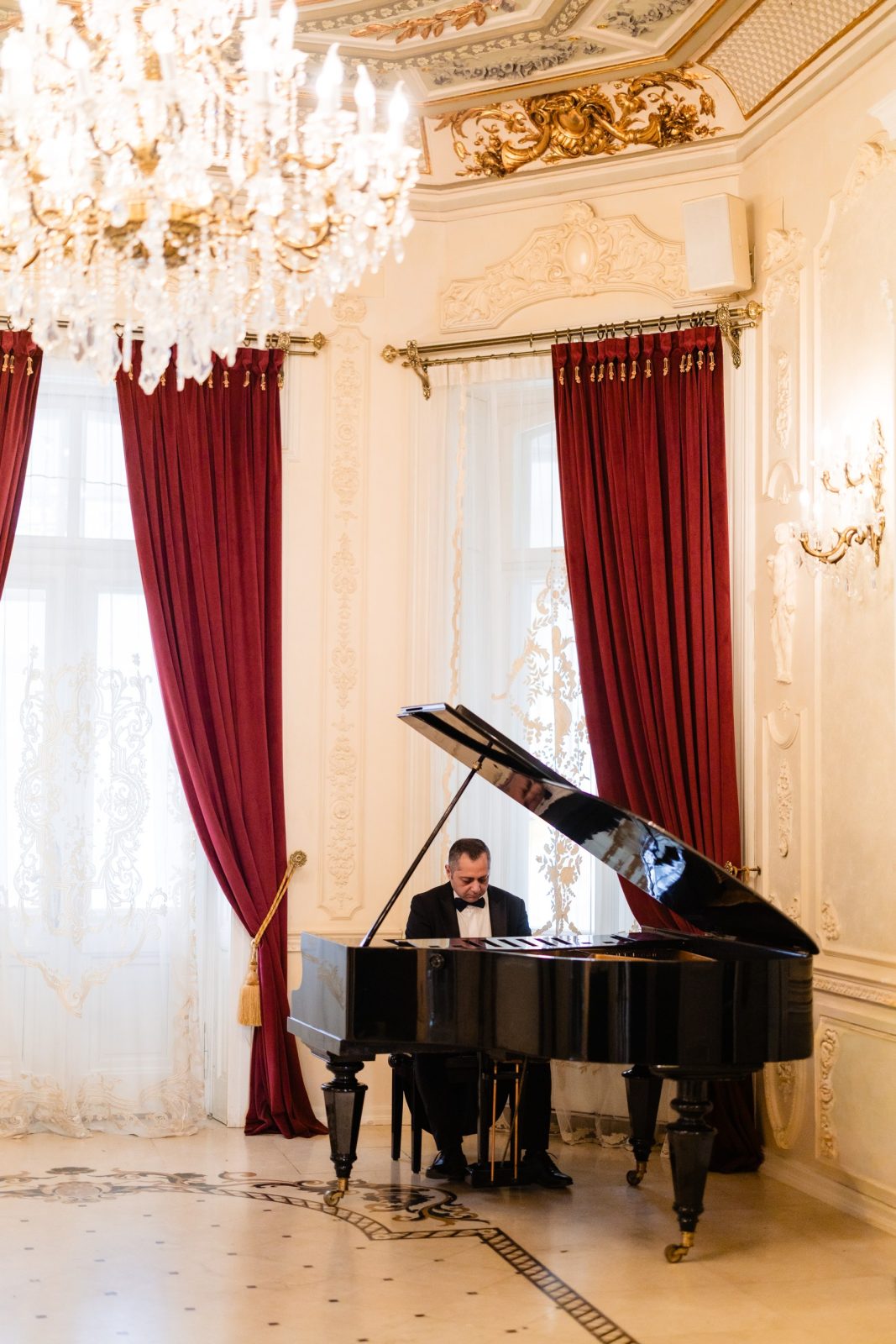
After the church service, the christening continues with a celebration in a carefully chosen setting. More and more families are choosing Palatul Noblesse, an 1881 historic monument in the heart of Bucharest, to mark this moment in elegant surroundings, with refined rooms, painted ceilings and a bohemian garden. Here, the emotion of the ritual flows naturally into an unforgettable day.
From the traditional first haircut and the guests' dancing to the culinary experience from the Palace kitchen, every detail is designed to honour both tradition and the beauty of the occasion. In this way, the Orthodox christening finds a fitting continuation — a celebration worth remembering.
A particular advantage for those who choose Palatul Noblesse is its proximity to Biserica Sfinților, just across the road on the same Strada Sfinților. This historic church, with roots going back to 1728, is the ideal place for the christening service: family and guests attend the religious ceremony and then walk just a few steps to the celebration at the Palace. The whole day — from the church ritual to the party — thus takes place practically in one spot, with no long journeys and no organisational headaches.
The main steps are: the opening prayers, the renunciation and confession of faith by the godparents, the blessing of the water, the threefold immersion in the water, the anointing with holy chrism, the cutting of the hair, the clothing in white and Holy Communion.
The three immersions symbolise the three days Christ spent in the tomb and His Resurrection, as well as the child's spiritual rebirth, cleansed of original sin.
Palatul Noblesse, an 1881 historic monument in the heart of Bucharest, is an elegant venue for a christening celebration, with refined salons, a garden and its own culinary experience.
Tell us more about your event and our team will be in touch shortly.
Request a Tailored Quote