
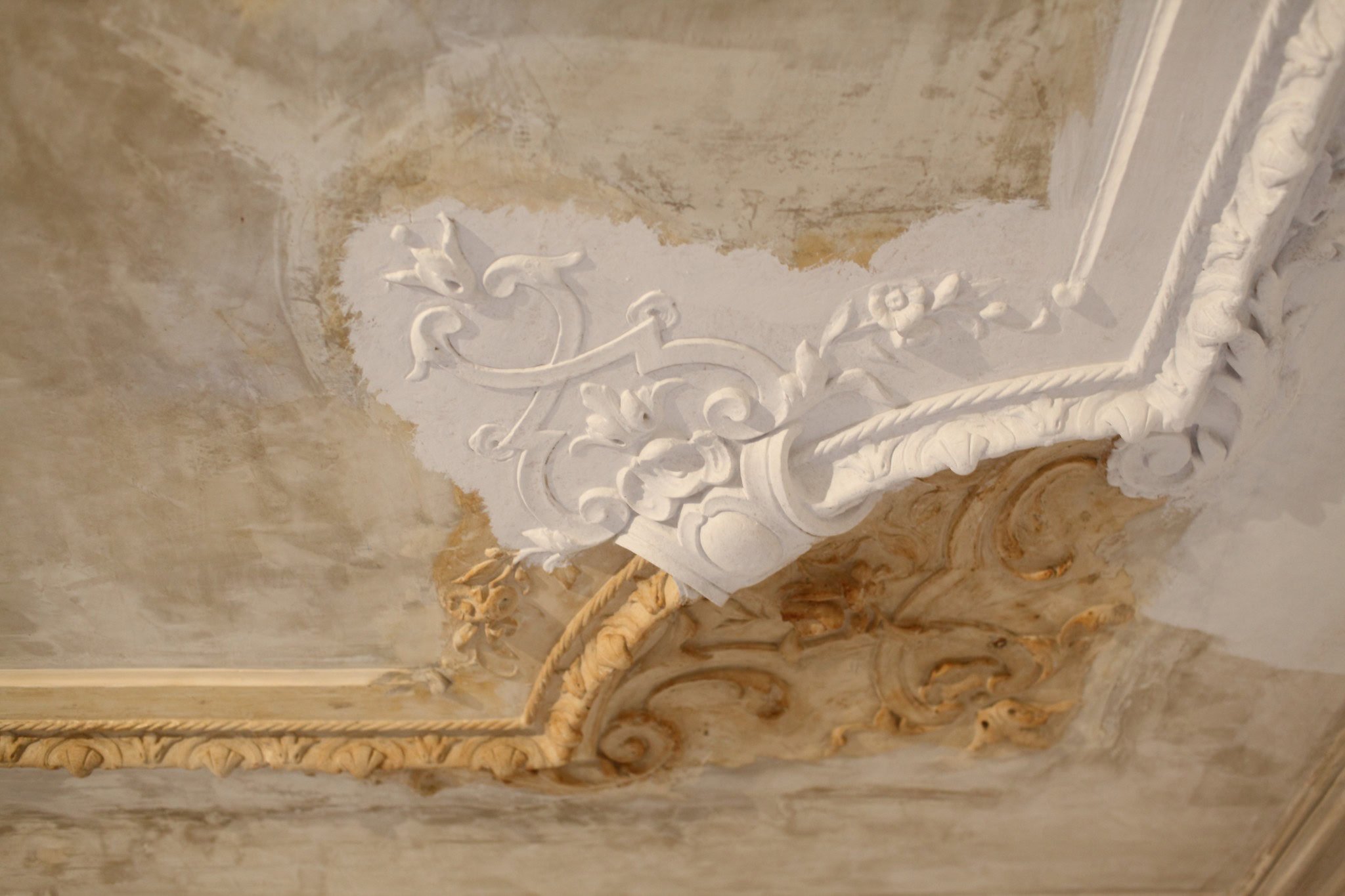
Restoring the decorative stuccowork inside Palatul Noblesse was a process of rare complexity, combining traditional craftsmanship with
Restoring the decorative stucco work inside Palatul Noblesse was a remarkably complex undertaking, blending traditional craftsmanship with modern conservation techniques. Through this work, the original architectural features have been brought back to life, helping to preserve the building's authenticity and showcase its cultural heritage.
Stucco work comprises architectural decorative elements made from plaster, lime and plant fibre, applied or cast to create relief ornaments on ceilings, walls and door or window surrounds. These details, often found in Baroque, Neoclassical, Rococo and Eclectic styles, define the aesthetic character of a building.
Used since Antiquity and perfected during the Renaissance, stucco adorned palaces and aristocratic residences, becoming a symbol of refinement. Today it is regarded as decorative heritage and requires specialist restoration to be preserved authentically.
During the restoration of Palatul Noblesse, original interior plasterwork was discovered, made from hemp-reinforced plaster. It included floral and geometric ornaments characteristic of the period. To preserve the architectural balance, new plaster mouldings inspired by the historic designs were added, maintaining the stylistic coherence of the rooms.
Every room in the palace is decoratively unique, featuring different plasterwork designs in which floral and geometric motifs intertwine.
As part of the extensive restoration led by Noblesse Group, a team of specialists painstakingly rediscovered and restored original stucco work characteristic of the eclectic style of the late 19th century. Crafted from hemp-reinforced plaster, these decorations, with their botanical and geometric motifs, capture the refined spirit of the age and the skill of the craftsmen of old. In some rooms, the original ceiling stucco is complemented by trompe-l’œil murals, lending the space an elegant theatricality typical of aristocratic residences.
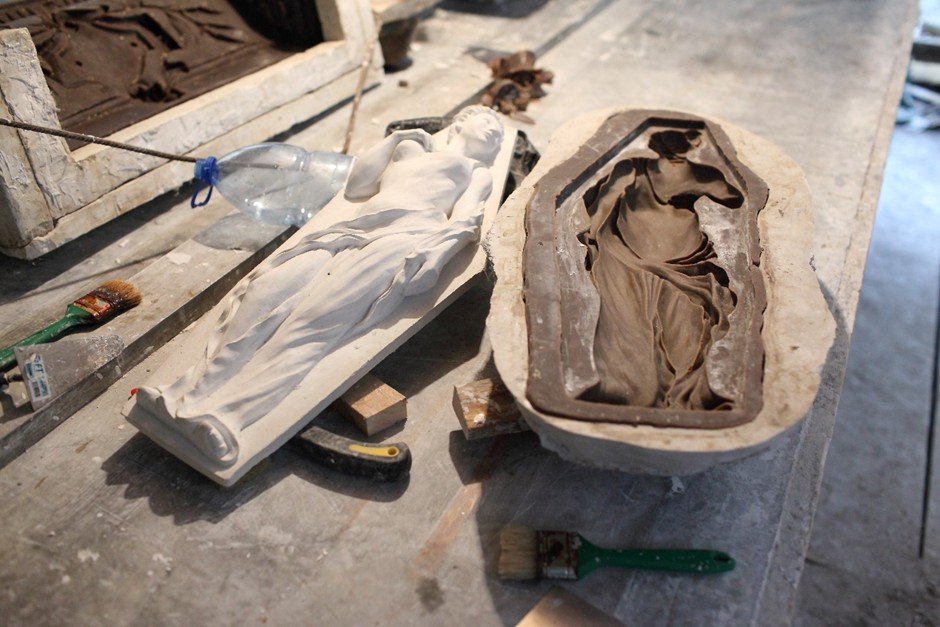
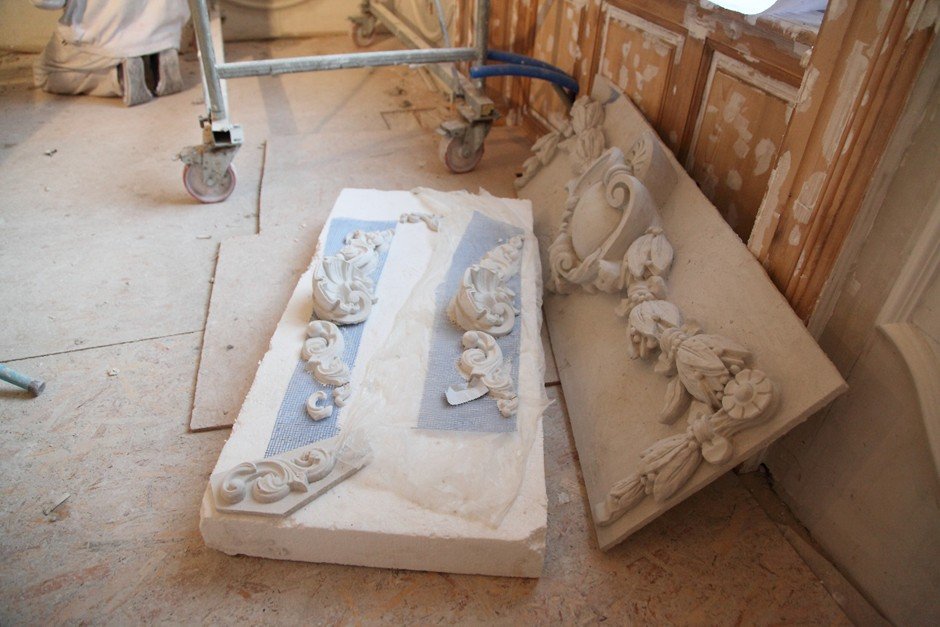
To preserve the decorative harmony, casts were taken from the original mouldings and complemented by new profiles and ornaments inspired by historical research. Every room in Palatul Noblesse is unique, not only in purpose but in artistic expression: the Baroque Salon impresses with its gilded stucco and central painting, the Florence Room retains its Louis XV-style stucco, while the French-style foyer is adorned with elegant classical details typical of Parisian architecture.
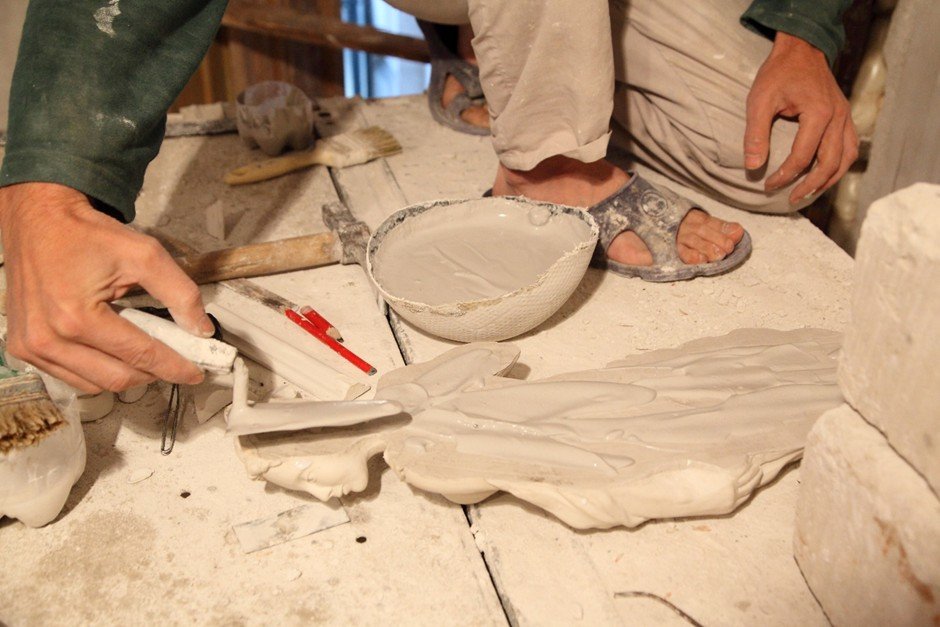
The restoration of these decorative plaster mouldings was carried out by hand, stripping them back layer by layer, then filling, sanding and faithfully reconstructing each one. Every restored ornament thus becomes a link between past and present, between historic decorative tradition and a contemporary expression of refinement.
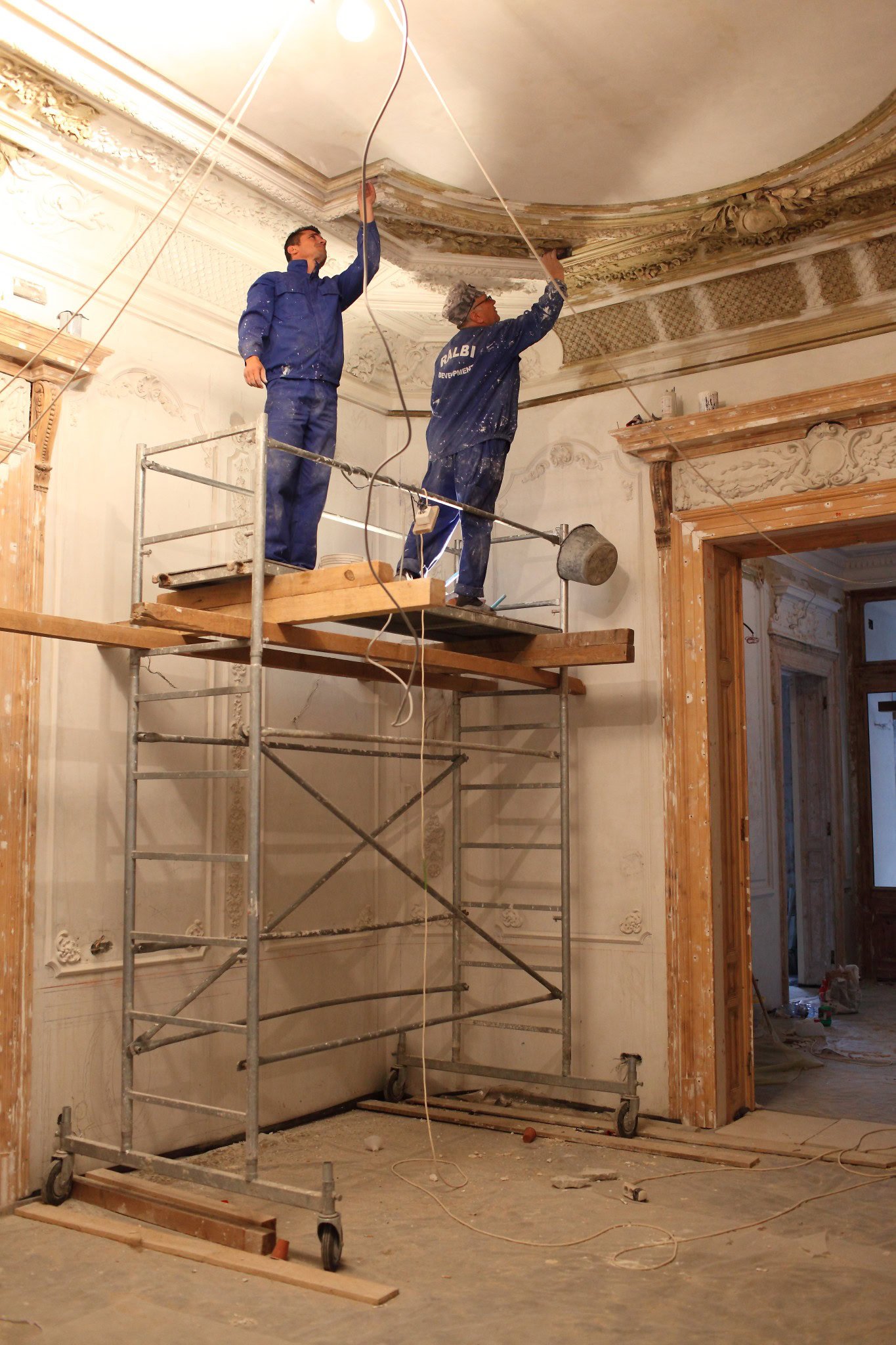
Out of deep respect for history and authenticity, the restoration workshop was set up within Palatul Noblesse itself, or in a space created specially in its courtyard. This intimate, refined setting allowed every piece of stucco work to be carefully restored right beside the place where it belongs. In this sanctuary of craftsmanship, the details came to life once more, and the dialogue between the artisans and the architecture was constant and organic. The work unfolded under the silent gaze of the old walls, in perfect balance between tradition and excellence, preserving the artistic coherence of every room.
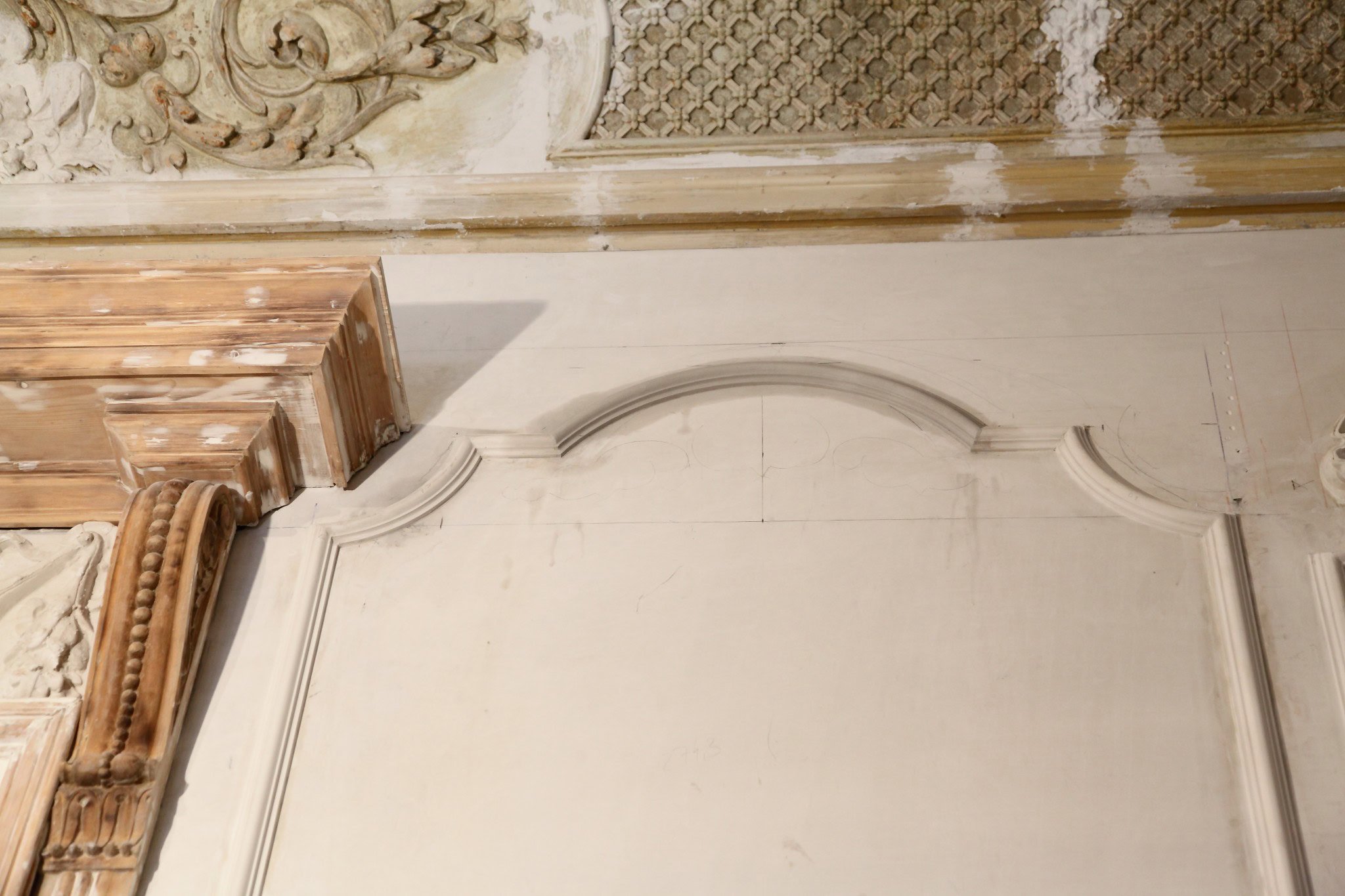
The restoration of the stucco work at Palatul Noblesse is a fine example of best practice in the conservation of architectural heritage. Every ornament has been treated with care and respect, so that the finished result reflects both the building's original beauty and its historic value. The palace has thus regained its former splendour, becoming a benchmark of elegance and quality restoration within Bucharest's architectural landscape.
Tell us more about your event and our team will be in touch shortly.
Request a Tailored Quote