
It is said that values have a mysterious way of intersecting, easily finding their point of confluence even when circumstances are against them. As an expression of art, literature has, over the cour…
It is said that values have a mysterious way of intersecting, finding their meeting point with great ease, even when circumstances are against them. As an expression of art, literature has over time followed winding paths towards the fulfilment of the creative act, yet this challenge has never discouraged the devotees of a world of gracefully woven words; rather, it has added value to their endeavours.
Time, in its mysterious way, or perhaps chance, is ‘to blame’ for the moments when truly remarkable people have made their presence felt across the centuries. And so it was that, while Bucharest’s high society was savouring the ambrosia of the Belle Époque to the full, Mircea Eliade was born in a modest suburb. The event might have gone unnoticed, and his mark on history might long since have faded, had his gift not ‘condemned’ him to immortality in a manner that proved historic for the complex world of religious studies.
Mircea Eliade is one of the most representative figures of Romanian literature and, indeed, of world literature. His work reached its international peak with the celebrated History of Religious Ideas, yet his activity was never confined to the study of religion alone: he also made his mark as a writer of fiction, a philosopher and a professor (at the University of Chicago). The author of more than 30 scholarly volumes, literary works and philosophical essays translated into 18 languages, as well as some 1,200 meticulously researched articles and reviews on an extraordinarily wide range of subjects, Mircea Eliade is the father of a genuine literary movement rooted in the comparative study of religions.
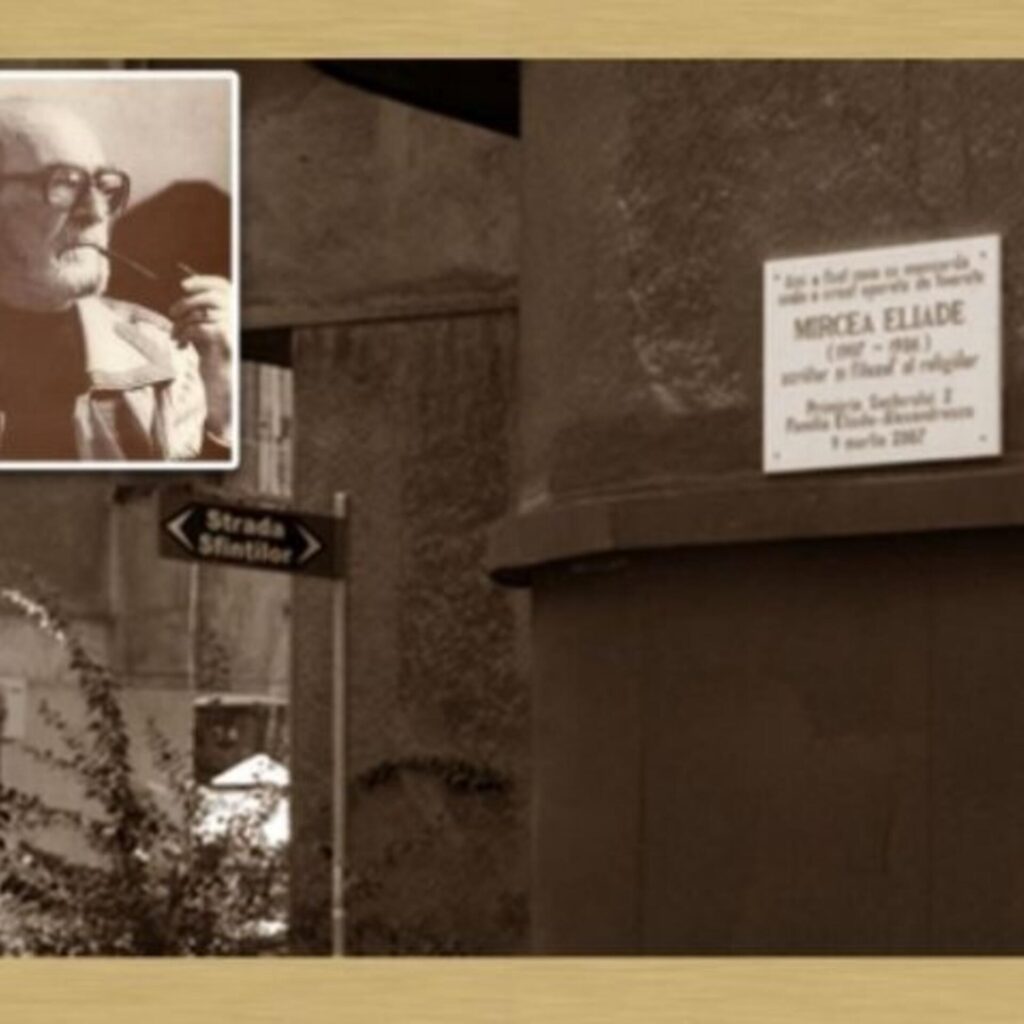
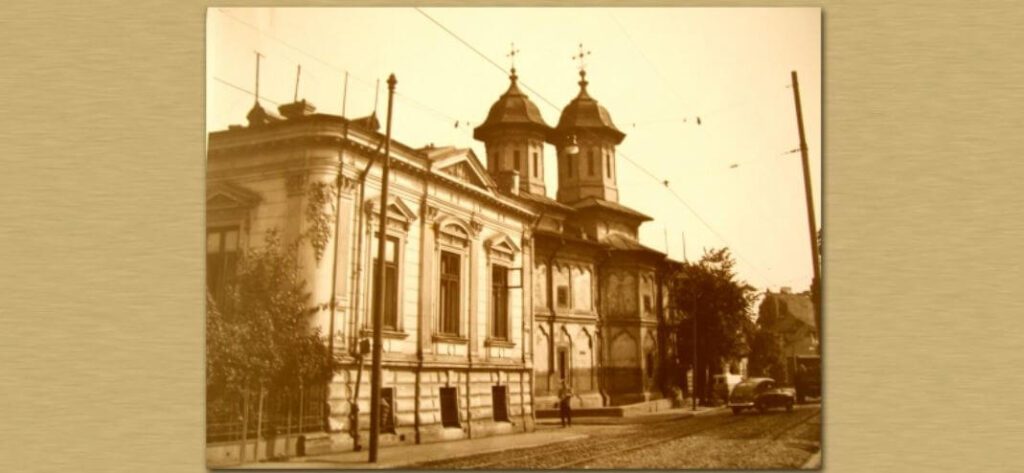
From 1914 the family lived near Piața Rosetti, settling in a building at the junction of Strada Sfinților and Strada Radu Cristian. This place left a notable mark on the character and style of the future writer. The nearby little Church of the Saints and the simple yet tradition-rich way of life typical of the period would lay the foundations for the ideas from which the author's most complex work would later grow.
It was here that, despite his father's deep concern that he was endangering his already poor eyesight, he read with passion, quite literally "devouring" the great titles of world literature. It was also here, in 1925, that Mircea Eliade completed his debut work, the autobiographical Novel of the Short-Sighted Adolescent. "Life is lived forwards, and I write what has been lived," notes the novel's hero somewhere, a young secondary-school pupil who sets out to write a chronicle of adolescence like none written before.
Although life's paths would carry him all the way to Chicago, whose University he taught at in the final years of his life, no one can deny that the places where we take our first steps in shaping who we are leave an echo that resonates beyond time and space. This is just one of the reasons we are proud that, although Palatul Noblesse stands on such a small street, tucked away from the bustle of everyday life, its value transcends the bounds of time and place.
Tell us more about your event and our team will be in touch shortly.
Request a Tailored Quote