
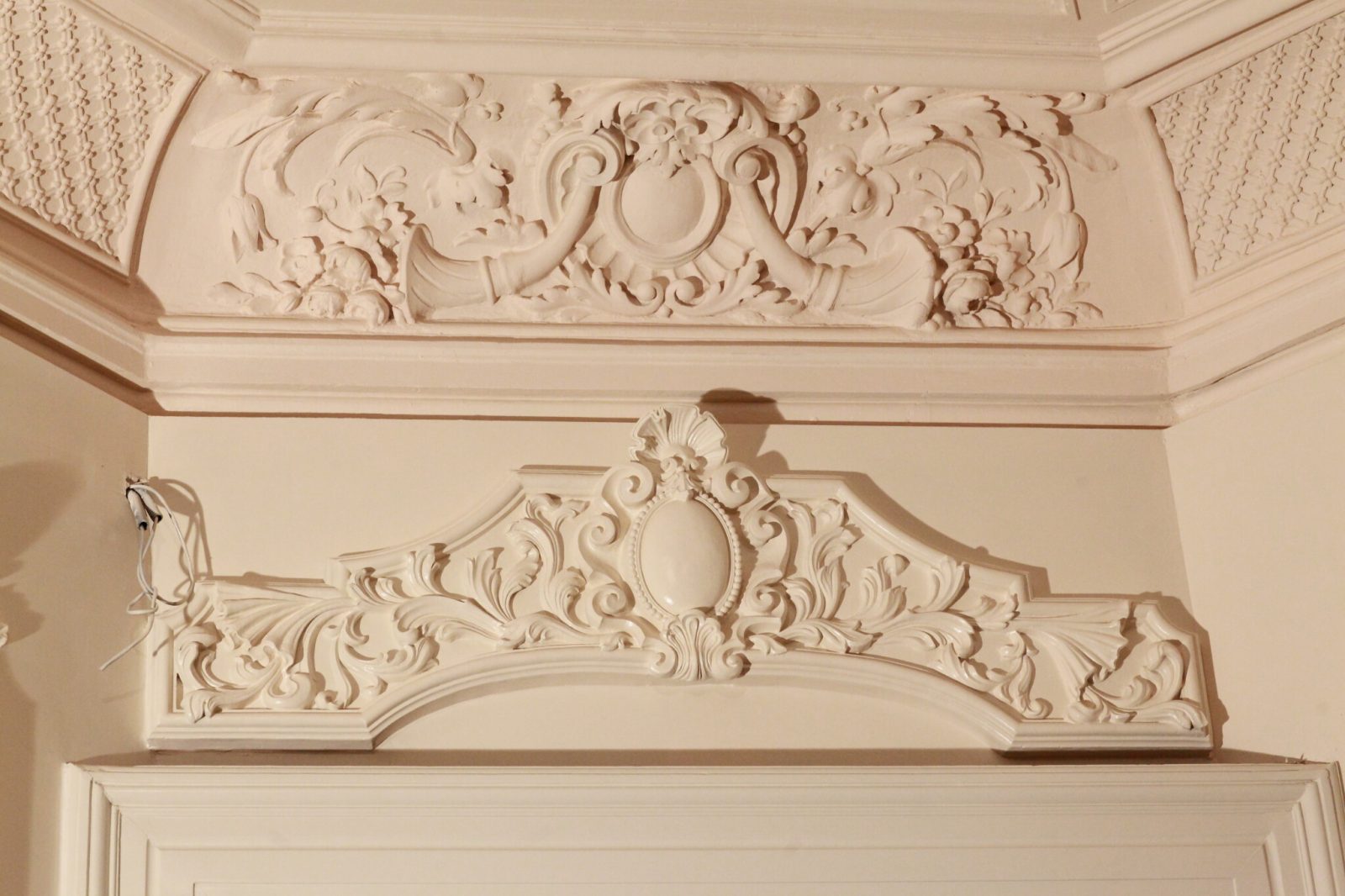
Stucco restoration at Palatul Noblesse — original plaster ornaments brought back to life in the Palace workshop, overseen by the Preda family and the Noblesse Group architects.
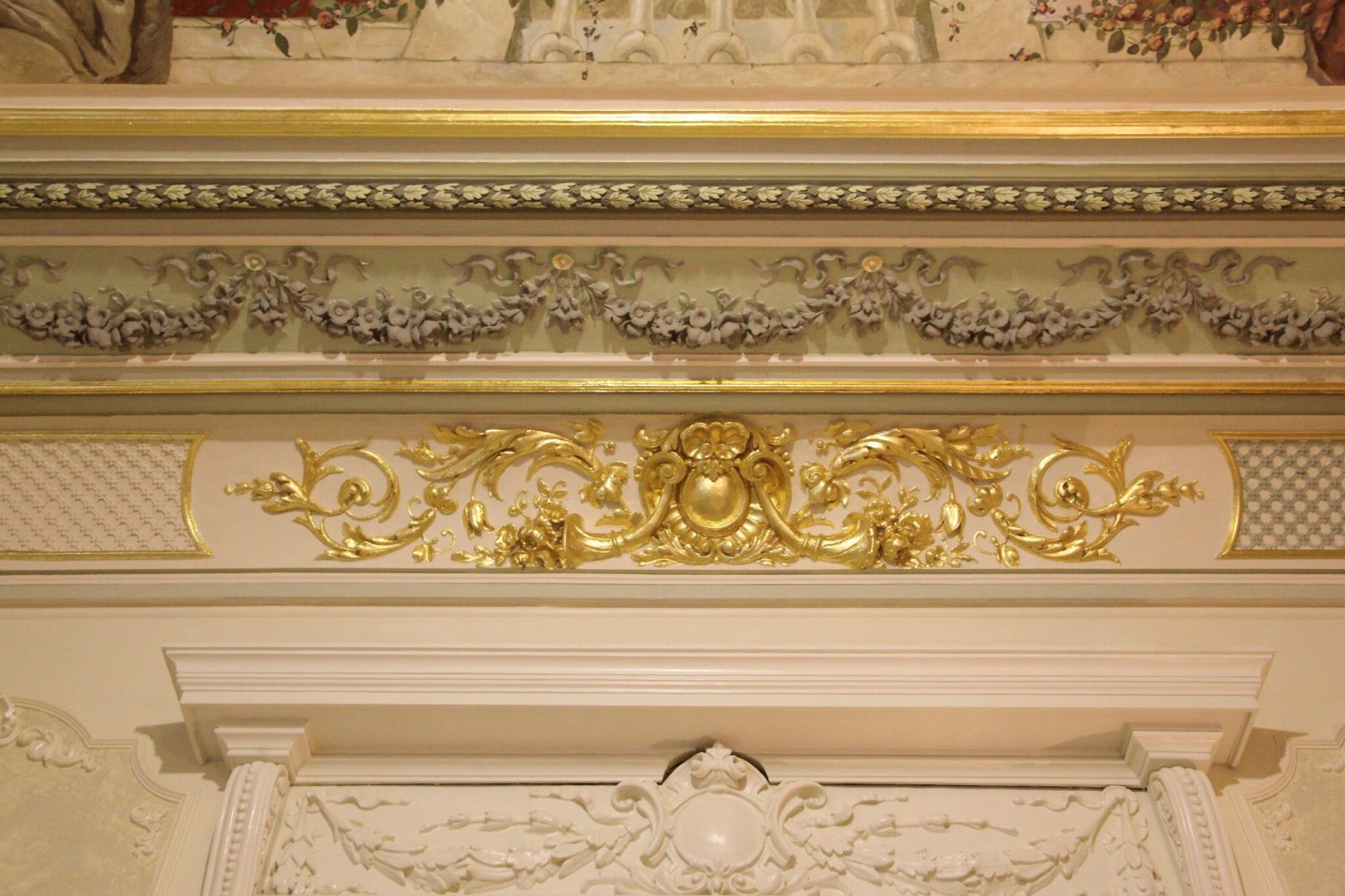
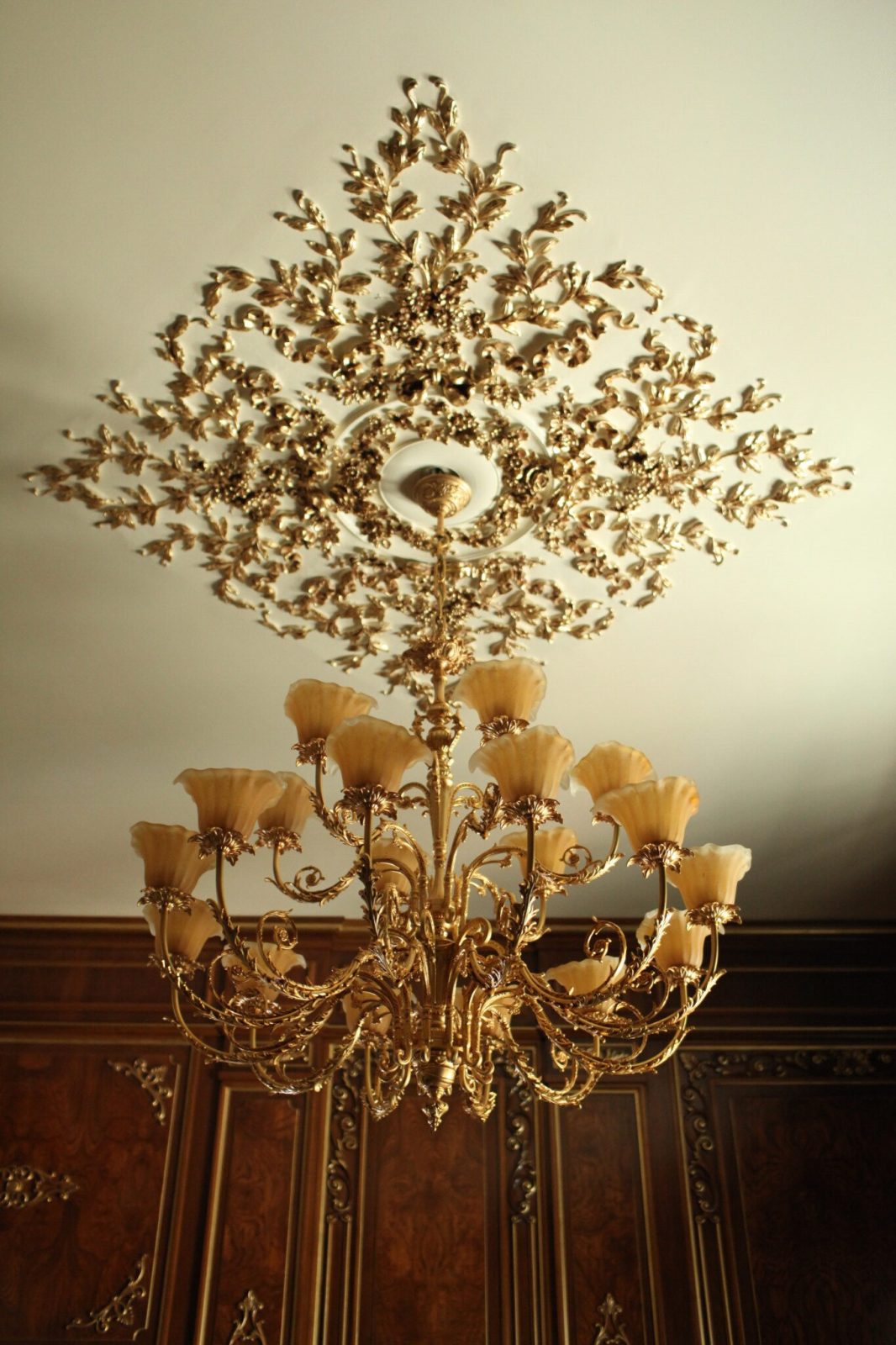
Restoring the stuccowork was one of the most delicate stages in bringing Palatul Noblesse, a historic monument dating from 1881, back to life. Stucco is a fine plaster-based mixture used to decorate walls and ceilings; at the Palace, the original ornaments — both floral and geometric — were recovered, catalogued and restored piece by piece.
The restoration project was led by Loredana and Silviu Preda, owners of the Palace since December 2012, together with the team of architects at Noblesse Group, in which the Italian restoration architect Alessandro Lussito played a key role. The result: today every room abounds in beautifully crafted stuccowork, just as it did a century and a half ago.
In 2012, the house at No. 7 Strada Sfinților was “a beauty hidden beneath crumbling walls”. Loredana and Silviu Preda took it on and led an extensive programme of consolidation and restoration, together with the architects at Noblesse Group. For the stucco work, the vision of architect Alessandro Lussito was essential — he describes the experience of the Palace “as the Italian Renaissance”, captivated, on first stepping inside, “by the hidden beauty of the decorative elements”.
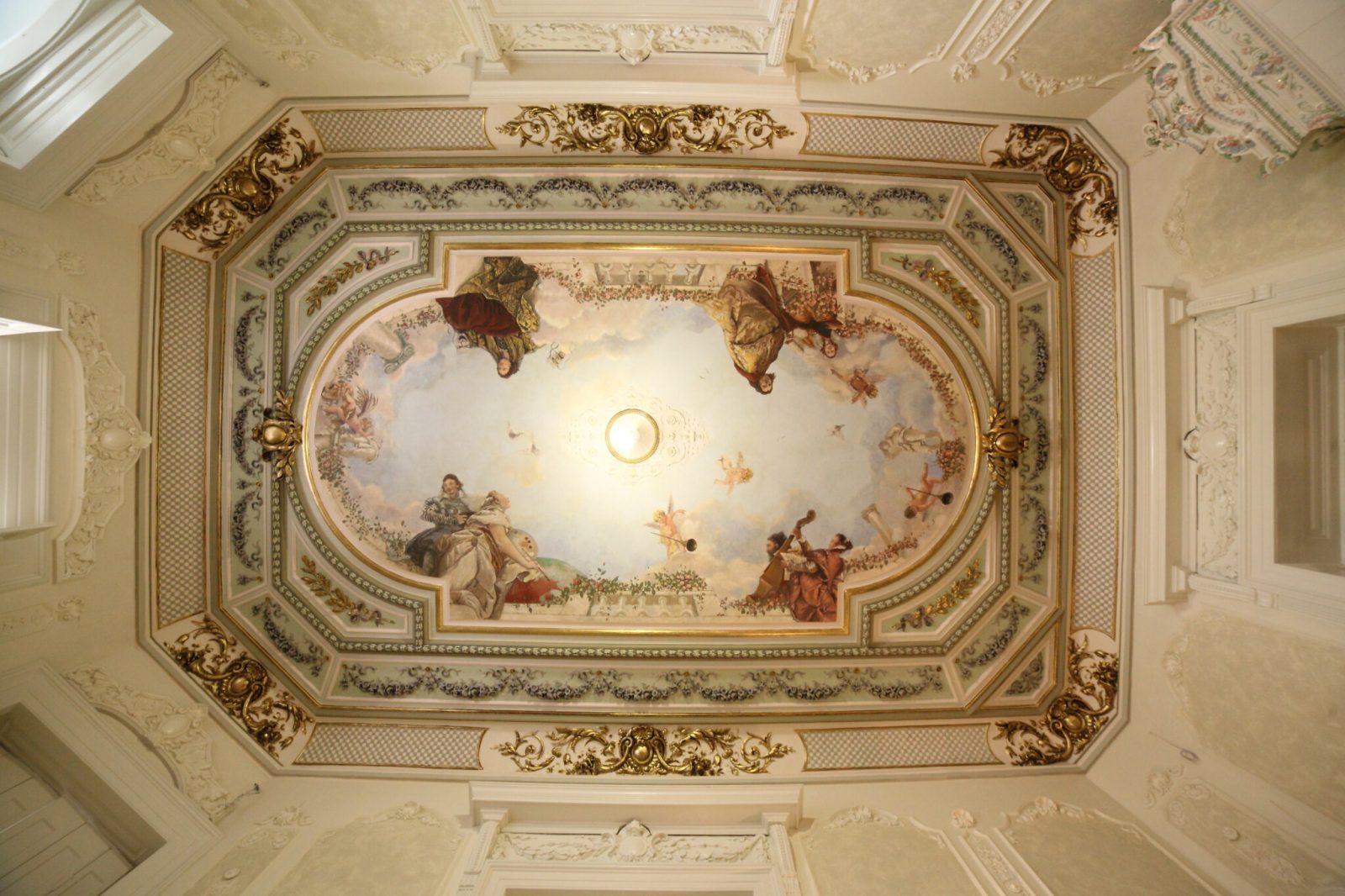
The prevailing style of the ornamentation is Baroque, within an eclectic ensemble typical of 19th-century Bucharest. The technique belongs to the tradition of classical stucco work (including Stucco Veneziano), while the painted ceilings use trompe l'œil to create volume and depth. The full story of the restoration is told in the Palace's album-book, “A fost cândva, în mahalaua Sfinților din București” (Once upon a time, in the Sfinților quarter of Bucharest).
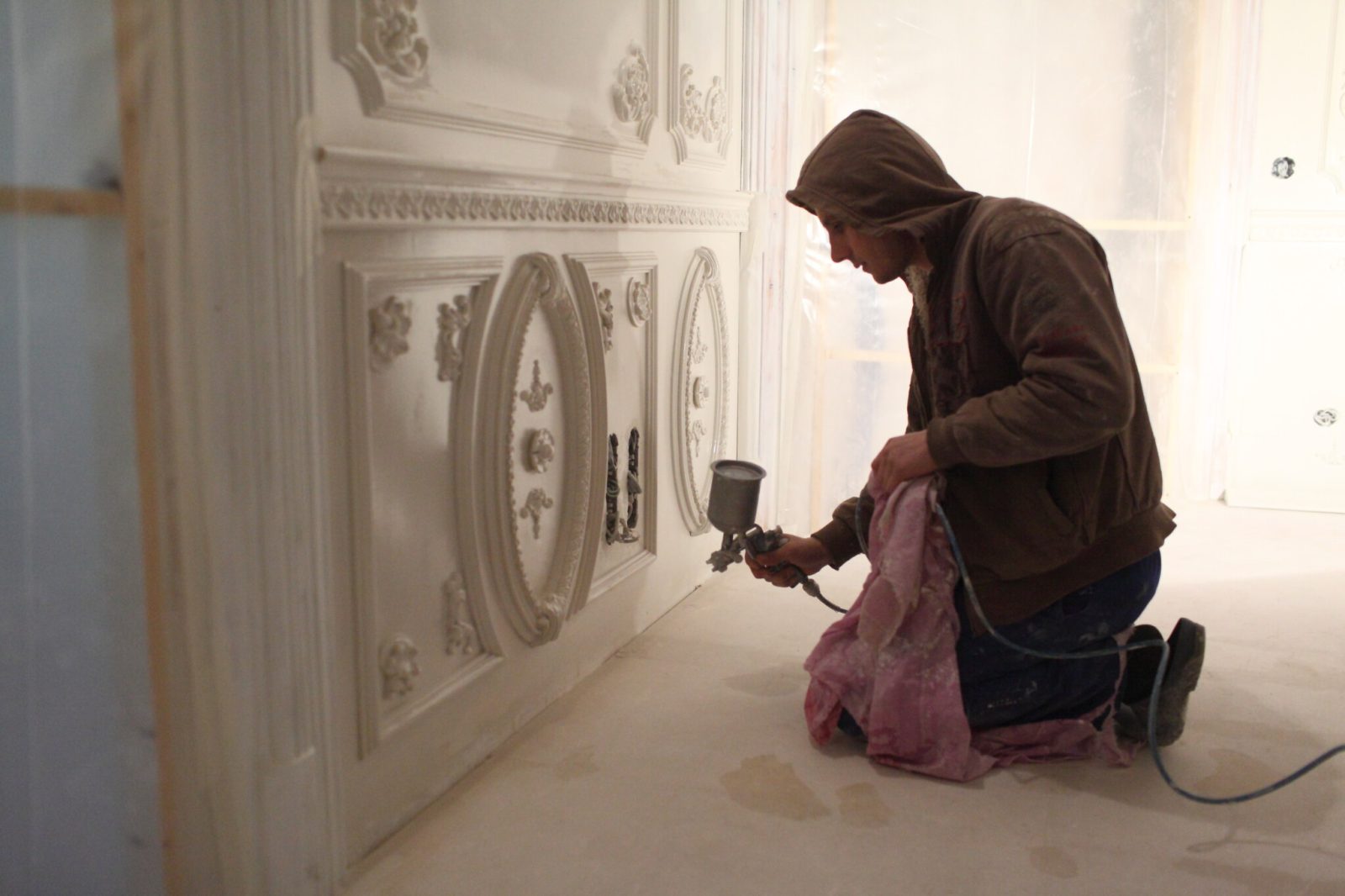
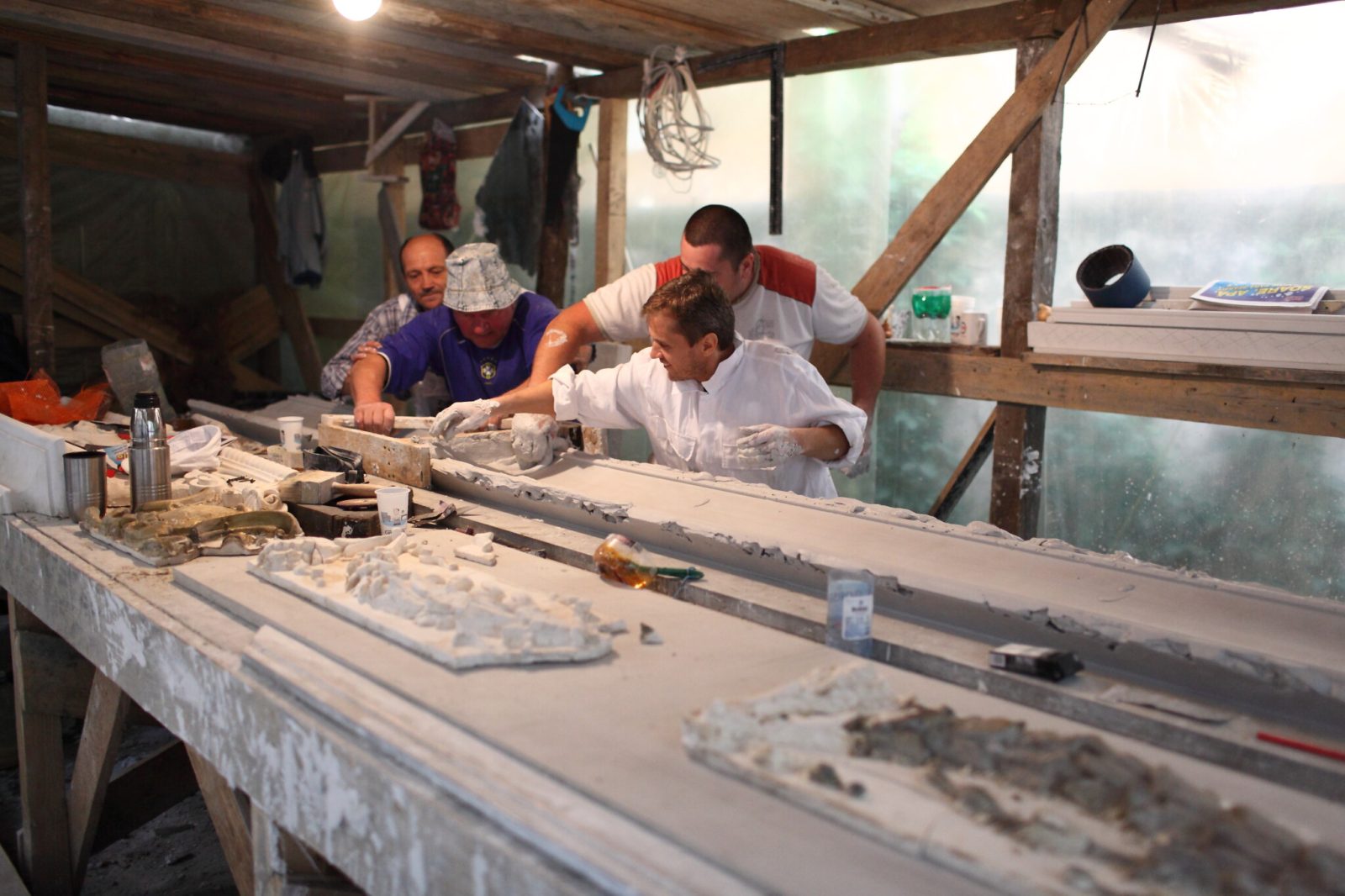
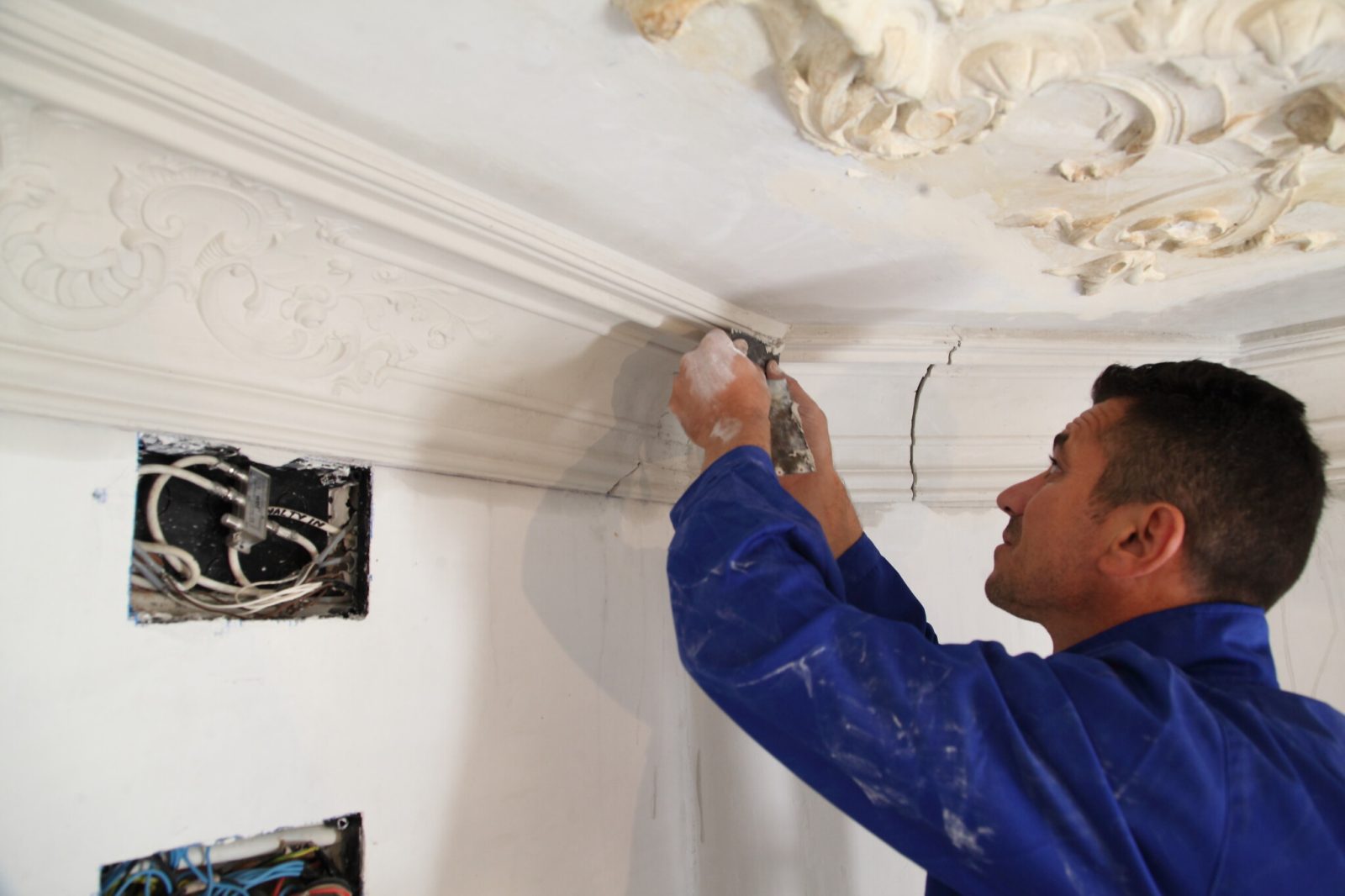
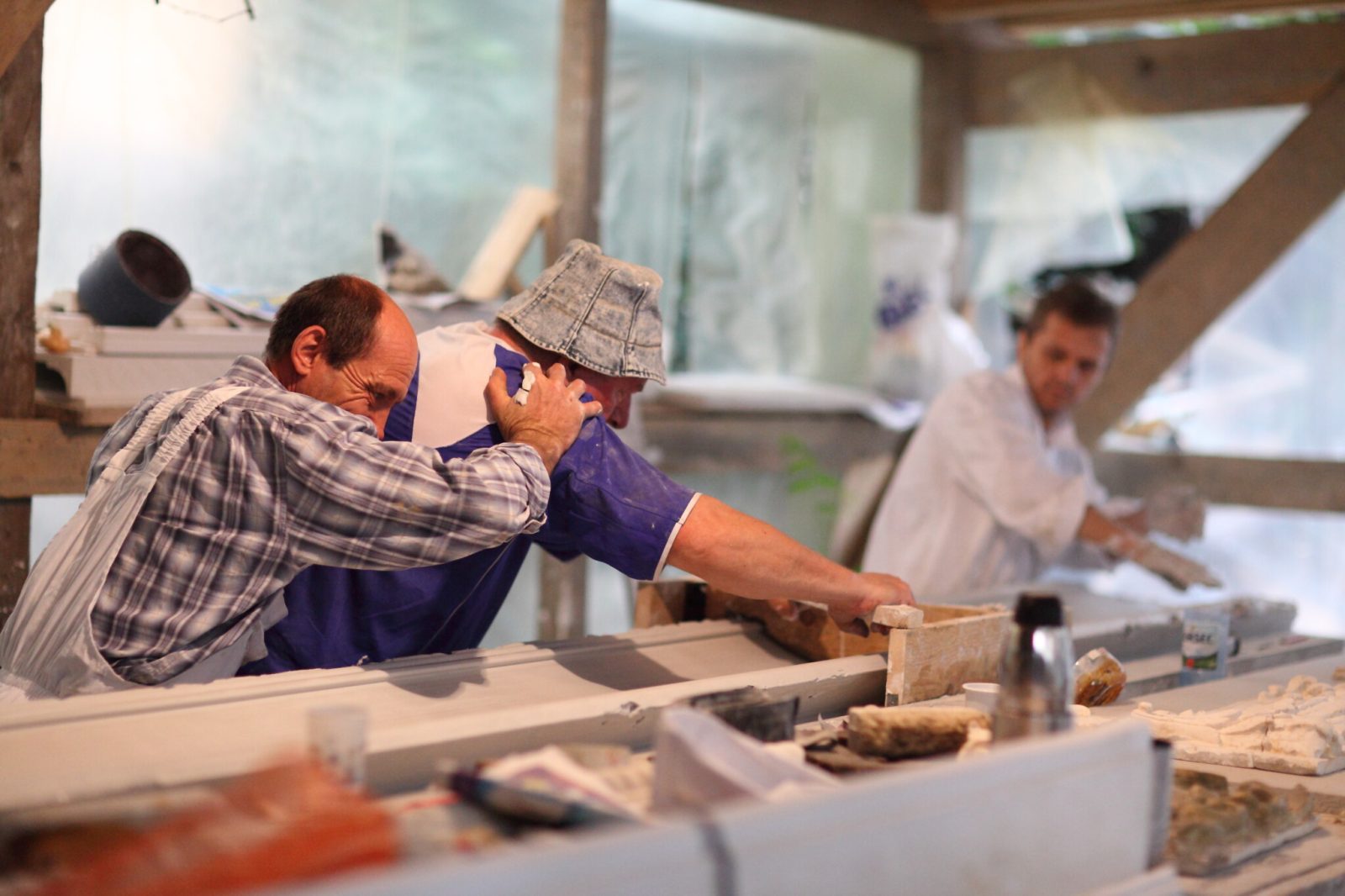
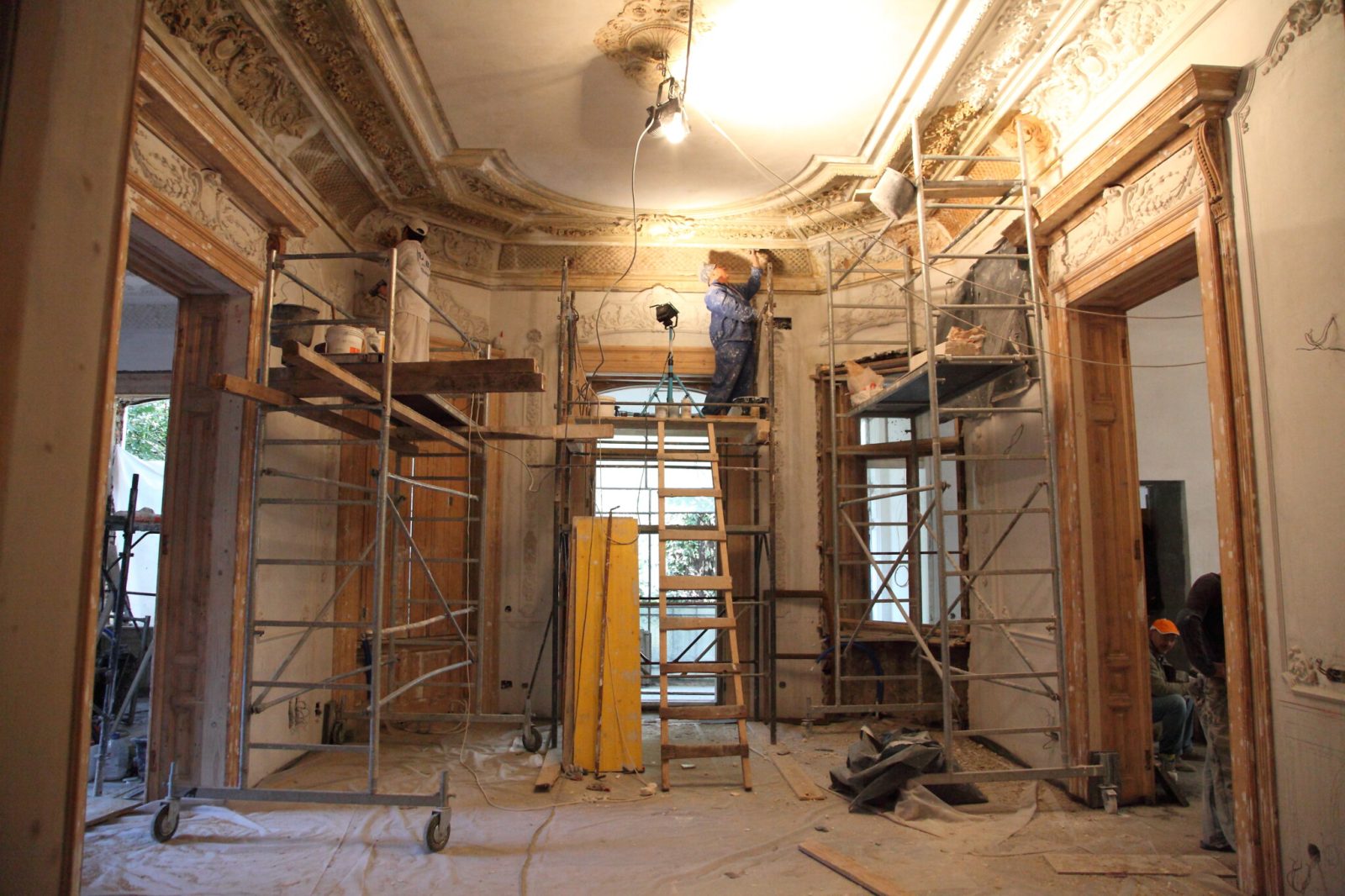
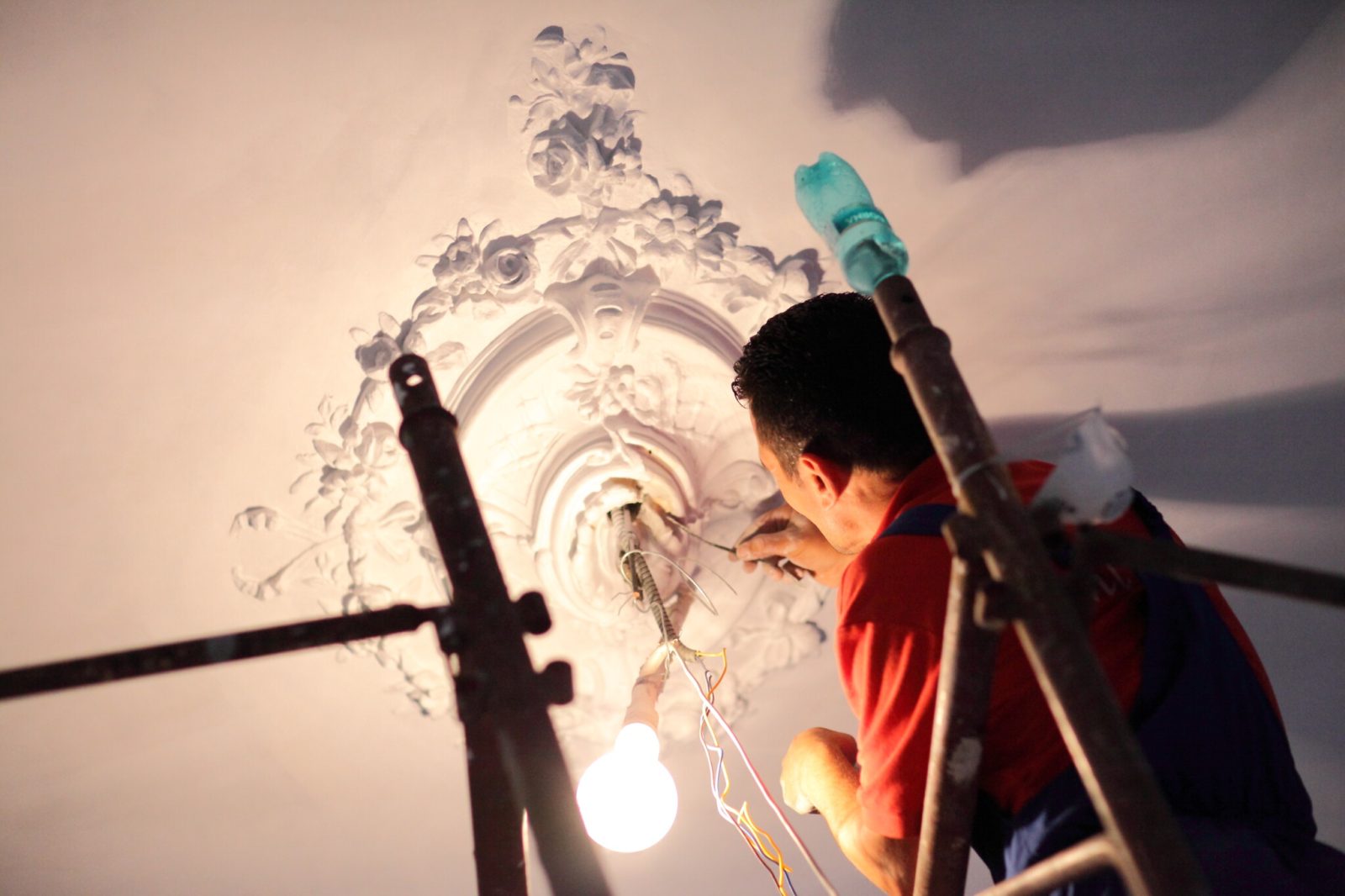
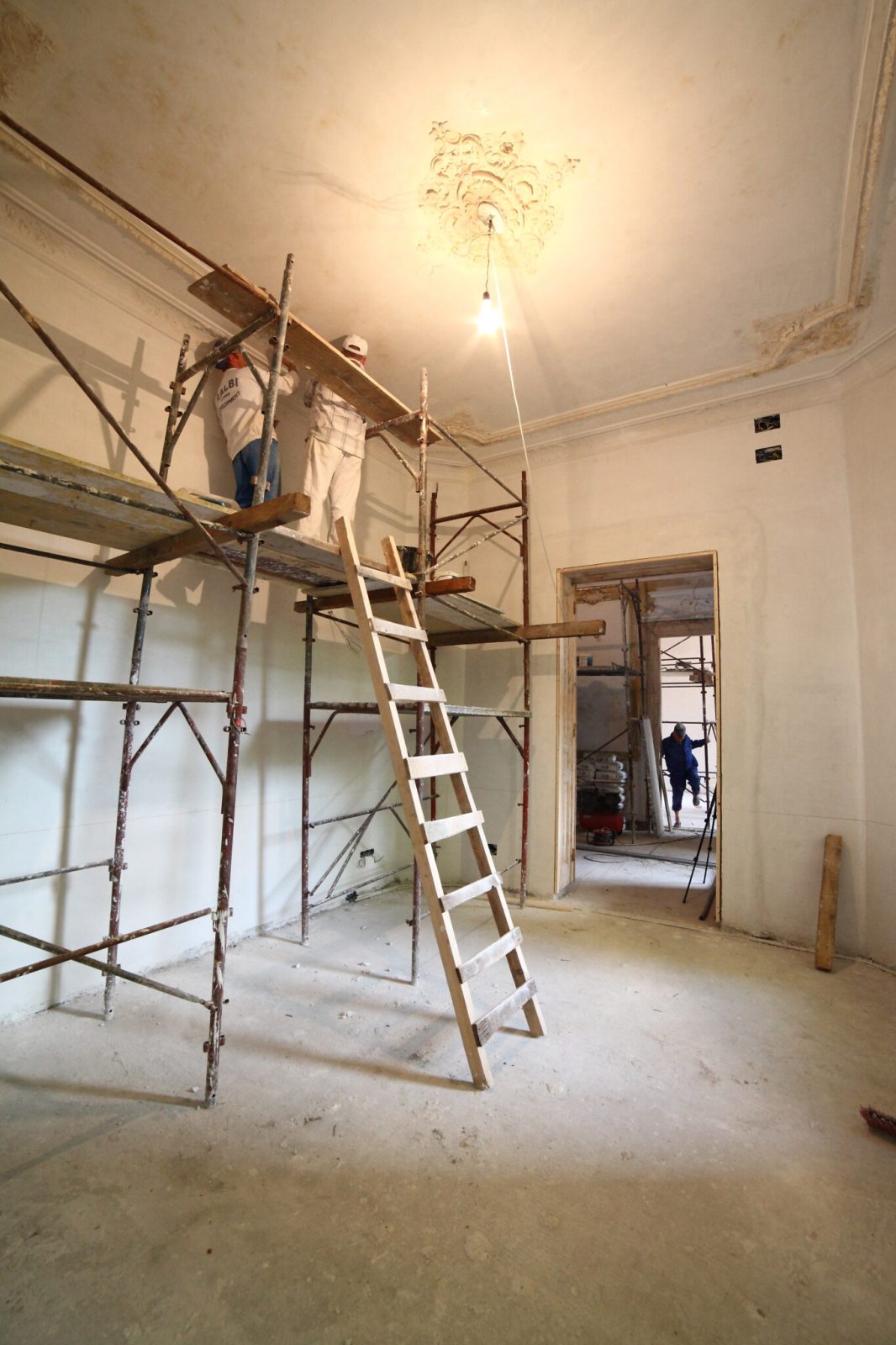
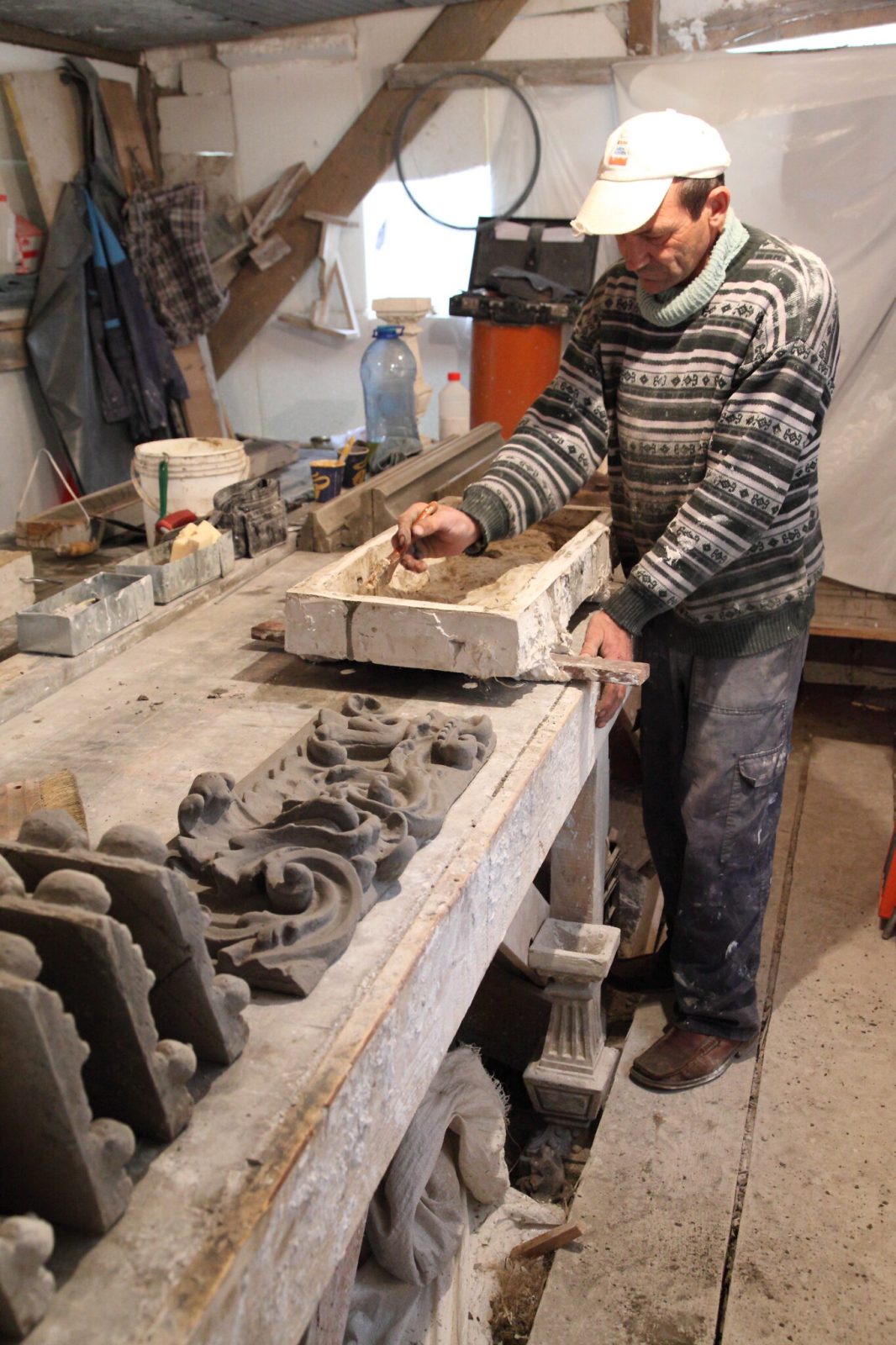
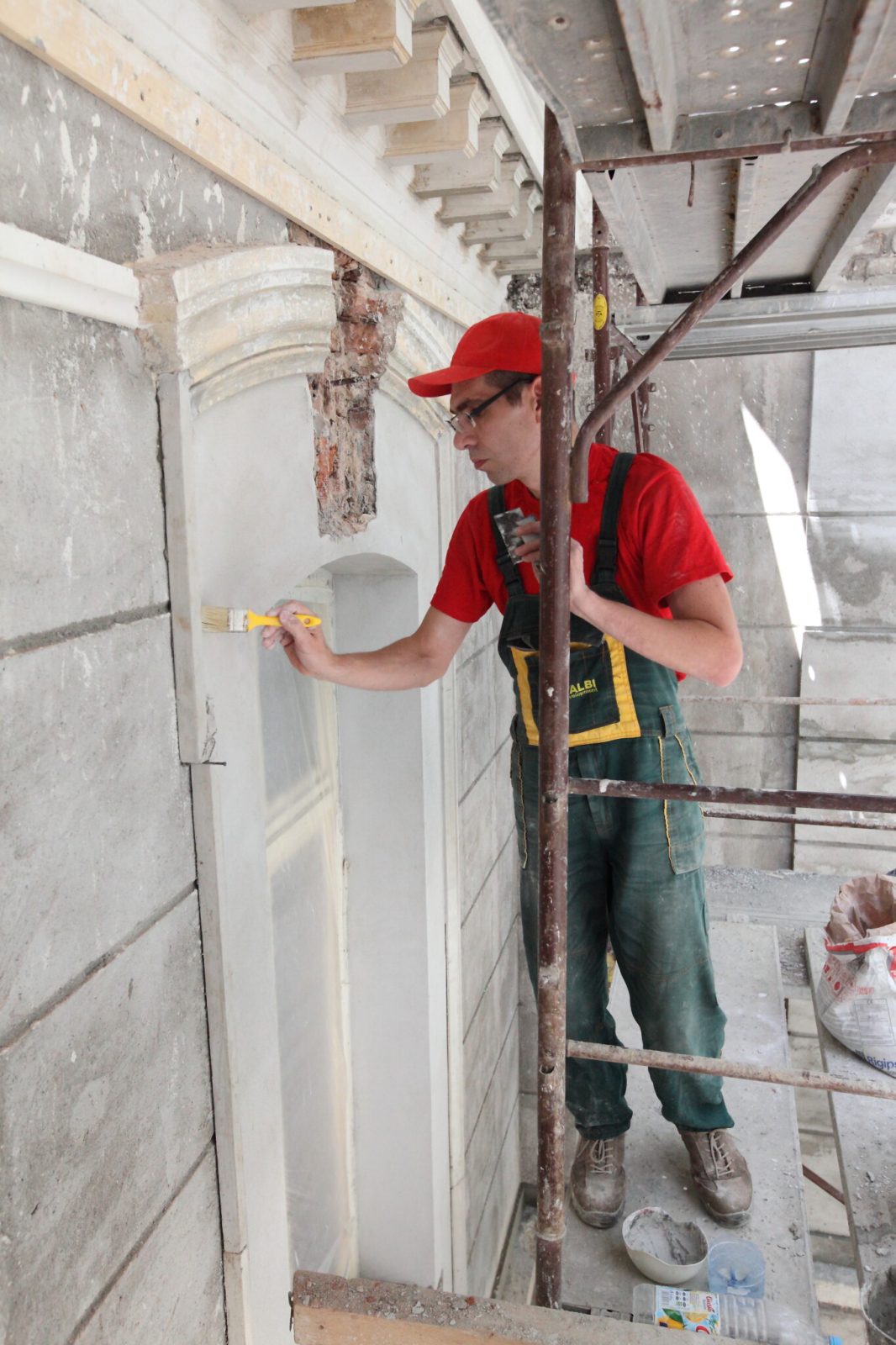
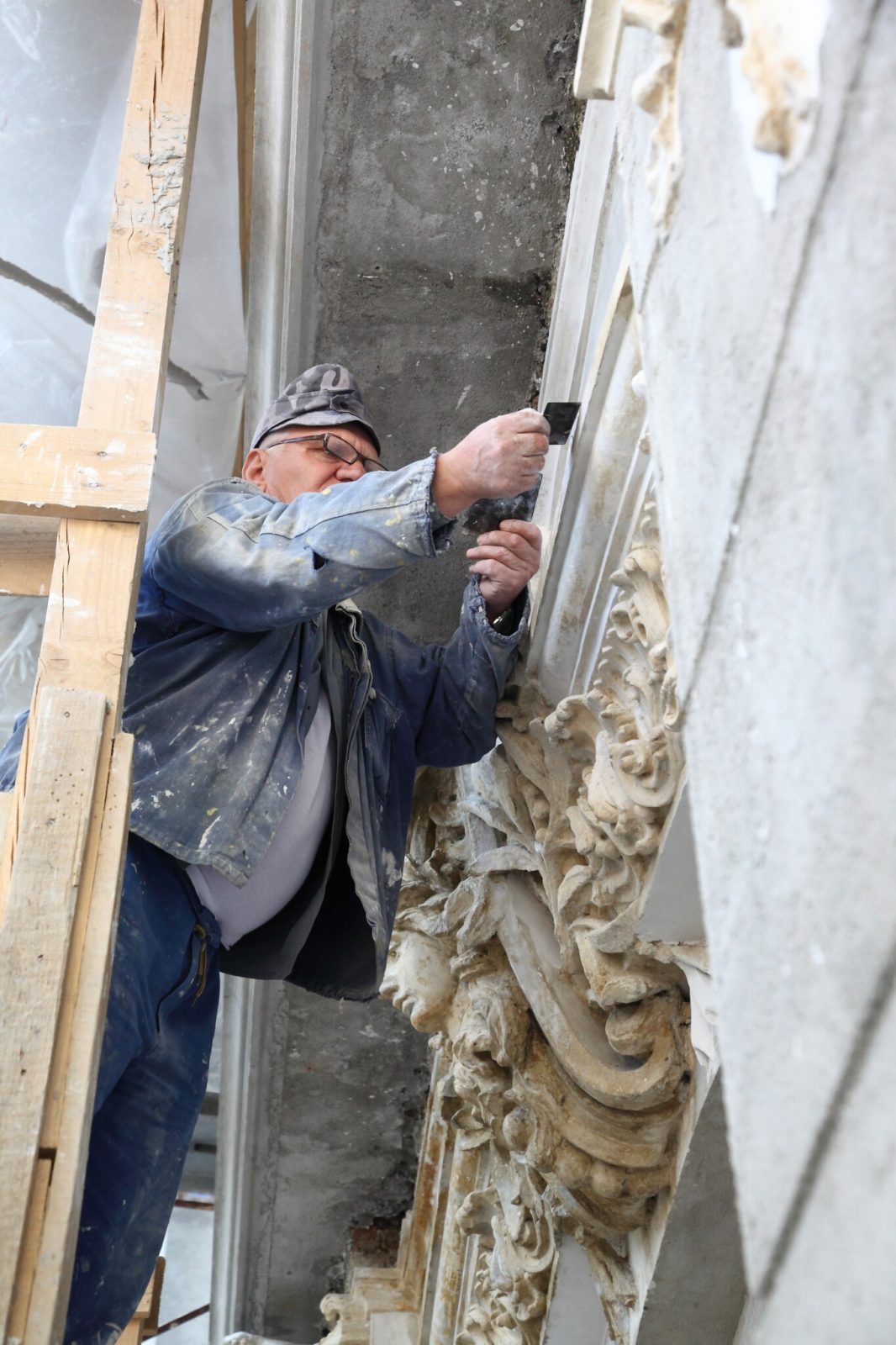
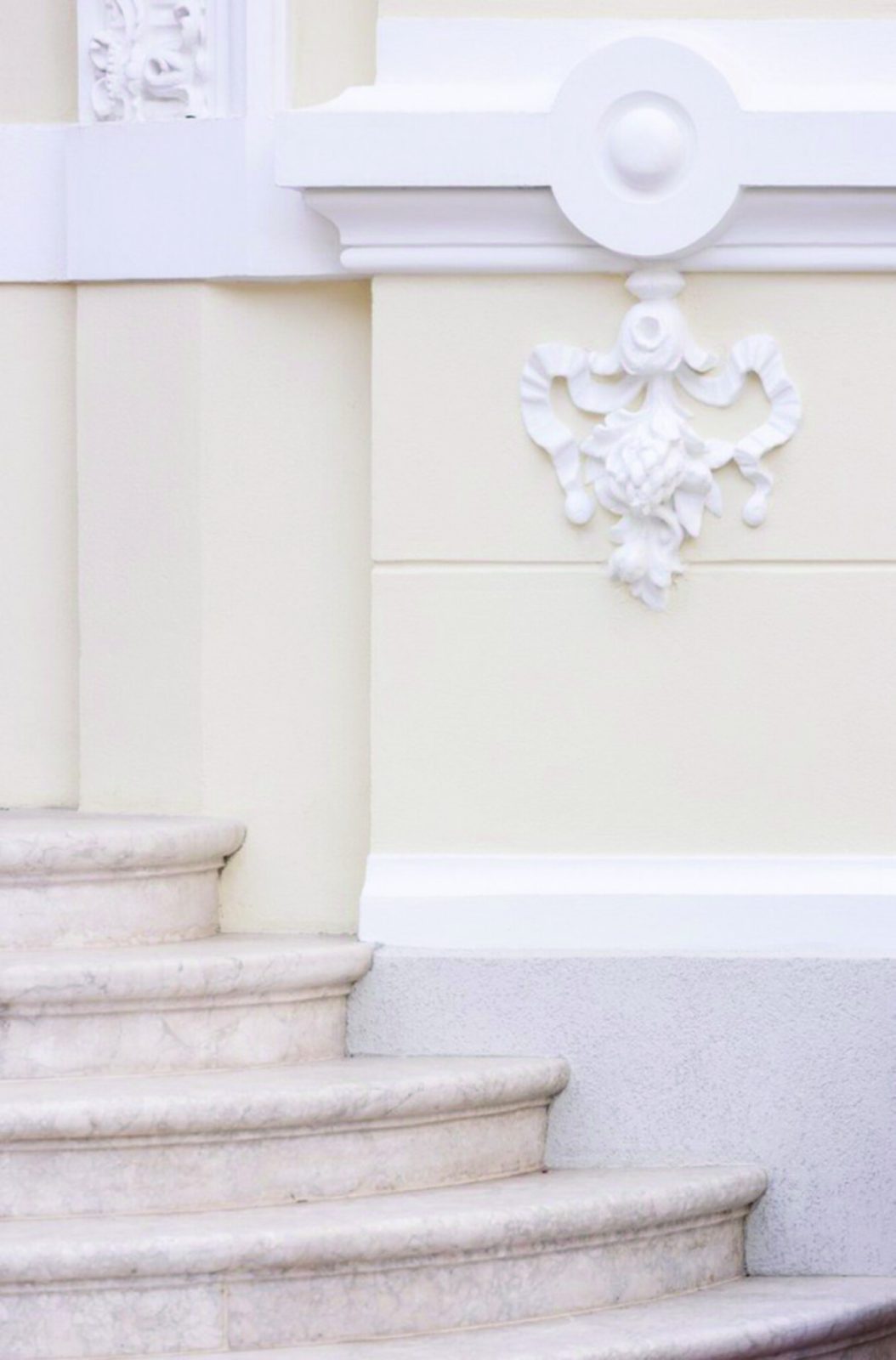
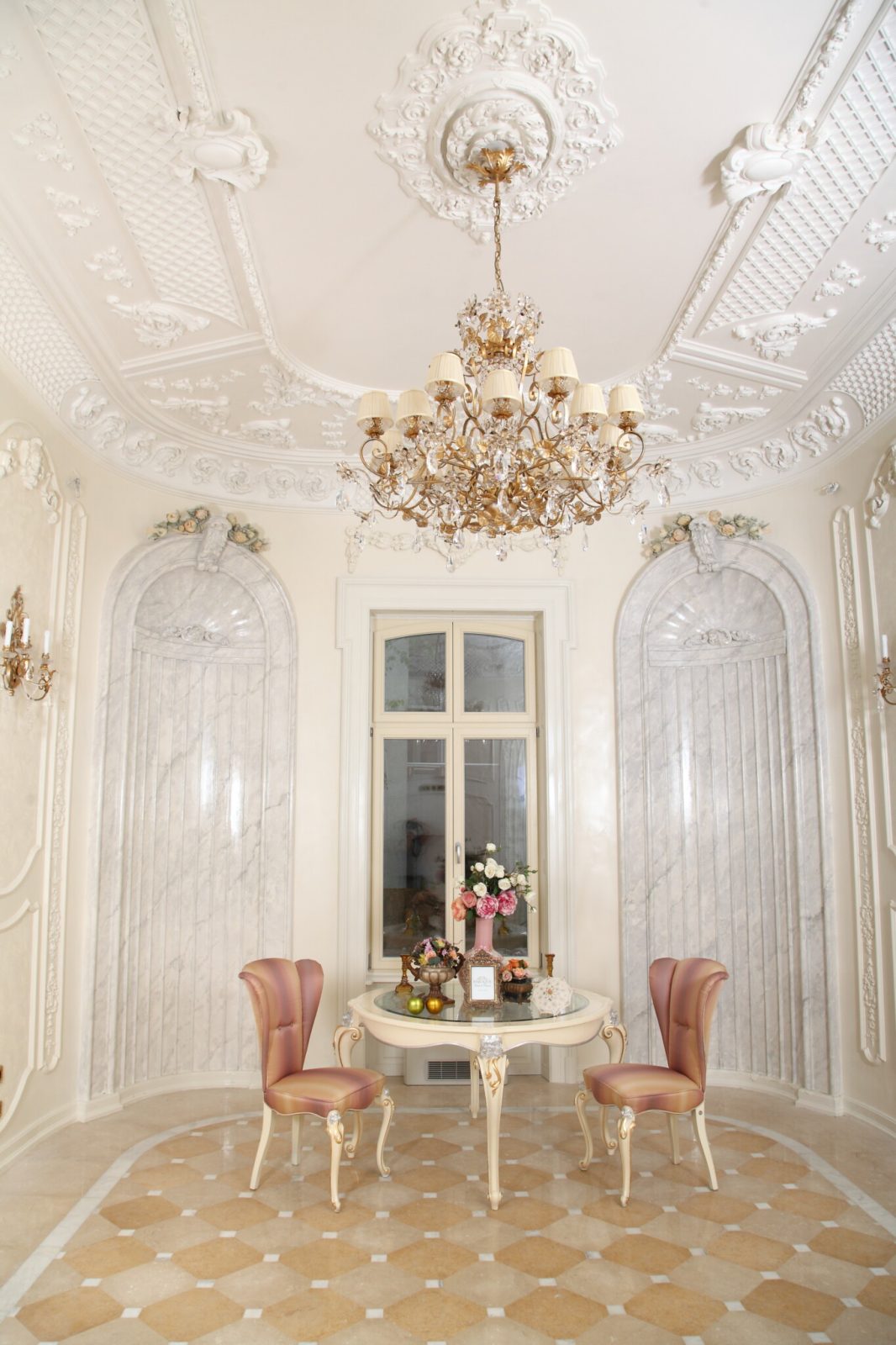
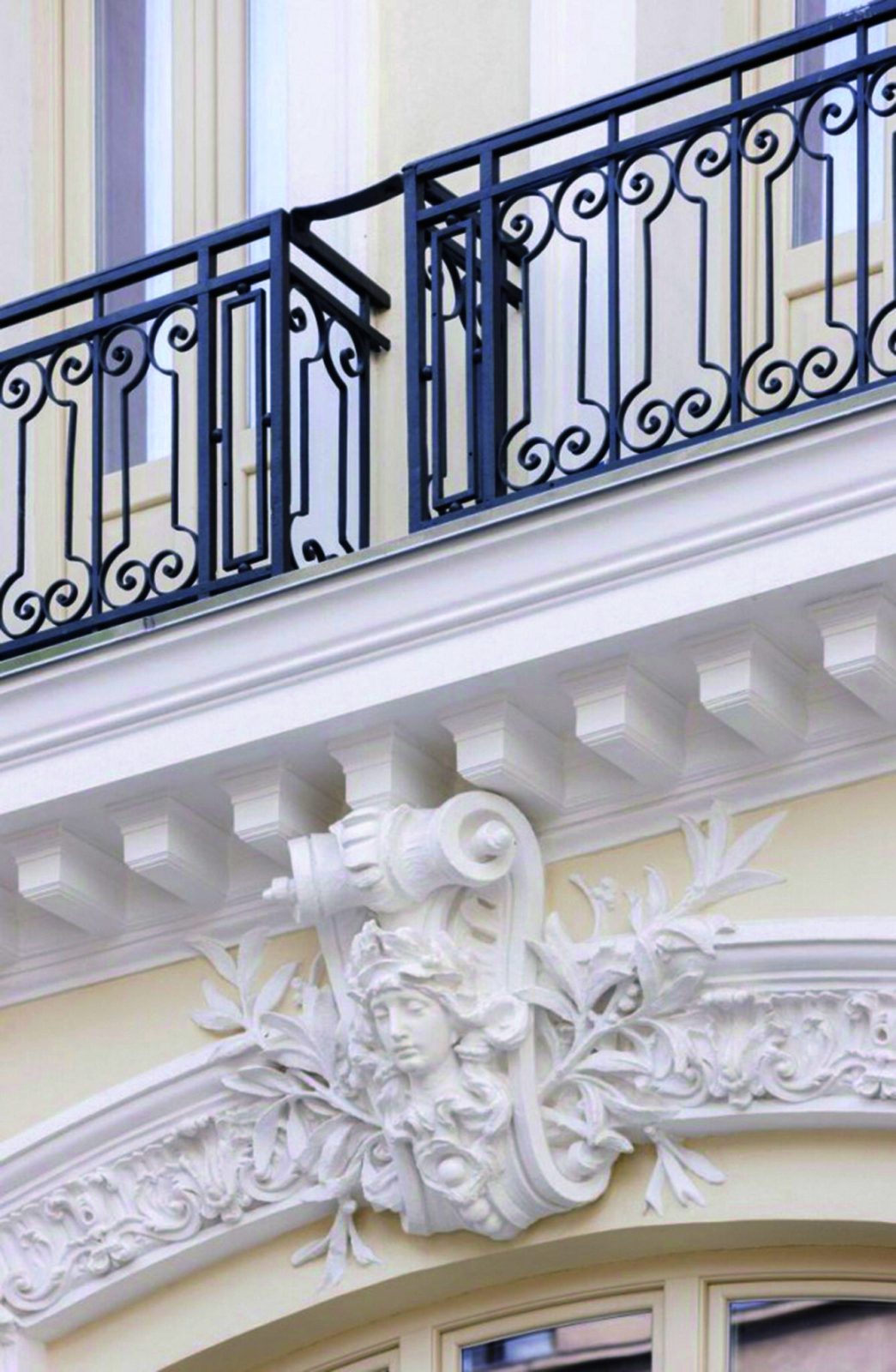
At Palatul Noblesse, the original interior stucco work consisted of ornaments made from hemp-reinforced plaster, with mouldings run in situ. These were foliate and geometric motifs, and to balance the proportions of the surfaces, new period-appropriate stucco mouldings were added to the side walls and ceilings. Every room in the Palace has its own distinct stucco profile, set apart by its patterns and above all by the way floral and geometric elements are combined. Much of the stucco you see today is the original, restored work.
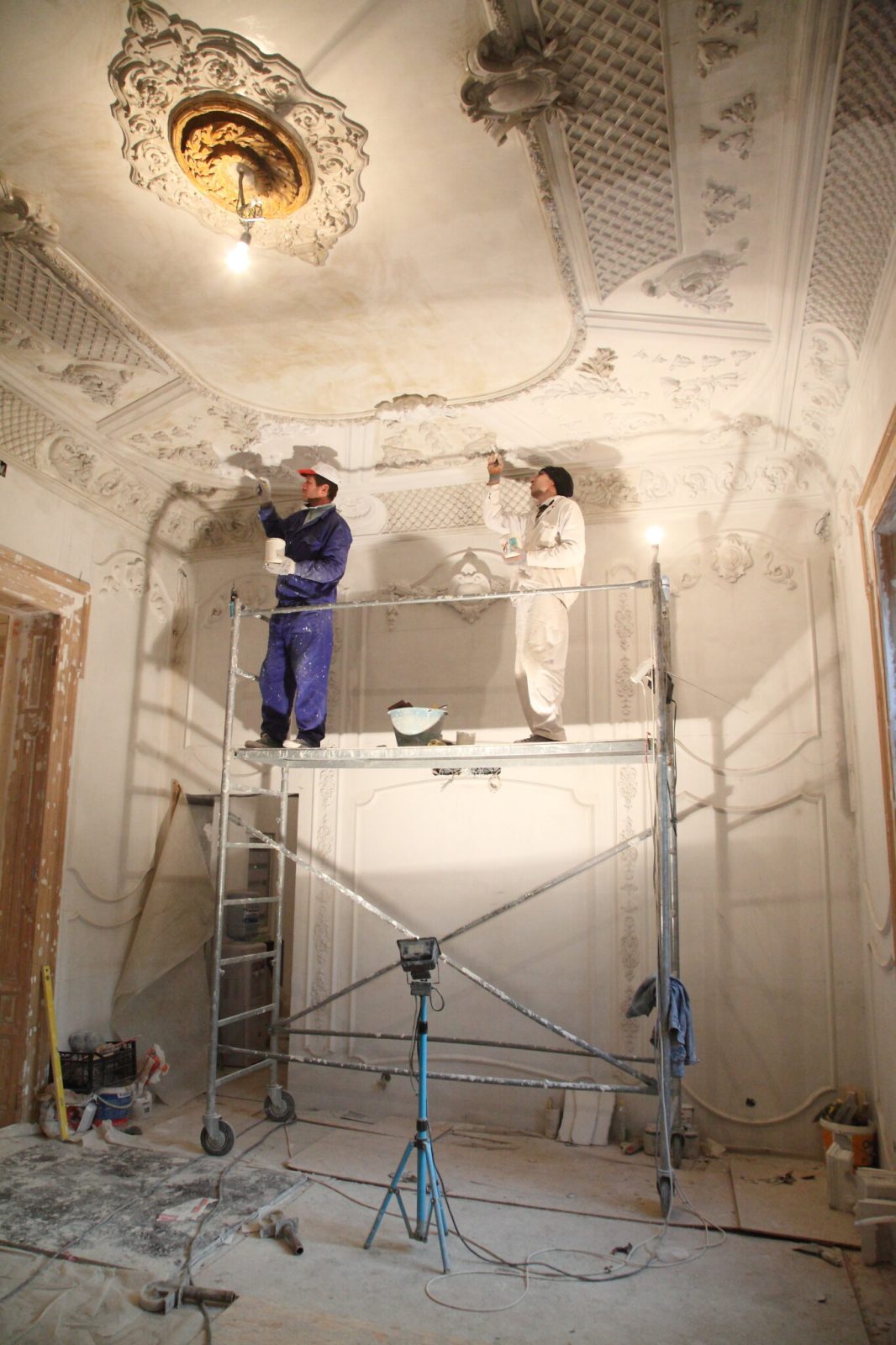
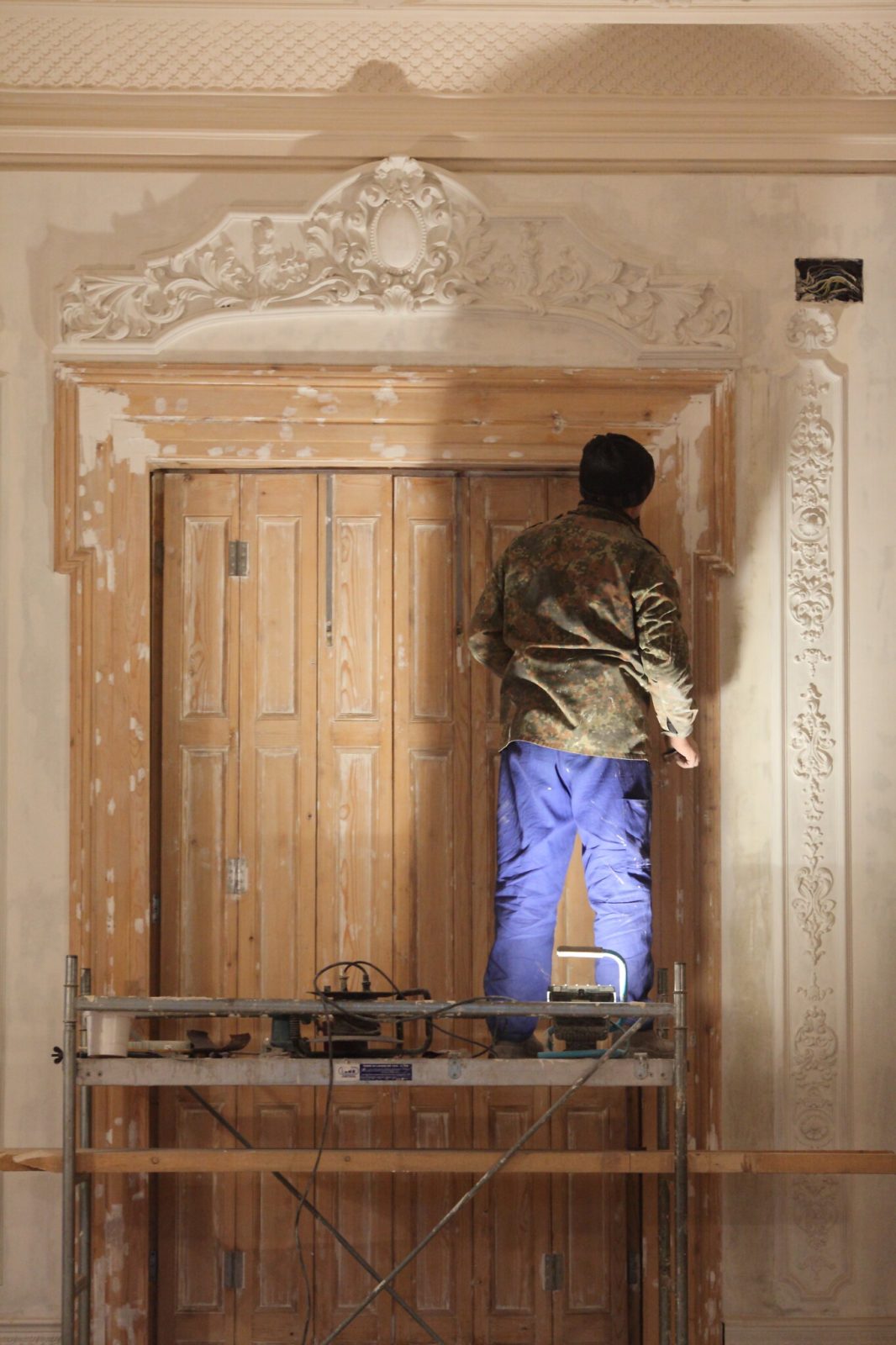
How was it done? Each piece was removed and stripped of its old paint, then a plaster slab was bonded to it. For the straight sections, profile guides were made; for the modelled areas, a 2 cm layer of clay was applied and a cap formed over it, after which the clay was replaced with poured plastisol or silicone rubber to create the mould needed to reproduce the piece. For the moulded sections, templates were cut to match the original pattern.
The existing elements were restored by paint stripping: a stripping solution was applied by brush and, after 15–20 minutes, the layer of old paint was cleaned away. The process was repeated for each layer, so that 60% were cleaned right back to the linseed oil, while on 40% the final layer could not be removed, as the paint had soaked into the stucco. Cracks were repaired, pieces were replaced one by one and, in some areas, the plaster glaze on the mouldings was renewed. Once the repairs were complete, the stucco was sanded and given one or two coats of linseed oil and matt paint.
Worth noting: the restoration workshop for the interior and exterior stucco was set up inside Palatul Noblesse itself and in a workshop built in its courtyard. This made rigorous, day-by-day quality control of the work possible.
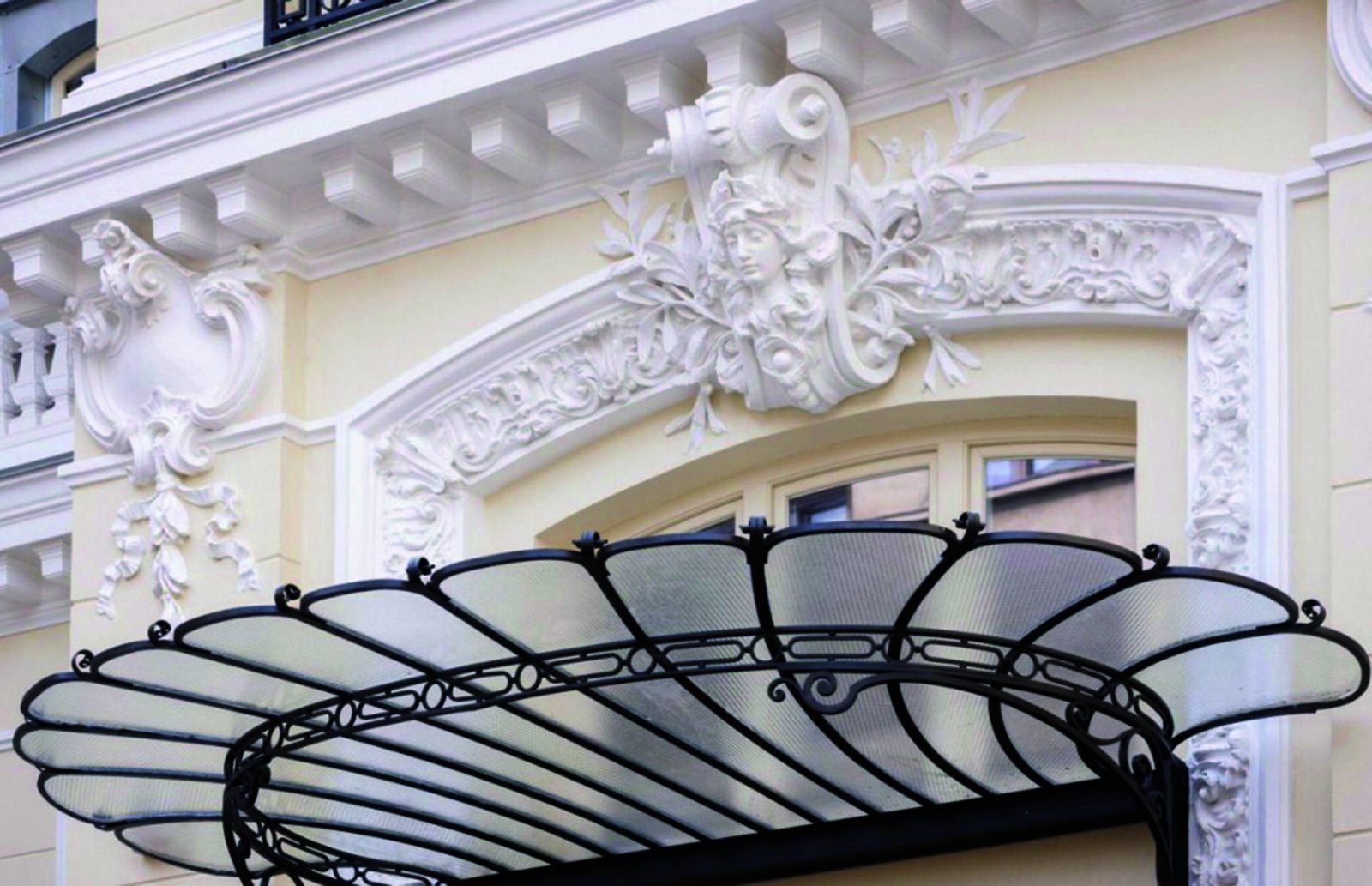
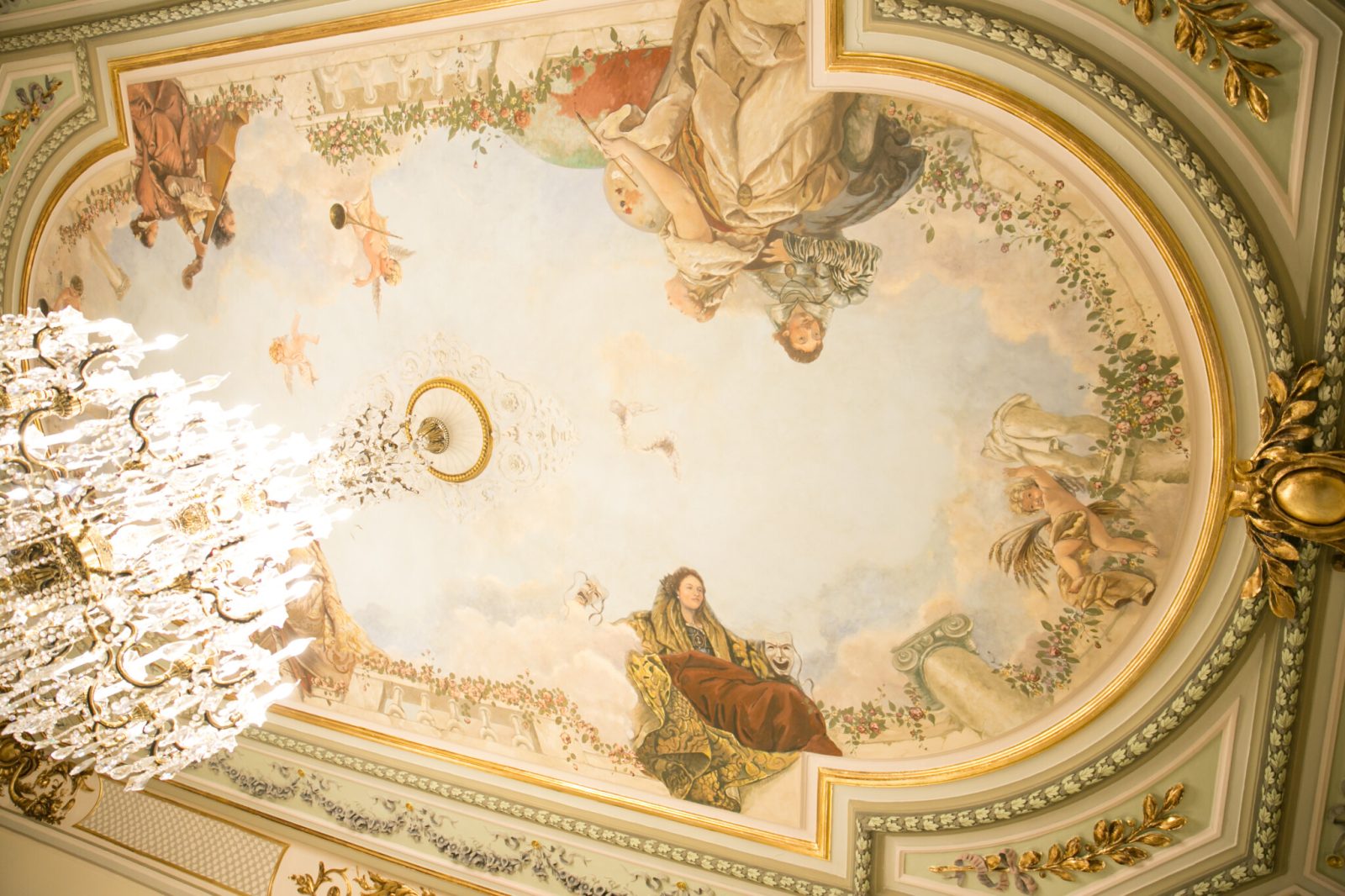
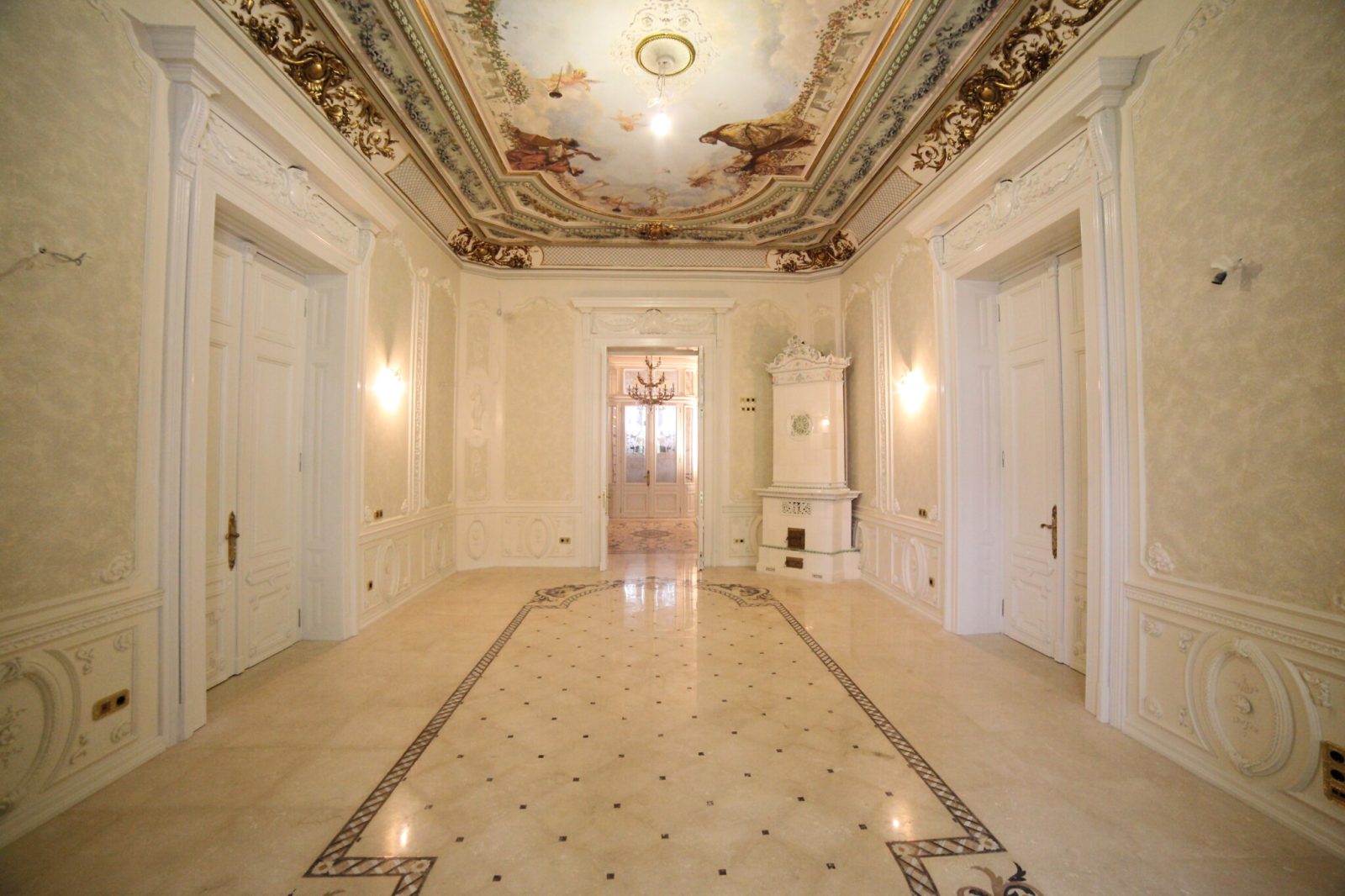
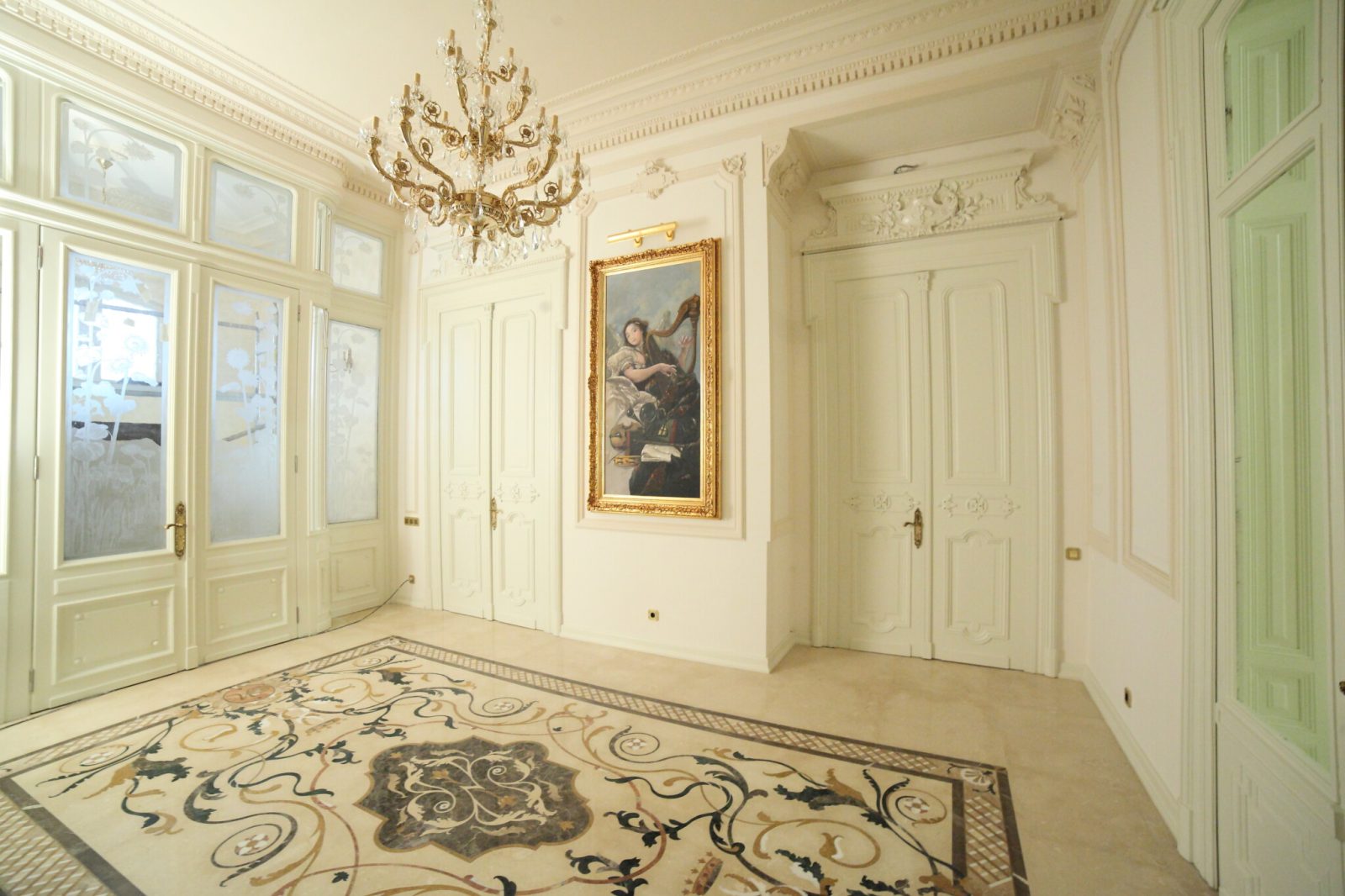
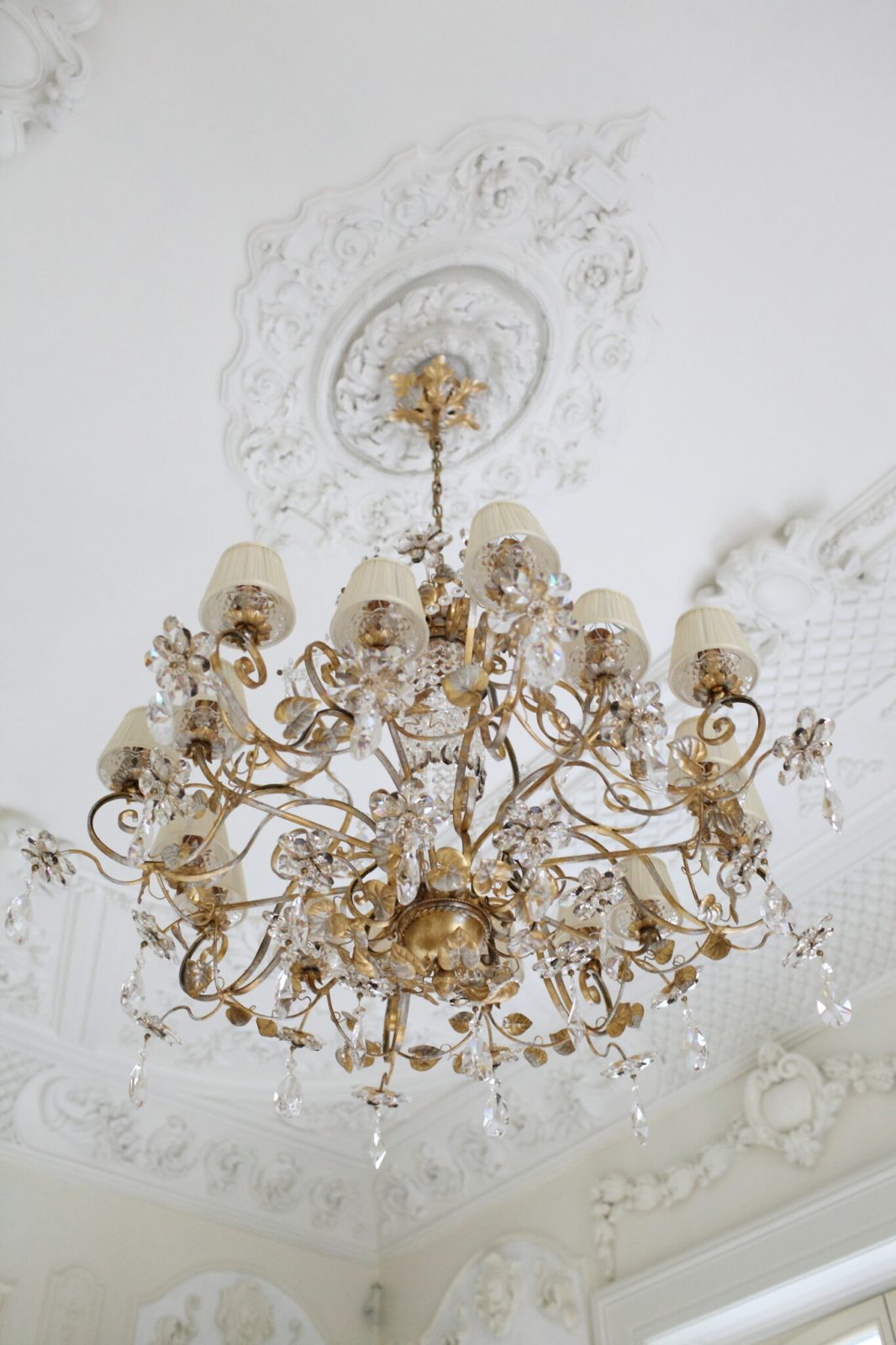
No two rooms are alike. In the Baroque Room, the most imposing of all, the stuccowork is finished in royal burgundy with gold leaf; in the Florence Salon, Louis XV ornamentation pairs white with gilded and silvered patina. Many of the stucco reliefs bear allegories of the arts, both visual and musical, with muses and motifs that turn the ceiling into a story.
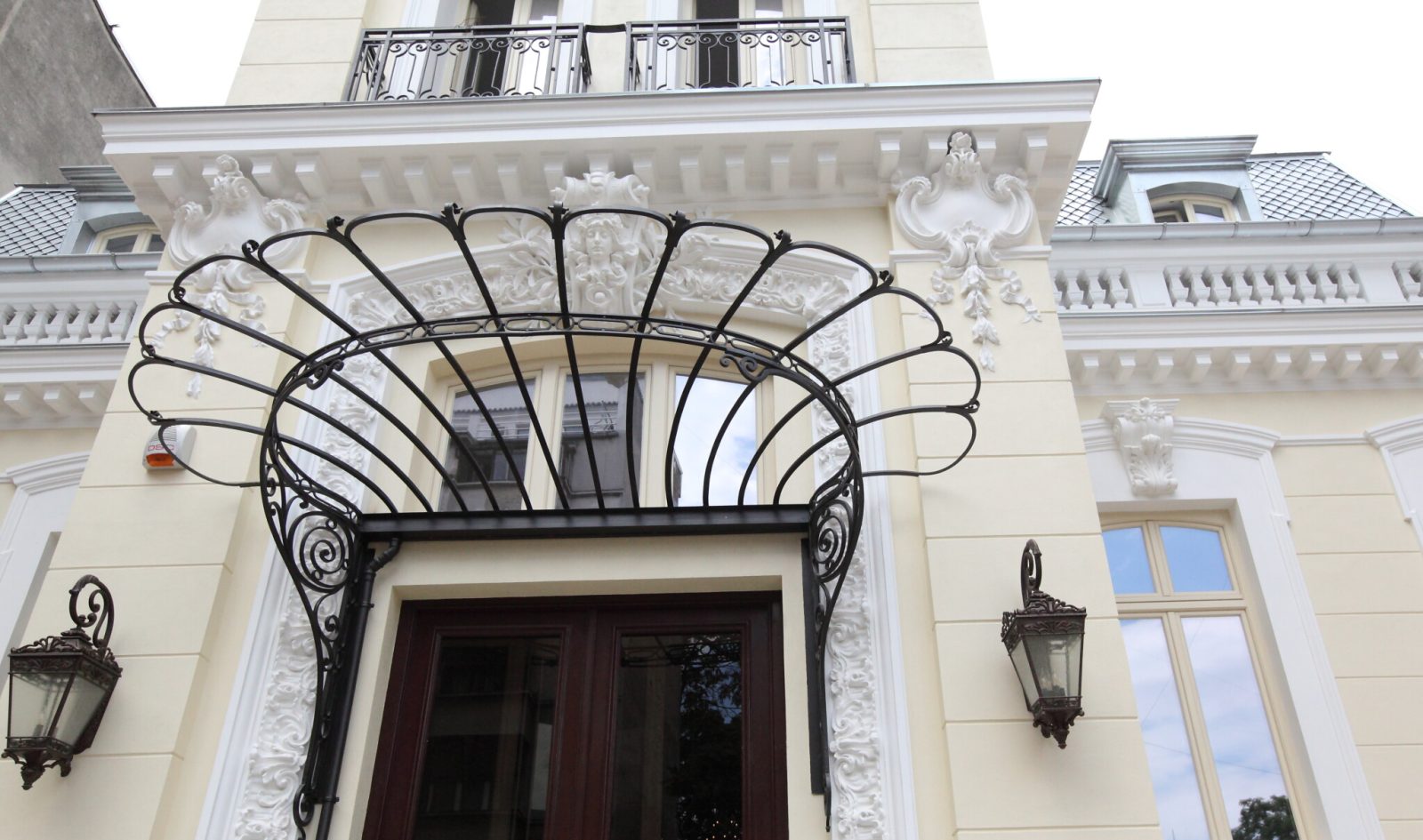
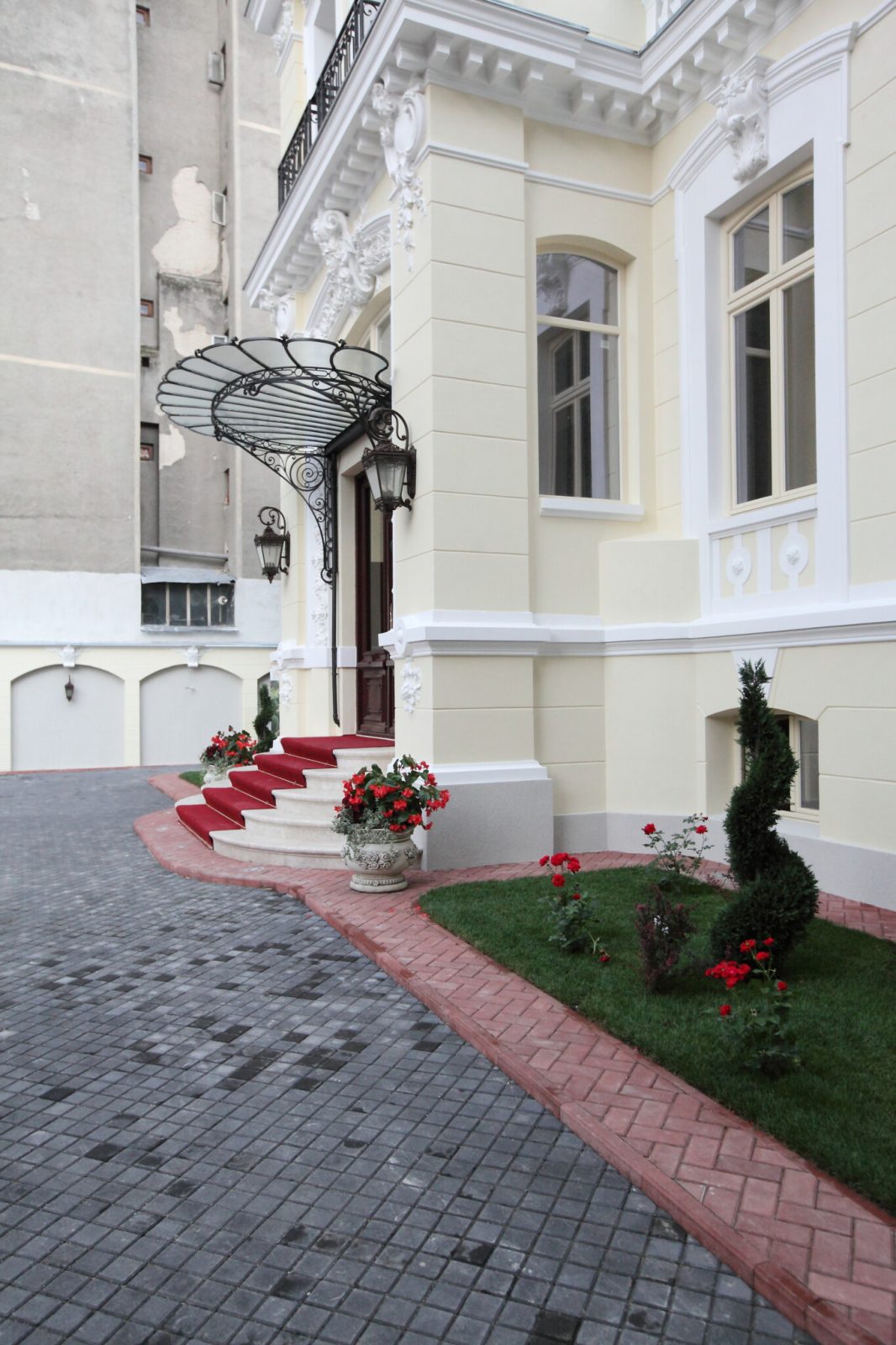
The house was designed in 1881 by the architect Alexandru Săvulescu, in the French eclectic style. Through a restoration overseen by the Preda family and the architects of Noblesse Group, these ornaments have been saved and returned to their original splendour, a testament to the craftsmanship of their makers and to a deep respect for heritage.
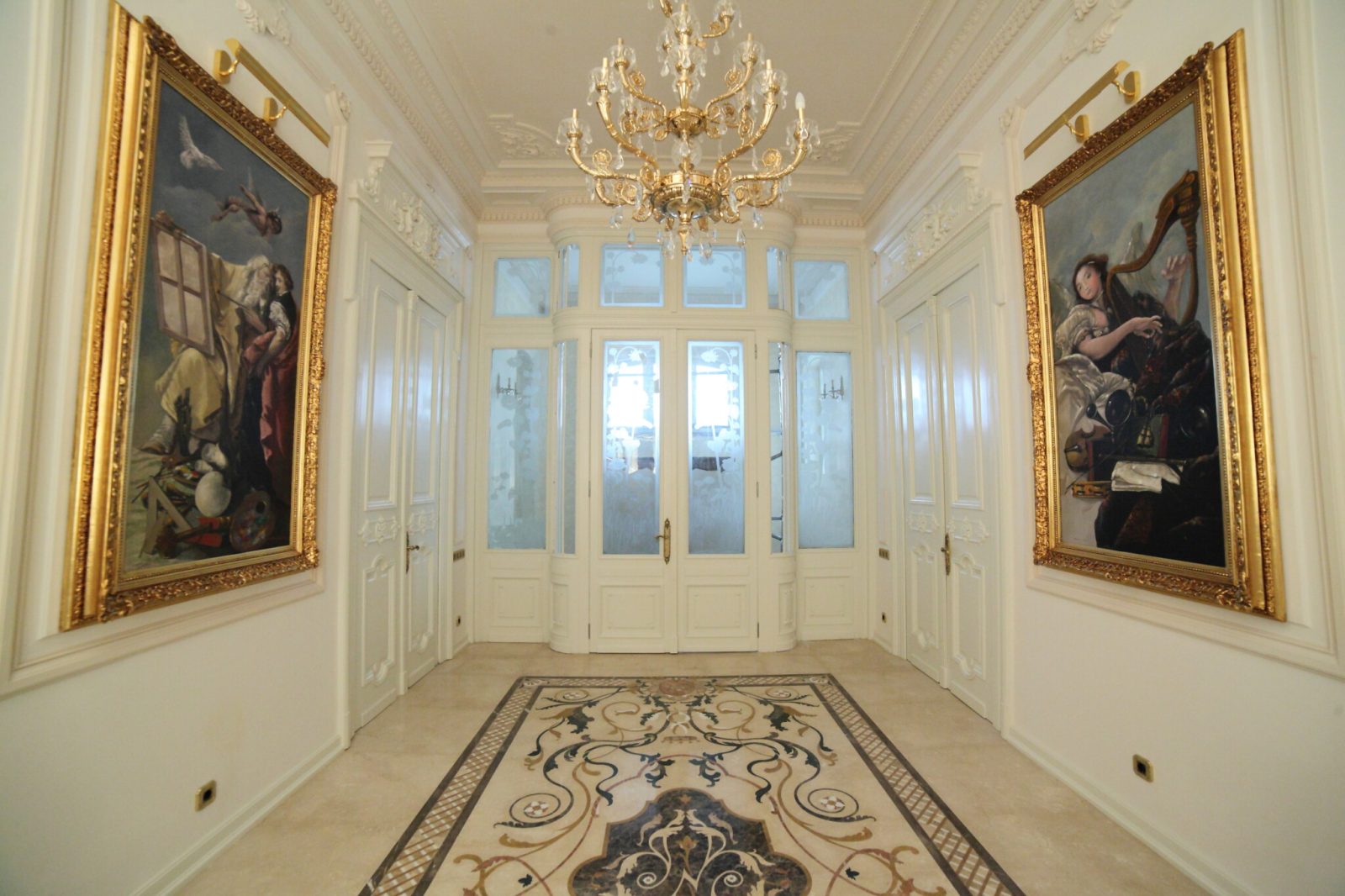
Discover the full story of the restoration and the salons of Palatul Noblesse.
Restoring the stuccowork is just one part of the wider project to bring the Palace back to life. Discover more about the restoration of Palatul Noblesse, the story of the Palace and the salons where these ornaments can be admired today. Palatul Noblesse is part of the Noblesse Group, a group specialising in luxury design and restoration.
Tell us more about your event and our team will be in touch shortly.
Request a Tailored Quote