
Palatul Noblesse retains two original terracotta stoves, more than a century old and painstakingly restored: the green stove in the Florence Salon and the white stove in the Baroque Salon. Both belong to the building's original fabric, dating from 1881, and have been brought back to life tile by tile to resume their place as the centrepieces of their salons.
These are not reproductions but authentic period stoves — testaments to the comfort and elegance of a late 19th-century Bucharest boyar residence. Each has its own personality, its own colour and its own restoration story.
In a city where so many such pieces have been lost over time, the fact that Palatul Noblesse preserves two complete original stoves, in two different salons, is a rarity. They have not merely been conserved but celebrated: restored to their former colour and lustre and woven into the salons where events are held today. Below, you can follow the story of each — from the dismantled, numbered tiles to the finished pieces in the Florence and Baroque Salons.
The stove in the Florence Salon is clad in green glazed tiles, richly moulded and with an imposing architectural silhouette. The deep green of the ceramic, softened by time, sits beautifully with the salon's warm tones and classic furniture, making it an elegant focal point of the room.
Today, in the fully furnished Florence Salon, the green stove presides quietly from a corner, alongside display cabinets, gilded mirrors and chandeliers — a living period piece woven into the everyday life of the palace.


Restoring the green stove was a labour of patience. Every green tile was dismantled, numbered and cleaned; the chips were then filled and the glaze renewed wherever time had worn it away. The stove's inner core, which stores the heat, was rebuilt, and the tiles were reassembled in exactly their original order — a puzzle of ceramics more than a hundred years old.
The photographs taken during the restoration show the whole process: the green tiles laid out and numbered on the floor, the stove rebuilt row by row, until it stood whole once more, ready to resume its place in the Florence Salon.


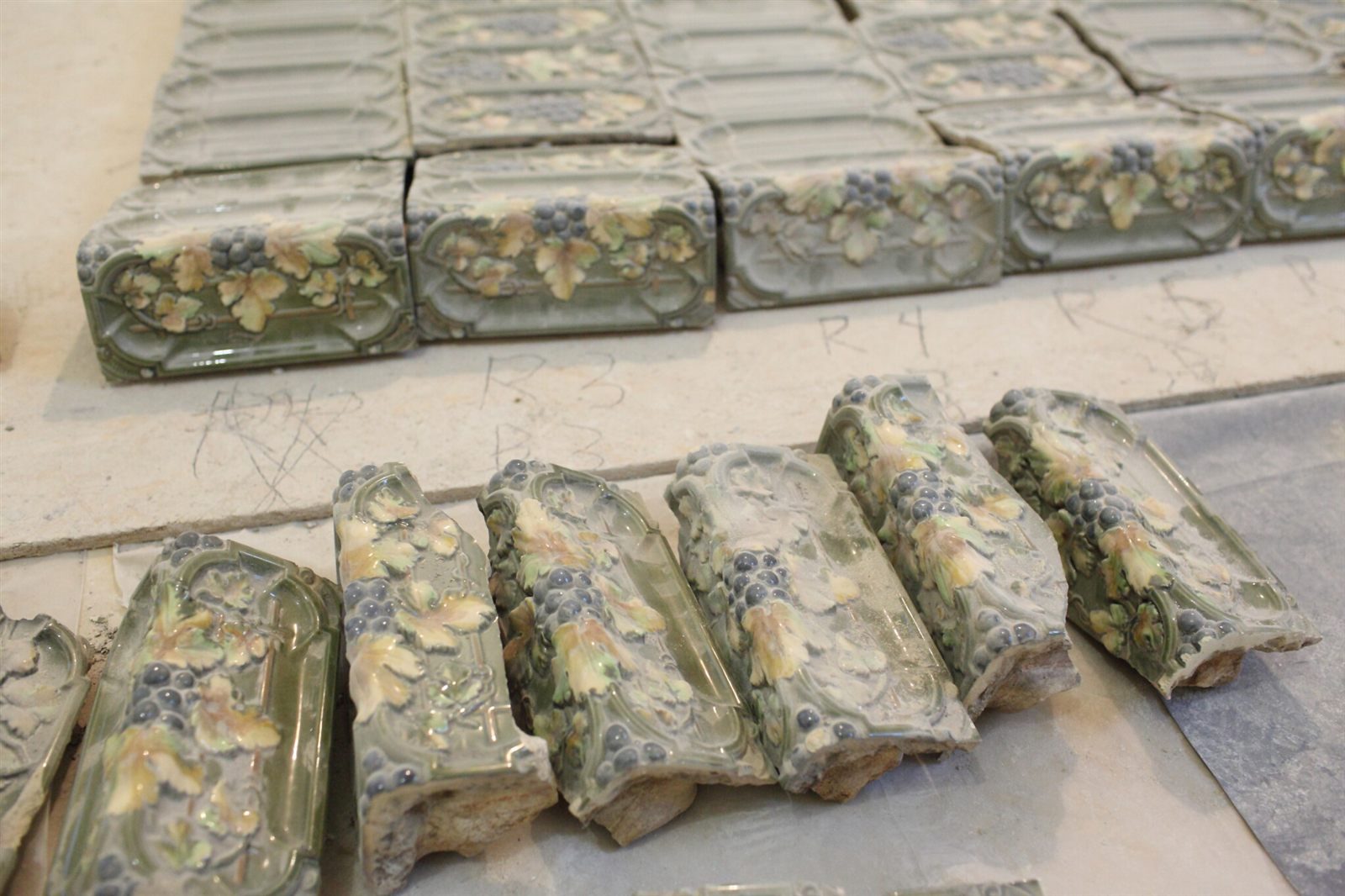
The palace's second stove, in the Baroque Salon, underwent a meticulous restoration: the tiles were dismantled and cleaned, the ceramic and glaze repaired, the internal structure rebuilt and the whole reassembled. Particular care was required for the painted floral crest at the top, where the original colours were preserved and restored to their former brilliance.
Photographs taken during the work show the body of the stove being rebuilt row by row, in a salon that was itself undergoing restoration — a process in which every white tile found its exact place once more, until the piece was whole again.

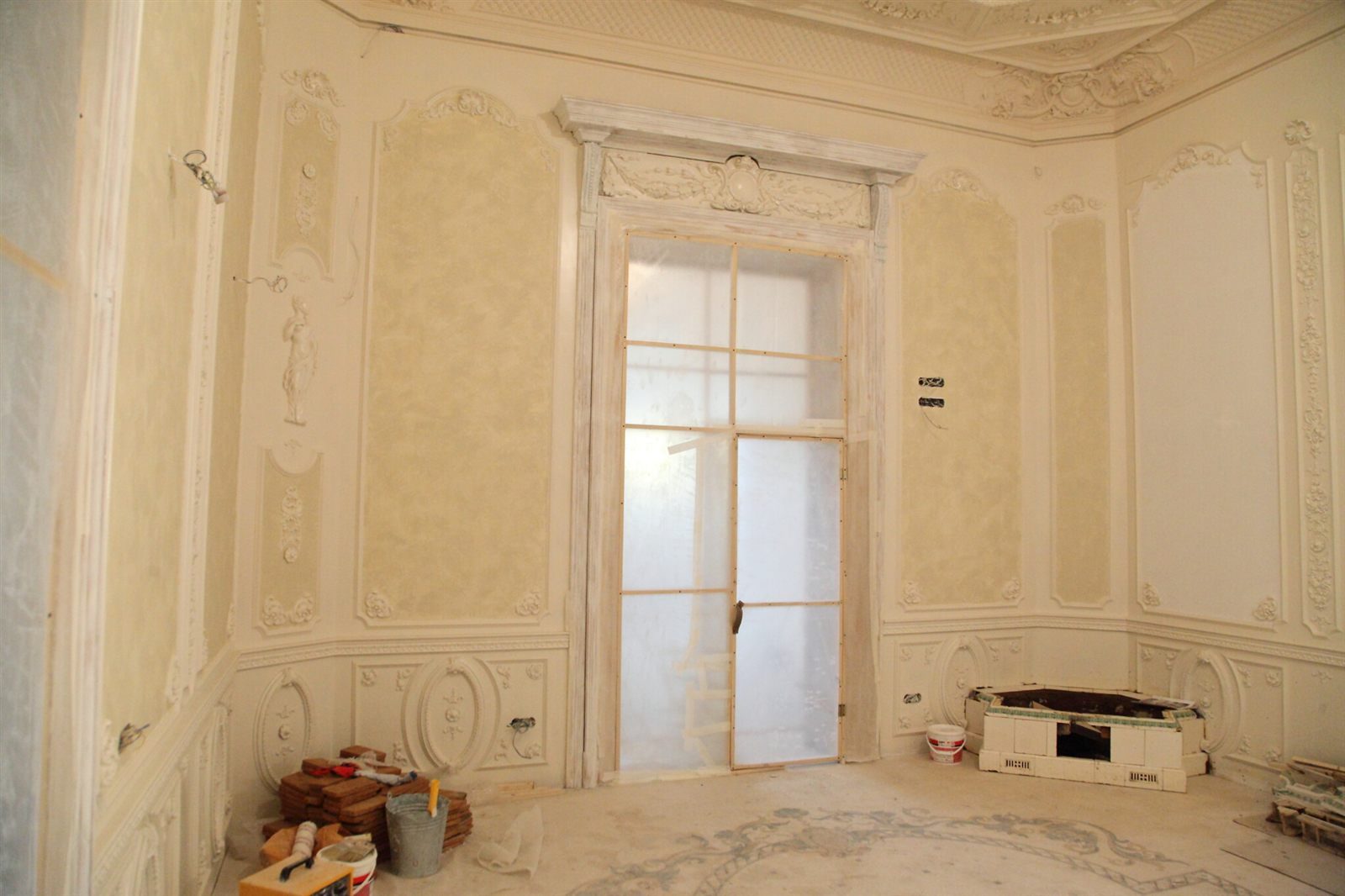
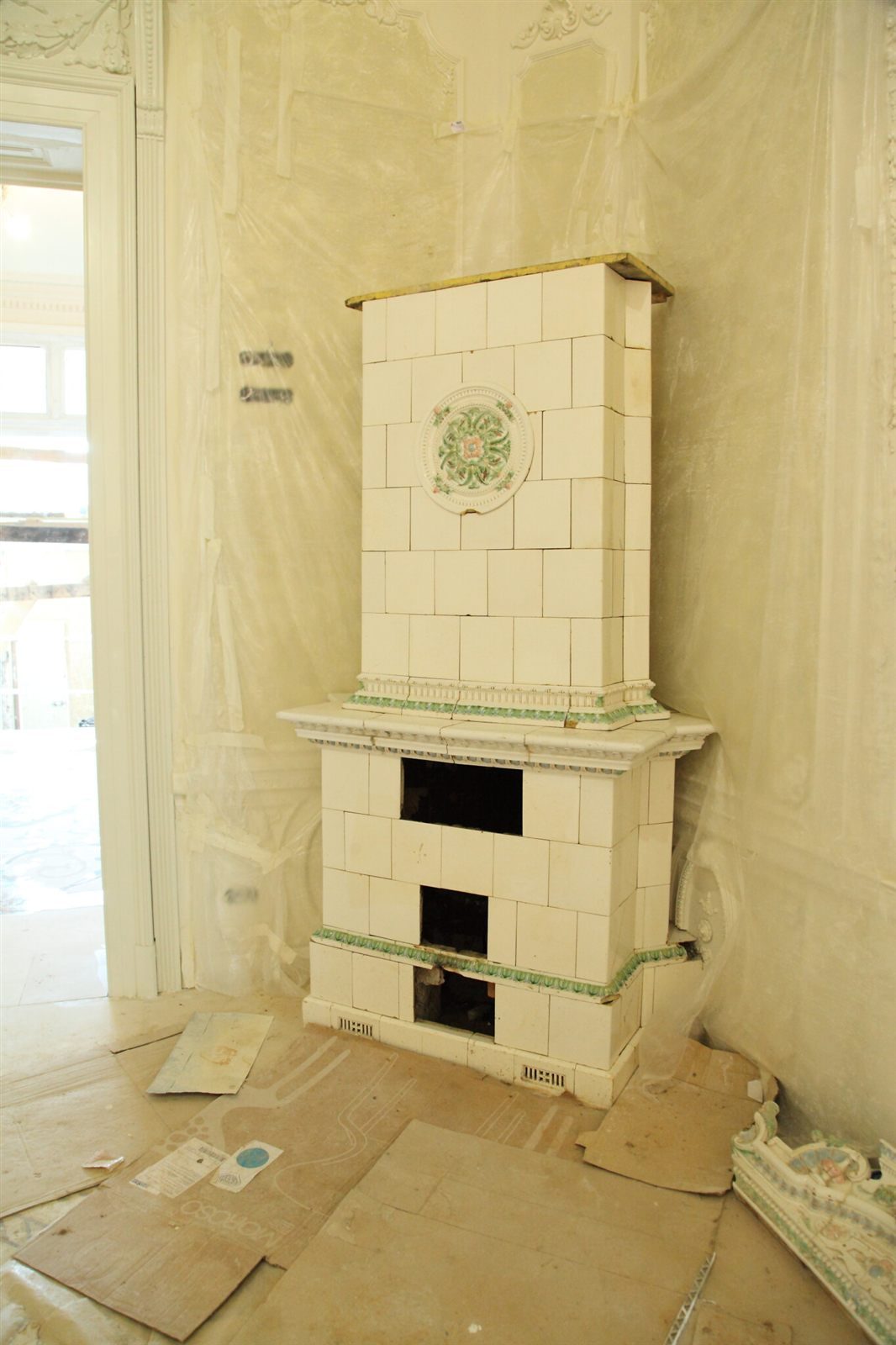
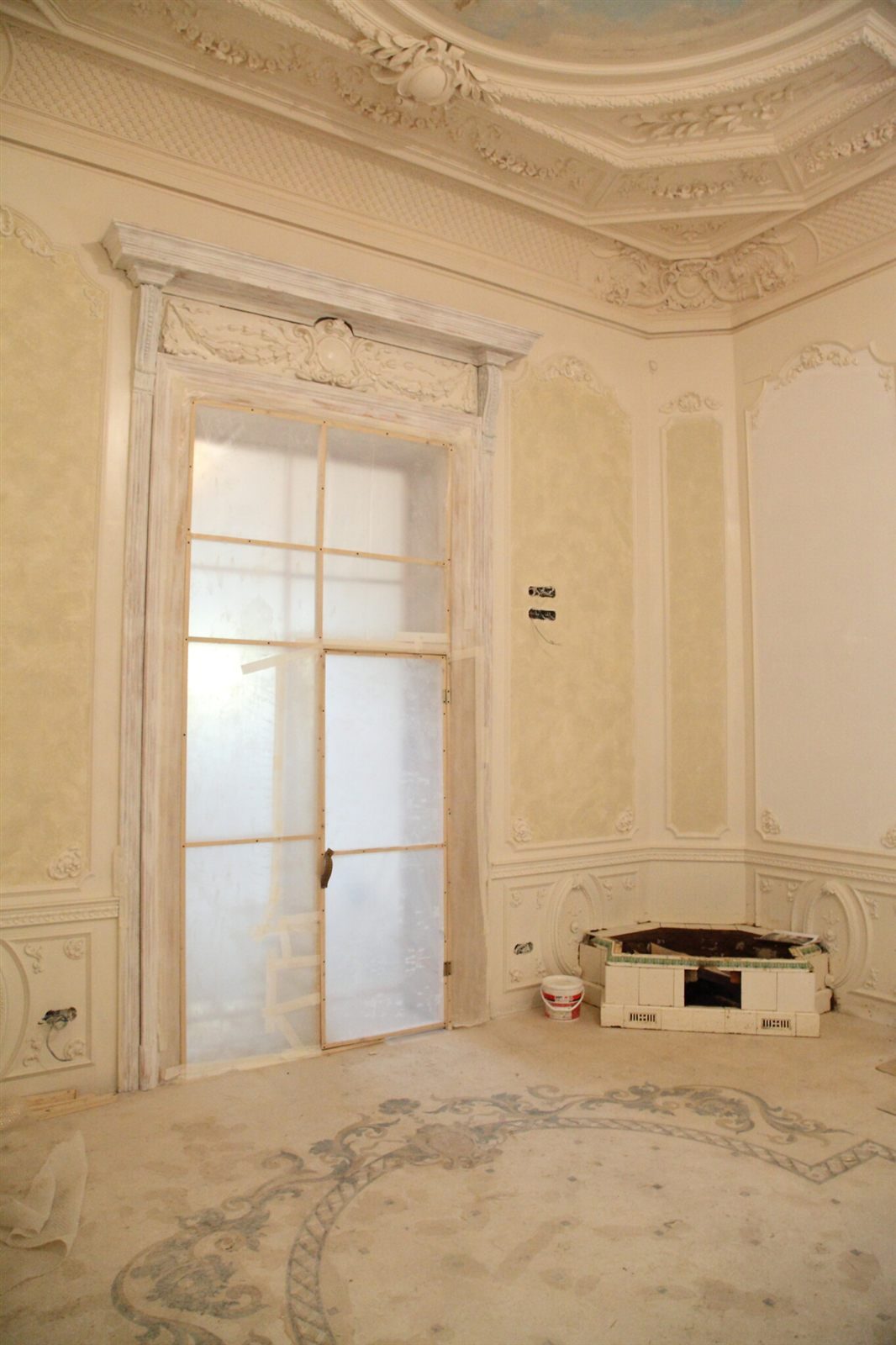


Lovingly restored, the stove in the Baroque Salon is a spectacular piece, its body clad in white and cream tiles and crowned by a hand-painted floral crest in delicate hues. It pairs the restraint of white with the exuberance of the floral ornament above — a true nineteenth-century ceramic jewel.
Today, in the fully furnished Baroque Salon — with its painted ceiling, crystal chandelier and gilded stuccowork — the white stove holds pride of place in one corner, brightening the room and anchoring it in authentic period elegance. It is the stove that instantly captivates every guest who steps into the salon.


Both stoves are built from tiles — ceramic (terracotta) plates cast in moulds, then fired and glazed by hand. The tiles are far more than a finish: they form a casing that stores heat and releases it slowly and evenly, the very principle that made the terracotta stove the most efficient and elegant heating system of its day.
Beyond their function, the tiles are a work of decorative art. The relief, the colour of the glaze — deep green on one, white with a painted crest on the other — and the way they fit together row by row turn each stove into a unique composition, impossible to reproduce industrially today.
Every tile was once cast, fired and glazed by hand, then mounted on a frame that carried heat across the stove's entire surface. Restoring such a piece means understanding this craft and honouring it: not merely repairing the ceramic, but preserving the logic by which a terracotta stove both worked and delighted for more than a century.
Terracotta stoves have made a striking return to the attention of interior designers. A period stove is, above all, a spectacular focal point — a vertical piece with volume and texture around which an entire room can be arranged.
At Palatul Noblesse, the two restored stoves are exactly this kind of piece: not mere objects, but the visual and emotional anchors of the Florence and Baroque Salons.
For events hosted at Palatul Noblesse — weddings, photo shoots, private dinners, launches — the terracotta stoves provide a ready-made setting. They offer a photogenic, warm backdrop full of character, against which brides, guests or featured products instantly take on a touch of period refinement.
Together with the gilded salons, exposed brickwork and crystal chandeliers, the two stoves complete the palace's palette of atmospheres — a rare variety of authentic settings, all within the same venue in central Bucharest. The green stove in the Florence Salon and the white stove in the Baroque Salon even offer two distinct photographic backdrops in a single visit.
How many stoves does Palatul Noblesse have?
Two original terracotta stoves: the green stove in the Florence Salon and the white stove in the Baroque Salon, both painstakingly restored.
How old are the stoves?
They are part of the original fabric of the building, erected in 1881 — they are more than 140 years old and handcrafted from ceramic tiles.
How is a terracotta stove restored?
The tiles are dismantled and numbered, then cleaned; the ceramic and glaze are repaired, the internal structure is rebuilt and the stove is reassembled in its original order.
Can antique stoves be incorporated into modern interior design?
Yes; a terracotta stove becomes a spectacular focal point, bringing authenticity and character to both classic and contemporary interiors.
The terracotta stoves are just one of the details that make Palatul Noblesse a living monument. Discover the restored exposed brickwork, the full story of the palace’s restoration and the salons that host our events. For interior design inspiration and premium fit-outs, visit Noblesse Interiors, and for the story of the group, Noblesse Group.
Tell us more about your event and our team will be in touch shortly.
Request a Tailored Quote