
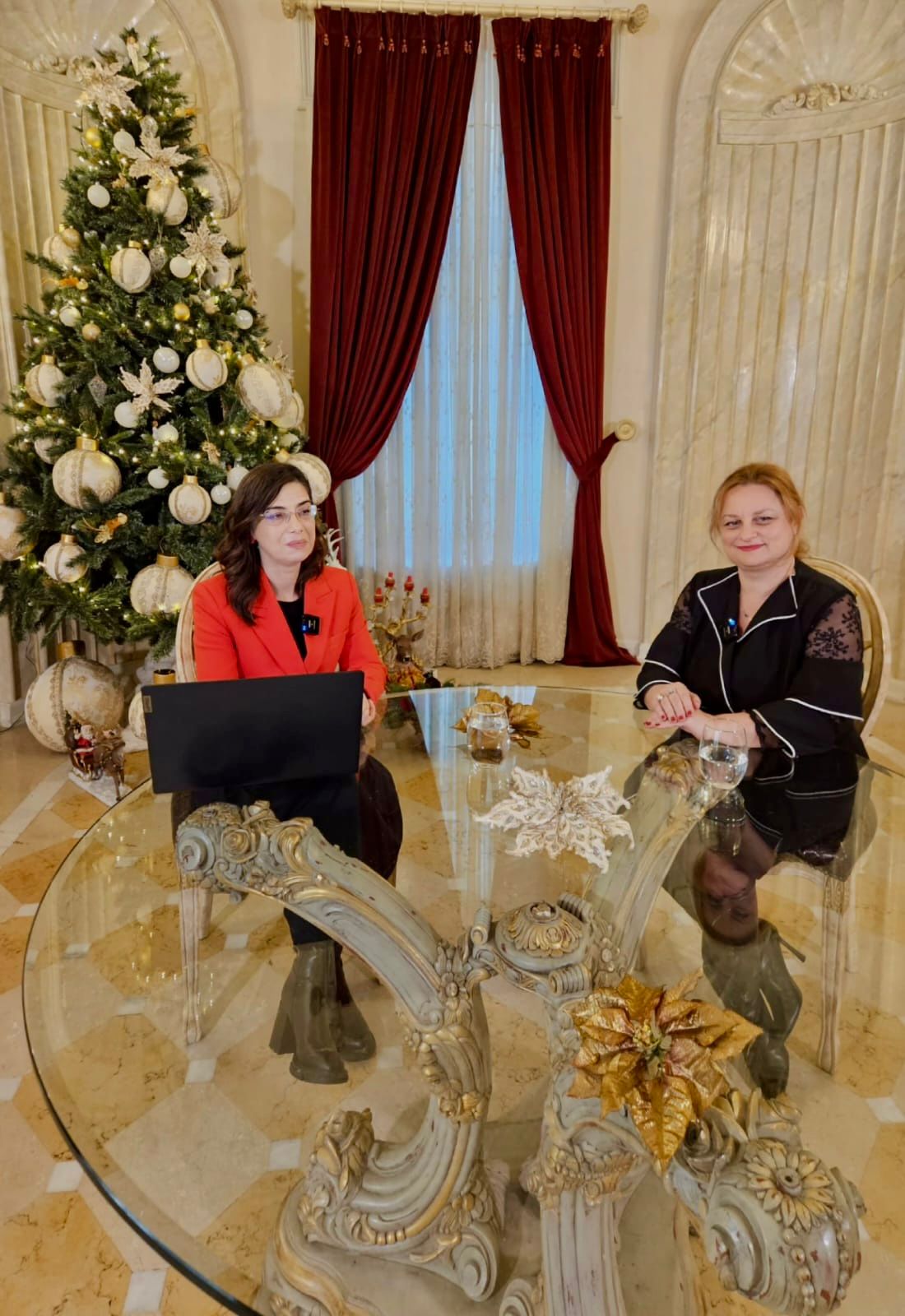
In this series of business interviews, I chose to share the story of Palatul Noblesse not merely as an entrepreneurial project, but as an act of responsibility towards heritage, the city and the community. Thank you to the Puterea Financiară team for inviting me to be part of the series "How We Love Bucharest"...
This article belongs to our business interviews category, documenting how private initiative can contribute to heritage restoration and the urban regeneration of Bucharest.
In this series of business interviews, I have chosen to share the story of Palatul Noblesse not merely as an entrepreneurial venture, but as an act of responsibility towards our heritage, our city and our community.
My thanks to Gilda Popa, journalist at Puterea Financiară, for a thoughtful, well-researched conversation and for capturing not only the facts but also the emotional side of restoring a historic monument. The interview is part of the editorial series “Cum iubim Bucureștiul” (“How We Love Bucharest”), which shines a light on private initiatives making a genuine contribution to urban regeneration and to bringing cultural heritage back to life.
My conversation with Gilda Popa was about courage, long-term vision and how a single building can become a catalyst for an entire neighbourhood. It is a dialogue about design, bureaucracy, community and the responsibility we share for the cities we live in.
Below you will find the full interview, conducted by Gilda Popa and first published by Puterea Financiară, reproduced in its original form.
‘2011 was a time of discovery and of emotions – from hope to discouragement – a whole mix of feelings. There were many weeping houses, and this was one of them – it was on a website, The Weeping Houses of Bucharest. It was also the first house I saw and, in a way, my first love, because I went on to visit perhaps another 20–30 houses, but my heart stayed here,’ recalls Loredana Preda.
Today, more than a decade later, Palatul Noblesse weeps no more. It has become an iconic cultural centre in Bucharest, a landmark of urban renewal and, above all, living proof that the private restoration of heritage is not only possible in Romania, but can also be a model to follow. This is the story of a pioneering venture that could change the way we relate to our own city.
In 2011, the area was run-down, the house abandoned, and warnings came from every direction: “it’s not a safe area”, “it’s not a sensible investment”, “it won’t work”. Even so, the decision was made quickly, born of an artist’s and interior designer’s instinct that was hard to explain in economic terms at the time.
“Back then, in 2011, the whole area (Moșilor – Rosetti) was in serious decline, so it hardly seemed an inspiring place for an entrepreneur. The building came with plenty of planning challenges. Even an estate agent who was advising me at the time said: «let’s look at some other houses too – the area isn’t very safe, it doesn’t have much to offer».
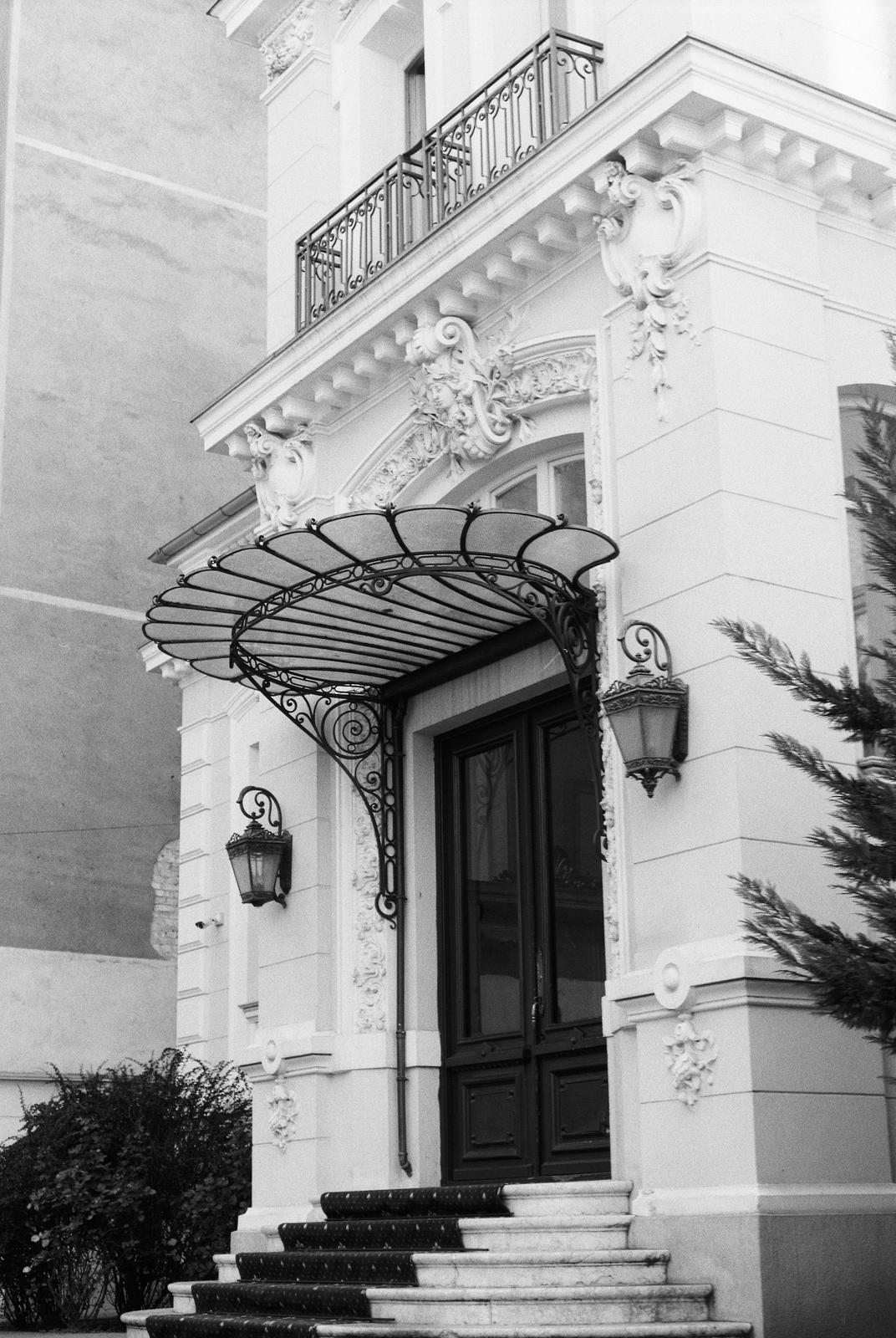
But my heart stayed with this beautiful house, even though it was badly deteriorated, abandoned, full of mould, with walls falling down. Yet it had enormous potential – something you can see when you work in interior design. Essentially, our challenge as a team of architect and designer is to bring these buildings back to life and turn them into something truly beautiful. Beyond the state it was in, I saw the beauty hidden within and what it could become: a true centre for the arts,” says Loredana Preda.
Restoring a historic building in Romania is not for the faint-hearted. It is an act of entrepreneurial courage that involves considerable financial risk, a bureaucratic labyrinth and a long-term vision.
The investment did not begin with a calculation of returns, but with a professional and personal instinct. Acquiring the building took more than a year. The historical research, design and restoration took years.
The building was brought back to life as a living organism: its stucco work restored rather than replaced, its spaces conceived as salons with their own identity rather than as mere decor.
“I didn’t want a museum. I wanted a living place. A place that would come alive and become our art and design showroom – and later came the idea of hosting events. Today it is a creative hub, a hub for communication and for connecting people from business, culture and the arts,” says Loredana Preda.
When it comes to historic buildings, the investment is substantial. But the challenges are not only financial. They concern procedures, communication with the authorities and the lack of efficient permitting mechanisms.
“There ought to be a simplified procedure for historic buildings,” says Loredana.
Today, more than a decade after the restoration of Palatul Noblesse, a new restoration project has been stuck at the permitting stage for almost three years, while the building continues to deteriorate.
“We have a building for which we have been unable to obtain a permit for almost three years.”
The transformation of Palatul Noblesse has had a ripple effect across the Calea Moșilor area. The local community has become more mindful of its heritage, investors see the area in a new light, and visitors are discovering a new point of interest.
“Mircea Eliade, Iuliu Maniu, Dimitrie Cantemir, Dimitrie Bolintineanu – all are connected to this area. It is a place with a vast and fascinating history. Before my very eyes, the area has begun to come alive.”
“The whole area around Calea Moșilor has extraordinary cultural value. It is Bucharest's next historic cultural centre.”
Loredana Preda also reveals plans for a new project: the acquisition of a nearby building, currently undergoing historical research, which will be transformed into a boutique hotel and café.
With more than 17 years of experience in interior design, the philosophy remains the same: design must tell a story in order to have life and identity.
“I have to tell a story for it to become part of a brand's life.”
The case of Palatul Noblesse shows that restored heritage is an urban asset that generates cultural, economic and social value. Bucharest has an enormous, still untapped wealth of image, and private initiatives can play a vital role in saving it — provided they are supported by functional, predictable public policy.
Tell us more about your event and our team will be in touch shortly.
Request a Tailored Quote